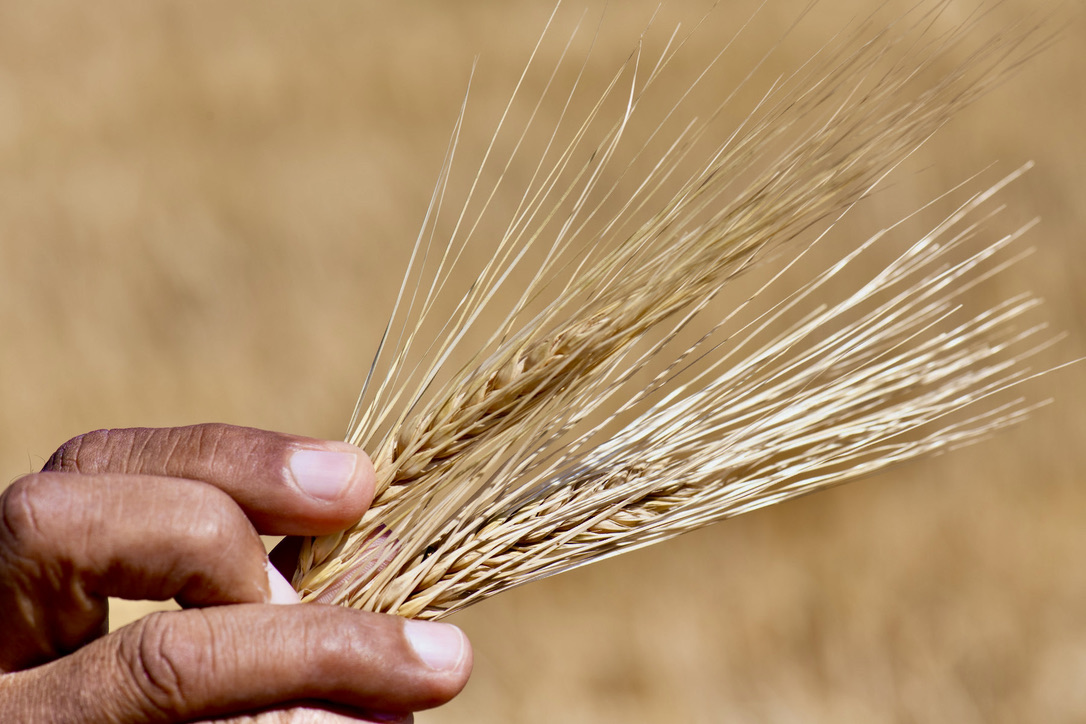
Sorghum
Sorghum bicolor
Crop Overview
Sorghum (Sorghum bicolor [L.] Moench) is part of the Poaceae (grass) family, which also includes maize, wheat, and rice. It ranks as the fifth most important cereal crop worldwide after maize, rice, wheat, and barley. The genus Sorghum includes several wild and cultivated species, but S. bicolor is the most commonly cultivated. The crop is known by various names depending on regional traditions and languages, such as sorghum, great millet, guinea corn, durra, jowar, or milo.
The origin of sorghum traces back to northeastern Africa, especially in the area that includes modern-day Sudan and Ethiopia, where both wild and cultivated varieties coexist. Archaeological findings show it was being grown as far back as 5,000 years ago. From Africa, sorghum spread to India and China via ancient trade routes and later to the Americas and Australia through colonial expansion. Its ability to thrive in drought-prone areas has made it a key food source in semi-arid regions of Africa and Asia, and it is becoming an increasingly vital crop for dryland farming around the world.
Characteristics, Cultivation, and Agricultural Practices
Sorghum is a hardy, C4 photosynthetic plant that thrives in hot, dry climates where other cereals struggle. It reaches heights of 1 to 4 meters, depending on the variety, and produces a dense panicle inflorescence with small, rounded grains that range in color from white and red to brown or black. The crop is highly tolerant to high temperatures and water shortages, thanks to its deep root system and waxy leaf surfaces that limit water loss.
Sorghum is usually grown under rainfed conditions but can also be cultivated with irrigation. It requires temperatures between 25–35°C for optimal growth and is more drought-tolerant than maize. The crop thrives in a wide variety of soil types, including marginal soils with low fertility. Land preparation involves plowing and harrowing to create a fine seedbed, and planting typically occurs at the start of the rainy season.
Agricultural practices differ by region but typically include seed broadcasting or row planting, thinning to keep optimal plant density, and minimal fertilizer use. Integrated pest and disease management are crucial for controlling major pests like sorghum midge, stem borers, and shoot fly. Weed control is usually manual, although herbicides are applied in mechanized systems. Harvesting takes place when the grains are hard and dry, with yields ranging from 1 to 4 tons per hectare depending on management practices and rainfall.
Nutritional, Economic, and Medicinal Value
Sorghum is a nutrient-dense cereal that provides a crucial energy source for millions of people. The grain contains about 70–75% carbohydrates, 10–12% protein, 3–4% fat, and is high in dietary fiber and minerals like iron, phosphorus, and potassium. It is gluten-free, making it suitable for people with celiac disease or gluten intolerance. The crop also includes bioactive compounds such as phenolic acids and tannins, which have antioxidant effects that may help lower the risk of chronic diseases.
Economically, sorghum is a versatile crop with many uses. Besides being eaten as a staple food in porridge, flatbreads, and fermented drinks, it is also used as livestock feed and as a raw material for brewing, ethanol production, and other industrial applications. The crop’s residue is utilized for thatching, fuel, and fodder, increasing its value in smallholder farming systems.
Medicinally, certain sorghum varieties rich in anthocyanins and tannins have been associated with health benefits, including improved digestive health and reduced inflammation. Traditional medicine in parts of Africa and Asia also employs sorghum extracts for treating digestive ailments and skin conditions. Thus, sorghum contributes not only to food and income security but also to health and well-being in rural communities.
Cultural Importance
Sorghum holds deep cultural importance across many societies, especially in Africa and South Asia. In numerous African countries like Nigeria, Sudan, and Ethiopia, sorghum is at the heart of food traditions, festivals, and rituals. It is used to make local drinks such as tella (Ethiopia) and burukutu (Nigeria), along with special dishes served during religious and social events. The crop is often seen as a symbol of resilience, sustenance, and community unity in dry and semi-dry areas where it has supported generations through tough weather conditions.
In India, jowar is a staple in many states and is celebrated in traditional cuisine, especially among farming communities. Sorghum stalks and leaves are also used in handicrafts, fencing, and construction. The cultural link to sorghum ensures its continued cultivation despite competition from higher-yielding cereals.
Gender Perspectives
Gender plays an important role in sorghum production and use. In many African and Asian societies, women are deeply involved in post-harvest tasks like threshing, milling, and food preparation. Women often oversee local seed selection and preservation, keeping traditional sorghum varieties with unique culinary and cultural features. However, their involvement in decision-making, access to improved seed varieties, and agricultural training remains limited.
Empowering women in the sorghum value chain can significantly improve productivity and food security. Gender-sensitive interventions that improve women’s access to land, credit, and extension services help boost household nutrition and income. Additionally, women’s traditional knowledge of sorghum processing and cooking offers valuable insights for developing consumer-preferred products and encouraging local value addition.
Why is the Crop Underutilized?
Although sorghum has many benefits, it remains underused compared to other cereals. Several reasons explain this situation. First, it has long been seen as a “poor man’s food," which has led to decreased consumption in urban areas where rice and wheat are preferred. Second, limited investment in research, infrastructure, and value chain development has slowed innovation in sorghum products. The absence of processing technologies and market incentives discourages farmers from growing improved varieties.
Additionally, some sorghum varieties contain anti-nutritional factors like tannins and phytates that affect digestibility and taste if not properly processed. The crop’s vulnerability to pests and diseases under certain conditions also hampers widespread adoption. Solving these issues through breeding, processing advancements, and consumer awareness efforts could help reframe sorghum as a nutritious, climate-friendly food for modern diets.
Diversity Available in Genesys
As of December 2025, Genesys, the online platform that provides information on plant genetic resources conserved in genebanks, lists 134,628 S. bicolor samples. The largest holdings are located at:
- International Crop Research Institute for the Semi-arid Tropics (ICRISAT) in India– 49,868951 samples
- USDA National Plant Germplasm System in the USA – 438,37157 samples
- Ethiopian Bioversity Institute in Ethiopia – 11,116 samples
Current Breeding Efforts
Modern breeding programs aim to improve sorghum’s yield, nutritional value, and resilience to climate stresses. Organizations like the International Crops Research Institute for the Semi-Arid Tropics (ICRISAT), national agricultural research systems, and private seed companies are leading these efforts. Breeding focuses on creating drought-tolerant, pest-, and disease-resistant varieties, as well as enhancing grain quality and processing traits.
Molecular breeding and genomic tools are increasingly used to speed up the identification of genes linked to important traits like drought tolerance, nitrogen-use efficiency, and grain micronutrient content. Biofortified varieties rich in iron and zinc are being developed to address micronutrient deficiencies in regions that rely on sorghum as a staple food. Additionally, breeding programs are creating varieties suitable for biofuel and brewing industries, thus expanding market opportunities.
Participatory breeding approaches that involve farmers, especially women and marginalized groups, help ensure that new varieties match local preferences and farming conditions. With increasing interest in climate-resilient and gluten-free grains, sorghum’s prospects look promising, as long as there is continued investment in research, extension, and value chain development.