

Ghana National Genebank
Location
Bunso, Ghana
Parent Organization
Council for Scientific and Industrial Research (CSIR)
Overview
The CSIR–Plant Genetic Resources Research Institute (PGRRI) was founded in 1964 as Plant Introduction and Exploration (PIE), a division of the Crops Research Institute of the CSIR. The purpose of PIE was to collect and maintain the plant germplasm of Ghana. The name changed to the Plant Genetic Resources Unit in 1984, and in 1994, its responsibilities expanded and its status was elevated to that of a Center, called the Plant Genetic Resources Center (PGRC) of the CSIR. In 2005, the PGRC was upgraded to an Institute, the CSIR-PGRRI, with the mandate to collect, characterize, evaluate, conserve, document, distribute, and utilize the plant genetic resources of Ghana.
PGRRI’s objectives are to:
- Collect and conserve the plant germplasm of Ghana
- Characterize, evaluate and document the Institute’s collection
- Encourage the use of the collection by breeders, researchers and farmers
- Serve as a national PGR coordinating agency
- Engage in research relevant to its mandate.
Mission
PGRRI’s mission statement is to undertake demand-driven research, build capacity and promote the application of technologies for sustainable management of plant genetic resources for the benefit of society.
The Collection
- More than 15,000 accessions listed in Genesys
- The largest holdings are of yam (Dioscorea spp.), cowpea (Vigna unguiculata), maize (Zea mays), rice (Oryza spp.) and eggplant (Solanum spp.)
- Species conserved in vitro include cassava (Manihot esculenta), yam, sweetpotato (Ipomoea batatas) and frafra potato (Coleus rotundifolius)
- Species conserved in field genebanks include Guinea yam (Dioscorea cayenensis subsp. rotundata), cassava, sweetpotato, cocoyam (Colocasia esculenta) and bush yam (Dioscorea praehensilis)
Opportunity Crops in Ghana
The most widely cultivated opportunity crops in Ghana are Bambara groundnut (Vigna subterranea), fonio (Digitaria exilis), and turkey berry (Solanum torvum). Bambara groundnut is a hardy legume that thrives in poor soils and provides an essential protein source for rural households. Fonio is an ancient grain that matures quickly and is well adapted to drought-prone areas. Turkey berry is a resilient shrub crop whose small fruits are rich in iron and widely used in local cuisines and traditional medicine.
Key opportunity crops held at PGRRI include amaranth (Amaranthus spp.), Corchorus spp., Bambara groundnut (Vigna subterranea), roselle (Hibiscus sabdariffa) and pigeonpea (Cajanus cajan).
These crops are vital for food security in Ghana because they offer climate-resilient, nutrient-dense, and locally adapted food sources that enhance household nutrition and income stability in vulnerable farming communities.
Related Projects
- BOLDER: PGRRI is working with BOLDER to strengthen the conservation of four priority crops—Amaranthus spp., Turkey berry (Solanum torvum), sesame (Sesamum indicum), and baobab (Adansonia digitata)—by collecting their genetic diversity, regenerating accessions and making seeds available for distribution, documenting diversity in local databases and Genesys and building staff capacity to improve genebank operations.
Related Stories

How Digital Technology is Transforming Genebank Management Across Africa
12 Dec 2025
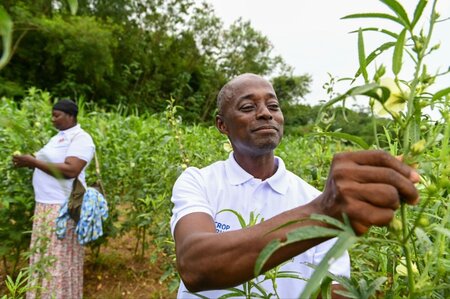
Taking Diversity out of the Genebank and into Farmers’ Fields in Ghana
16 Jan 2024
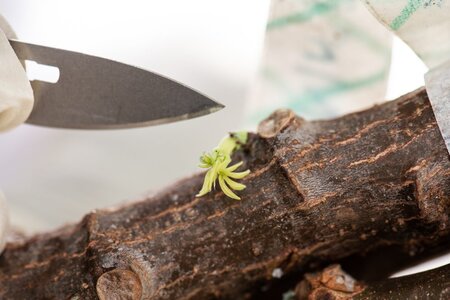
The Power of Healthy Seeds: How Genebanks are Helping to Build a Resilient Food System
12 May 2023