

World Vegetable Center
Location
Tainan City, Taiwan
Arusha, Tanzania
Overview
The Asian Vegetable Research and Development Center was founded in 1971 by the Asian Development Bank. The Center conducts research, builds networks, and carries out training and promotional activities to raise awareness of the importance of vegetables for better health and global poverty reduction. Its focus includes breeding improved vegetable lines, developing and promoting safe production practices, reducing postharvest losses, and enhancing the nutritional value of vegetables. The Center’s International Vegetable Genebank (IVG) in Taiwan holds over 71,000 accessions from 330 species across 155 countries—the world’s largest public collection of vegetable genetic resources. This collection features globally important vegetables such as tomatoes, onions, peppers, and cabbage, along with more than 10,000 accessions of traditional vegetables. The main genebank is complemented by the Center’s Africa Vegetable Genebank in Arusha, Tanzania, which holds nearly 10,000 accessions of vegetable species important to Africa’s food and nutrition security, most of which can be considered opportunity crops.
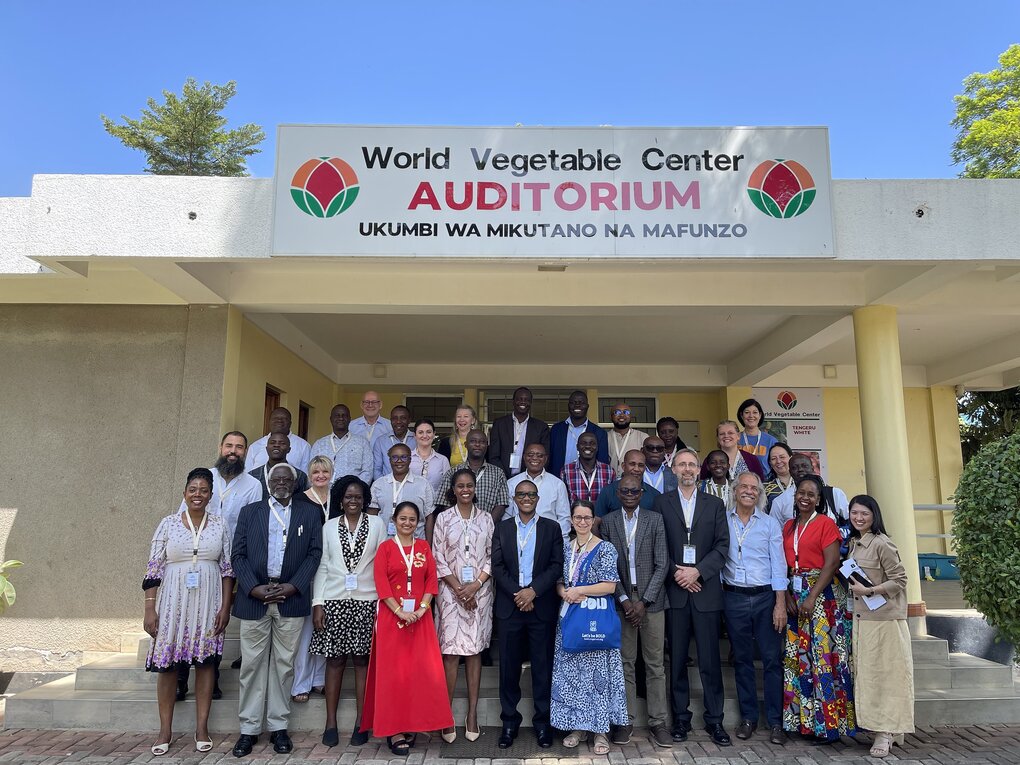
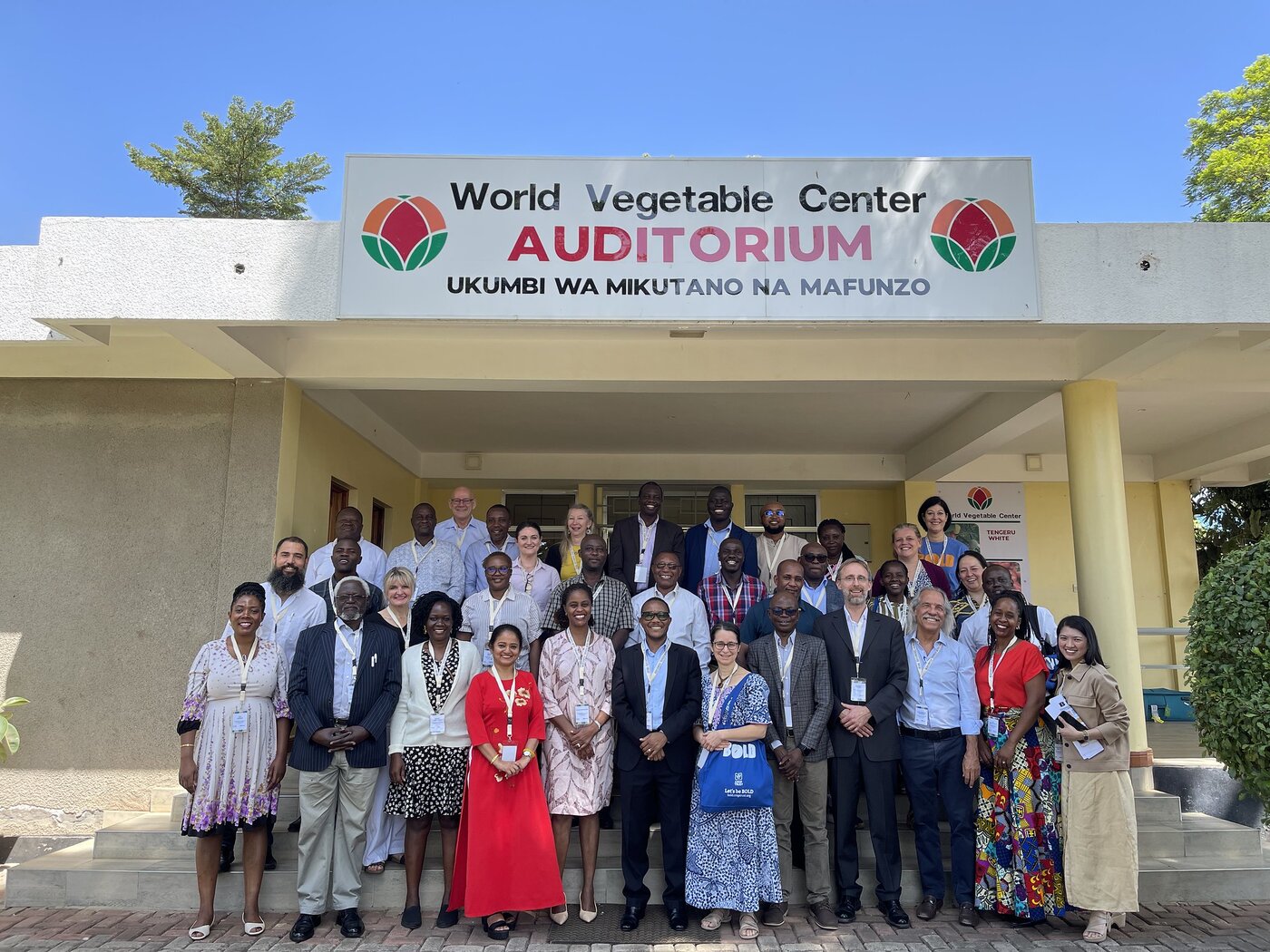
World Vegetable Center and Crop Trust partners outside the World Vegetable Center in Tanzania.
Mission
The World Vegetable Center’s mission is to deliver research and development to realize the potential of vegetables for healthier lives and more resilient livelihoods.