CGIAR: Cryo Vault Opens Its Doors to National Partners
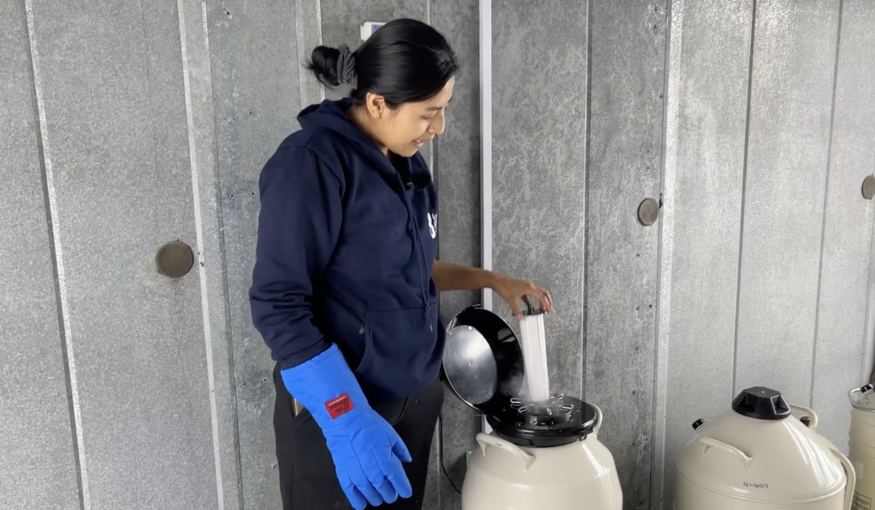
INIAP genebank's lab technician Raquel Andrango shows crops conserved in cryo at Ecuador's genebank and now safety duplicated at CIP's Cryo Vault. Photo: Marta Millere/Crop Trust
10 June 2026
The CGIAR has taken a major step forward in the long-term conservation of crops that cannot be stored as seed, as Ecuador becomes the first country to deposit material in the new Cryopreservation Vault at the International Potato Center (CIP) in Lima. In November 2025, Ecuador’s Instituto Nacional de Investigaciones Agropecuarias (INIAP) deposited 15 groundnut and four potato accessions during Crop Diversity Day, co-organized by the Crop Trust and CIP. INIAP has since expanded the deposit to 34 samples.
“Today is an historic and very happy day for the INIAP genebank as we deposit the first samples in the Cryo Vault. We will keep adding safety duplicates, including crops like Andean tubers. It’s challenging, but we have a responsibility to avoid genetic erosion in our region,” says Dr César Tapia, Plant Genetic Resources Coordinator at INIAP.
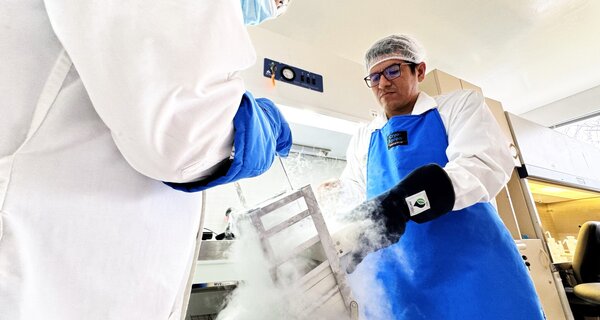
Cryopreservation stores tiny plant tissues in liquid nitrogen at -196°C, a secure backup for crops such as potato, sweetpotato, cassava, yam and banana. The diversity of these crops is often conserved in fields or in vitro collections. CIP’s new Cryo Vault, funded by GIZ, has capacity for CIP’s own collection of around 15,000 unique samples and 70,000 samples from national genebanks across Latin America.
INIAP is a key partner of the Crop Trust BOLD project, which supports national genebanks to strengthen conservation, data systems and access to crop diversity. The advance also reflects the wider CGIAR–Crop Trust partnership. CGIAR genebanks benefit from the Crop Trust’s Endowment Fund, helping ensure that vital crop collections are conserved and available for future food security.
Category: BOLD
Related Articles