A BOLD Attempt to Adapt Barley to the Most Remote Regions of Tunisia
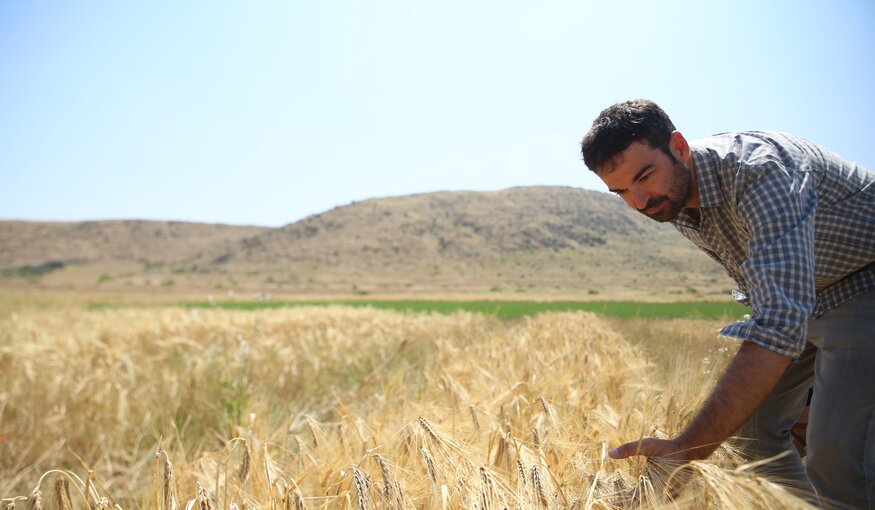
Dr Miguel Sanchez-Garcia, a barley breeder at the International Center for Agricultural Research in the Dry Areas (ICARDA), examines a barley trial in Tunisia. Photo: Luis Salazar/Crop Trust
-
 By Luis Salazar External Affairs Manager
5 December 2025
With temperatures rising and rainfall becoming scarcer in Tunisia, more farmers will turn to drought-tolerant barley to sustain both their households and their herds.
A hailstorm swept across Tunisia’s Kef region and wiped out an entire barley field only days before harvest. It only lasted half an hour and was the only storm for months in this drought-stricken region. But it was enough to destroy hundreds of hours of work by the staff of the Institut National de la Recherche Agronomique de Tunisie (INRAT). Work that will now need to be repeated if farmers are to remain resilient in the face of Tunisia’s progressively drier future.
Brawny Barley
Barley is a tough crop. It handles heat and drought better than most cereals and requires fewer inputs. “In North Africa, barley is essential,” says Dr Miguel Sanchez-Garcia, barley breeder at the International Center for Agricultural Research in the Dry Areas (ICARDA). “It feeds people. It feeds their animals. For smallholders, it’s often the crop that decides whether it’s a bad year or a disastrous one."
“If you do not have enough feed for your sheep or cows, you might lose everything,” he says. “And when you depend on your livestock for survival, this might lead to worst-case scenarios like sending your oldest child to fend for themselves in the city because you can no longer care for the whole family.”
Over the last decade, Tunisia has endured a series of severe droughts. In 2023, conditions were so extreme that INRAT lost nearly all of its barley breeding field trials. “In 2024, ICARDA sent them more than 1,200 potential new barley varieties to help rebuild their program,” says Miguel.
Although 2025 has been slightly better, especially in the borderlands near Algeria, farmers are still struggling with a lack of water and food insecurity. In the face of this new normal, new drought-tolerant barley varieties are needed now more than ever before. Hail or no hail.
Climate-proofing Barley
To help farmers adapt, ICARDA scientists are collaborating with the Crop Trust’s Biodiversity for Opportunities, Livelihoods, and Development (BOLD) project to develop improved, resilient barleys.
“It’s not easy getting drought tolerance,” Miguel says. “It takes time, resources and persistence.” But his work is beginning to pay off and the seeds of sturdier barley will soon reach farmers’ fields.
Through BOLD, Miguel shared promising drought-tolerant barley varieties with breeders in Senegal, Nigeria, Ethiopia and Tunisia, where they are put to the test by researchers, including INRAT and farmers.
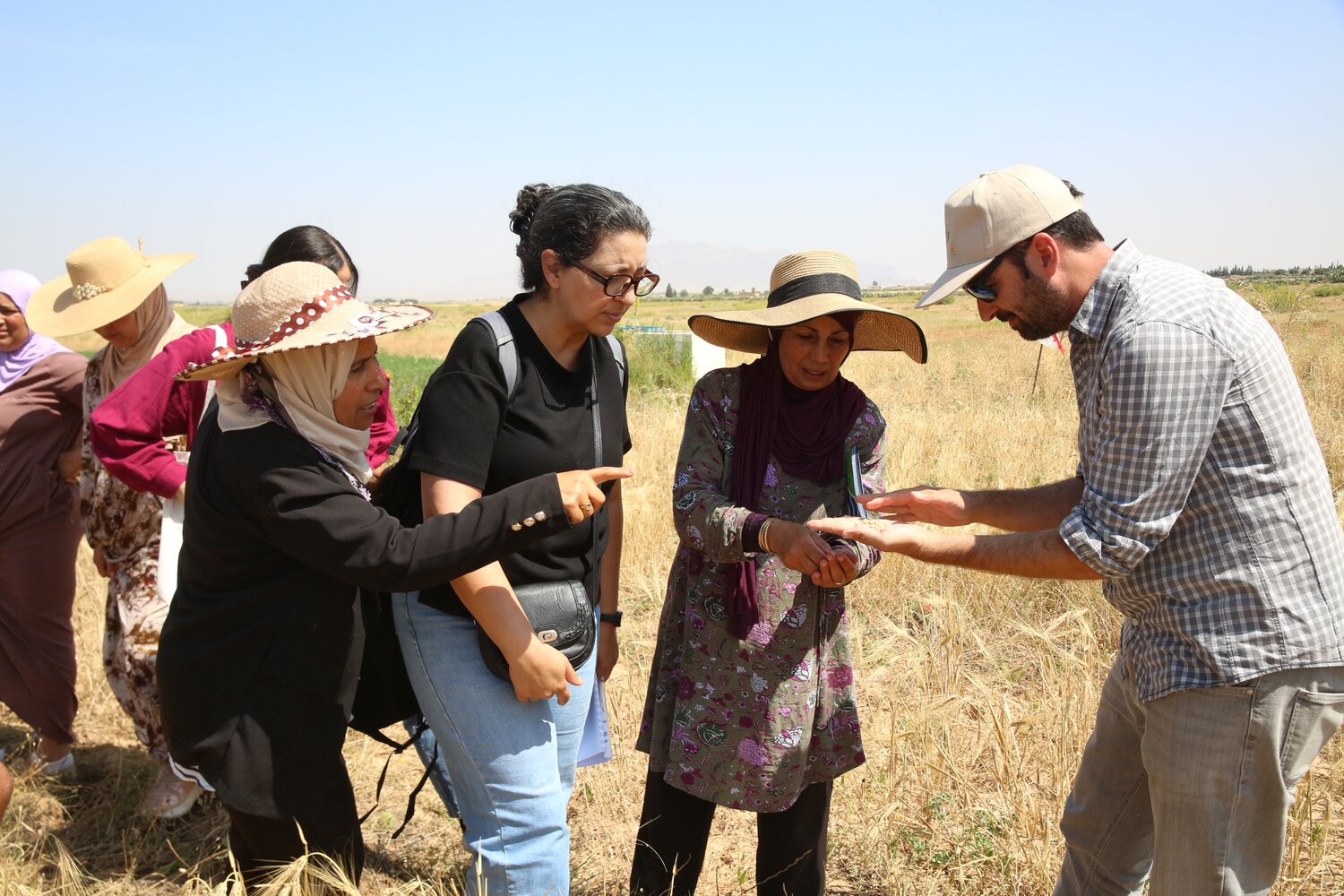
In the Kalaat Senan region of Tunisia, barley breeders and farmers visit an on-farm trial site where drought-tolerant barley is being grown. Photo: Luis Salazar/Crop Trust
Barley Country
Up in the Kalaat Senan region, an hour away from Kef, the Groupement de Développement Agricole (GDA) Al Hayet, a cooperative of women farmers, is testing some of Miguel's improved barleys. This includes plants derived from wild barley relatives developed with BOLD project support.
“This is barley country,” says Hajer Ben Ghanem, INRAT's National Barley Breeding Program Coordinator, who has been working closely with these women. “Barley feeds their livestock. It feeds families. It’s central to their lives.”
According to the President of the Cooperative, Leila Omrani, barley is preferred over wheat in this region. It can grow in poor soils, needs less water and fertilizer and yields valuable straw. The people here eat it in all kinds of ways – in couscous, bread and even soups (Chorba mermez) that they consume during Ramadan. The biggest challenge, she says, is access to good seed.
According to Lela, their 2023's harvest was catastrophic. The drought and high temperatures were worse than anything they had seen before. So when offered the chance to trial new, hopefully better, varieties, the women unanimously said yes.
The trial plot is near Hakima Ben Haj Nssib's house. Smaller than expected, it is all the land they could spare. Miguel sees two of his BOLD varieties are thriving. “They will likely produce more straw than the local variety,” he says. “But the real test is the harvest. The women will decide whether these materials are worth adopting.”
“Our hope,” says Hajer, “is that they find a variety that works well in their lands. And more importantly, one that they would be willing to register and multiply themselves – to have enough seed every year for their use and to sell to other farmers in this region. That’s empowerment.”
Close to Release
Near the city of Beja – praised by the 12th-century geographer Al-Idrisi as a breadbasket of the Maghreb – the land still yields plentiful wheat and barley. At the Centre Régional de Recherches en Grandes Cultures (CRRGC), Miguel learns that one of his barley varieties has been submitted for release and inclusion in Tunisia’s National Variety Registration Catalog.
“This means it’s just one or two years away from being released. We’re almost there,” he explains excitedly.
"This variety is derived from an old Syrian landrace and was sent to INRAT in 2021. It is known as Ghanja – brunette – for its dark spike, which many farmers believe produces better feed. “It will now be tested in different parts of the country and evaluated for yield, disease-resistance and nutritional quality,” Miguel says.
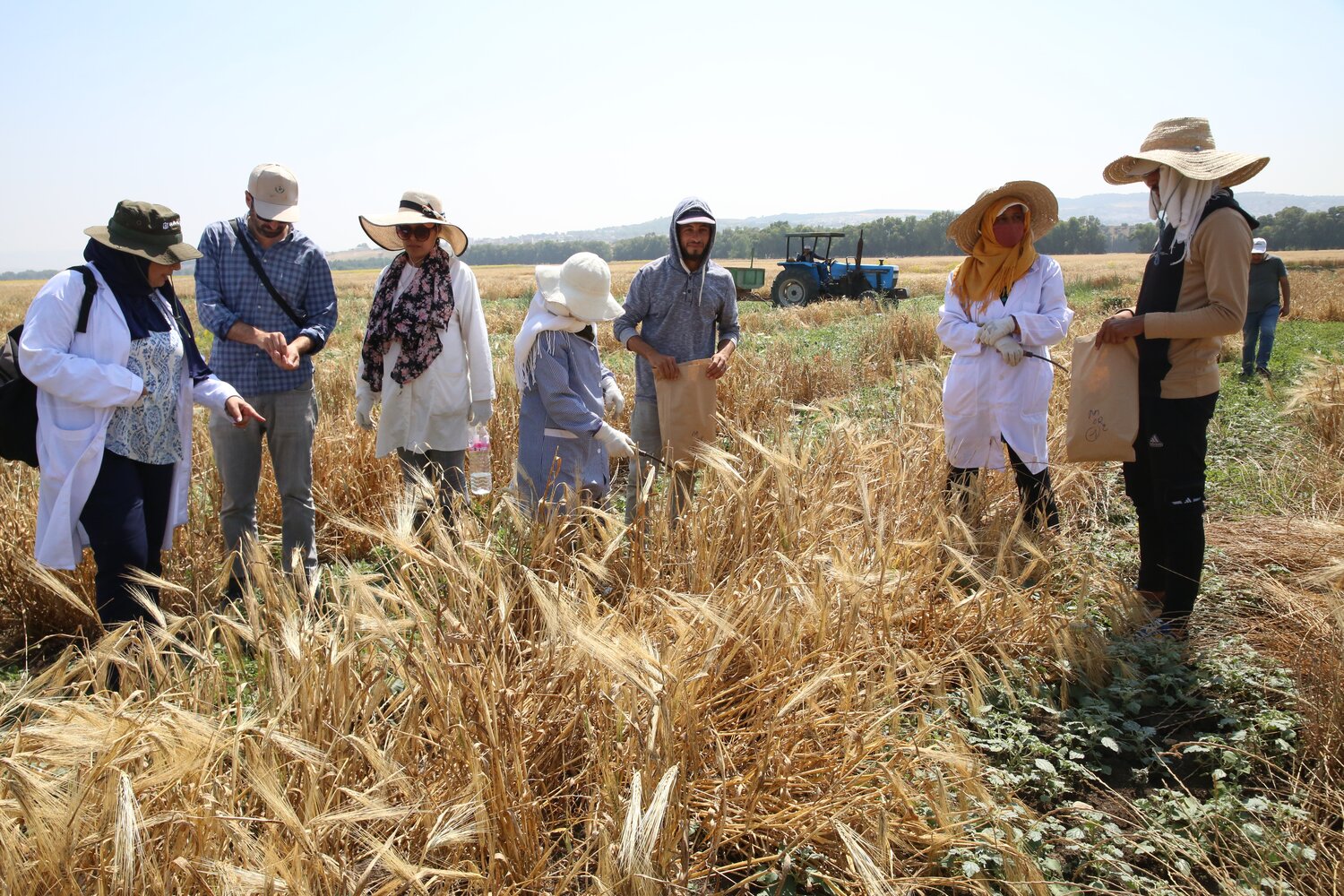
At the Centre Régional de Recherches en Grandes Cultures (CRRGC) in Béja, Tunisia, ICARDA’s barley breeder Miguel Sanchez-Garcia (second from left) meets Sonia Mansouri (far L), barley breeder at INRAT, during the harvest of a trial that included local barleys and varieties shared by ICARDA. Photo: Luis Salazar/Crop Trust
Convincing farmers to switch varieties is never easy. “They trust what they know,” says Hajer. “Men seek a variety that can deliver both grain and biomass. Almost 90% of their harvest will be destined to feed their animals. Women care more about taste and grain quality, because they will use it to prepare soups and couscous.”
“Farmer participation is key,” says Dr Benjamin Kilian, the BOLD Project Coordinator at the Crop Trust. “If they help evaluate and choose the varieties that will be released, the chances of adoption go way up.”
A Barley Future
Tunisia produces only 30% of the barley it consumes. The rest is imported – a heavy economic burden for a country already strained by drought. But as wheat becomes harder to grow in dry regions, barley is gaining importance. “We will see more and more farmers switching to barley in the coming years,” says Hajer.
“Barley is not just a backup, it’s the future,” says Benjamin. “The Crop Trust and BOLD will continue supporting Miguel and the network of national breeders working to improve and evaluate new barleys. We will also continue engaging farmers to get the right seeds in their hands.”
For farmers in Tunisia, this means hope for the future.
Categories: For The Press, For Partners, BOLD, Barley, Food Security, Sustainable Agriculture
Related Articles