Arthur E. Watkins: The Wheat Collector Who Saved Diversity for the Future
-
 By David Henry Contributor
4 August 2026
In this edition of our Seed Heroes series, we celebrate Arthur E. Watkins, the Cambridge botanist who collected wheat diversity before much of it disappeared from farmers’ fields. A century later, scientists are returning to his collection for traits modern wheat may need next.
Arthur E. Watkins collected wheat before scientists had the tools to fully understand what he was protecting.
In the 1920s and 1930s, the Cambridge botanist assembled several thousand samples of bread and pasta wheat varieties from 32 countries. Many were landraces – locally adapted wheat varieties shaped over generations by farmers, soils, climates and tastes. As modern plant breeding accelerated, Watkins understood that progress also carried a risk – the loss of genetic diversity that had sustained agriculture for centuries.
Today, 1,291 landraces survive from his collection. They are held and maintained at the John Innes Centre (JIC) in Norwich, in the U.K.. Now they are being studied with tools that Arthur Watkins could not have imagined.
For many of them, the Watkins collection is the only place these seed samples survive, as they have disappeared from farmers’ fields and other collections. Researchers studying these landraces are finding traits that can deliver benefits – efficient nitrogen use, resistance to slugs and resilience against devastating diseases such as wheat blast and yellow rust.
A collection that once looked like agricultural history now looks more like rediscovered treasure. This treasure, kept secure by JIC, is available to the world’s wheat community through the UKRI-BBSRC National Capability genebank.
“Only in the past decade have we had the technology to fully investigate the genetic potential of the entire Watkins collection,” says Dr Simon Griffiths, lead researcher at the Centre. “The implications for global food security are enormous as we look to adapt to the challenges of climate change.”
Ancient Crop with Modern Significance
Wheat has been cultivated for over 10,000 years. It is one of the four most consumed crops globally, along with maize, soybeans and rice. Originating in the Fertile Crescent region of the Middle East, the grain today provides about one-fifth of human calorie intake on average.
In the early 20th century, the emerging field of genetics began to feed into modern plant breeding. Watkins worried that this would increasingly displace landraces – the locally adapted traditional varieties that farmers had been growing for millennia. It would also have a devastating impact on crop diversity, particularly wheat.
He realized there may be future value in the genes that were thought to be of little use as scientists began to develop new wheat varieties. This genetic diversity was being erased due to dominant strains coming from prebreeding. Watkins could not have known at the time, but this loss of diversity would limit our ability to respond to modern challenges like climate change impacts and rapid population growth. He just knew this diversity is valuable. And he took action.
“He was well ahead of his time,” Griffiths says. “Even back then, Watkins already knew that the genetic diversity of wheat was disappearing and that something had to be done to stop it.”
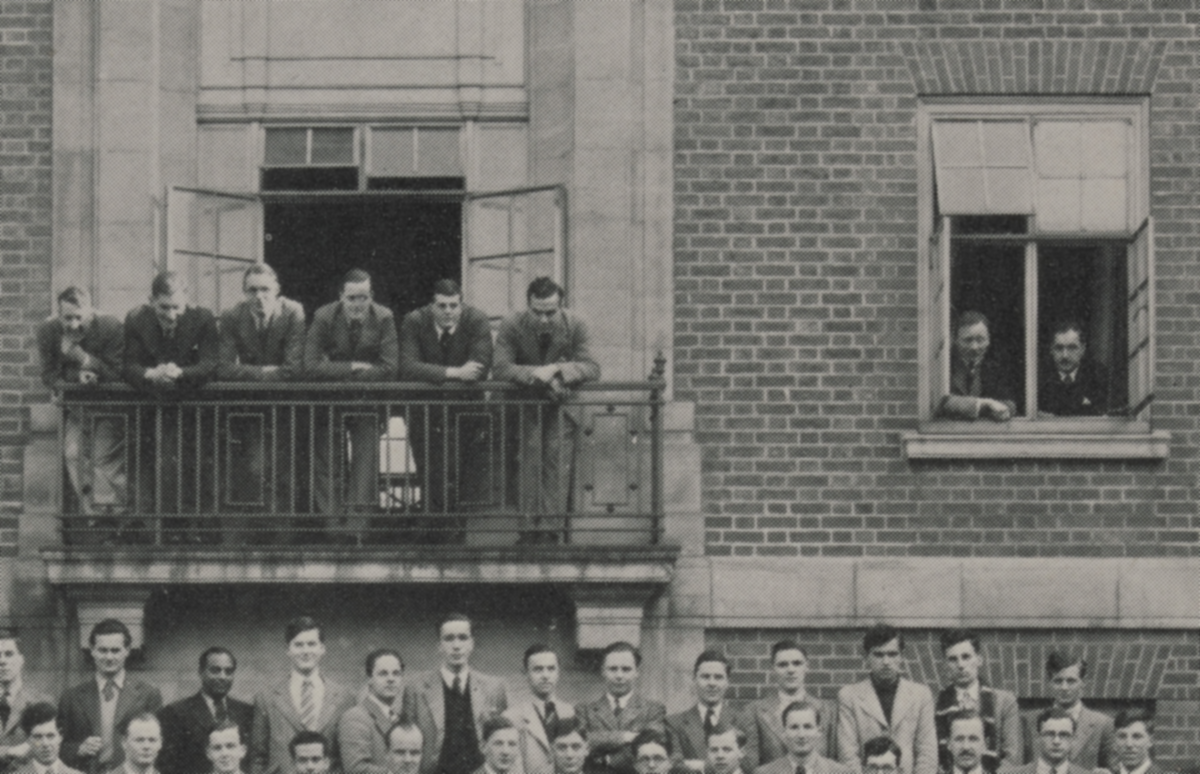
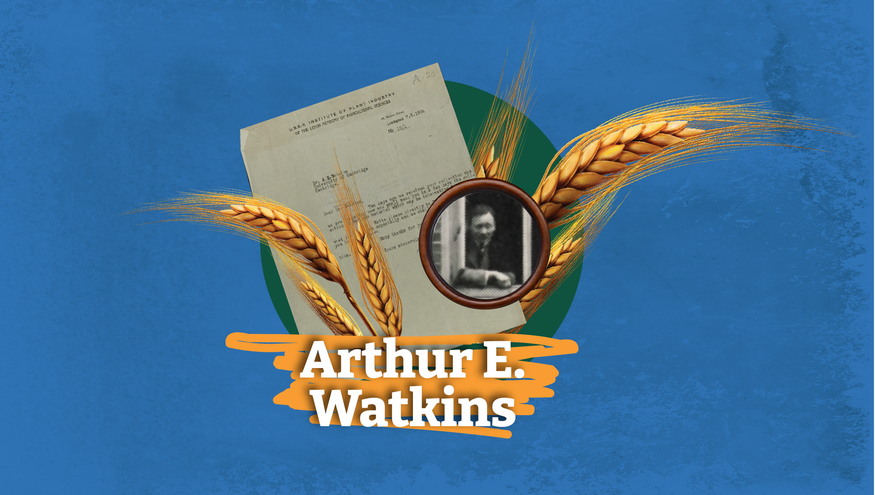
Watkins left in the right window at Cambridge. John Innes Historic Collections. Courtesy of the John Innes Foundation.
Playing Musical Chairs with Crop Diversity
The loss of crop diversity is like an agricultural version of musical chairs. As each plant variety vanishes, there are less options to find the traits you might need. Over the past century, Watkins and generations of plant scientists collected crop varieties to ensure we have all the genetic options available to adapt our food systems. This valuable diversity is conserved in the global system of genebanks.
The Watkins collection, much of which was lost during World War II when resources for its upkeep ran short, has only recently revealed the full extent of its value. Scientists in Shenzhen, China, and at the John Innes Center collaborated to decode the data generated from the sequencing of wheat’s genome.
They found that modern cultivars draw mainly on just two of the seven ancestral groups, which represents only about 40% of the diversity in landraces. The remaining genetic variation represents an impressive, largely untapped resource for breeding resilient crops and strengthening sustainable food security.
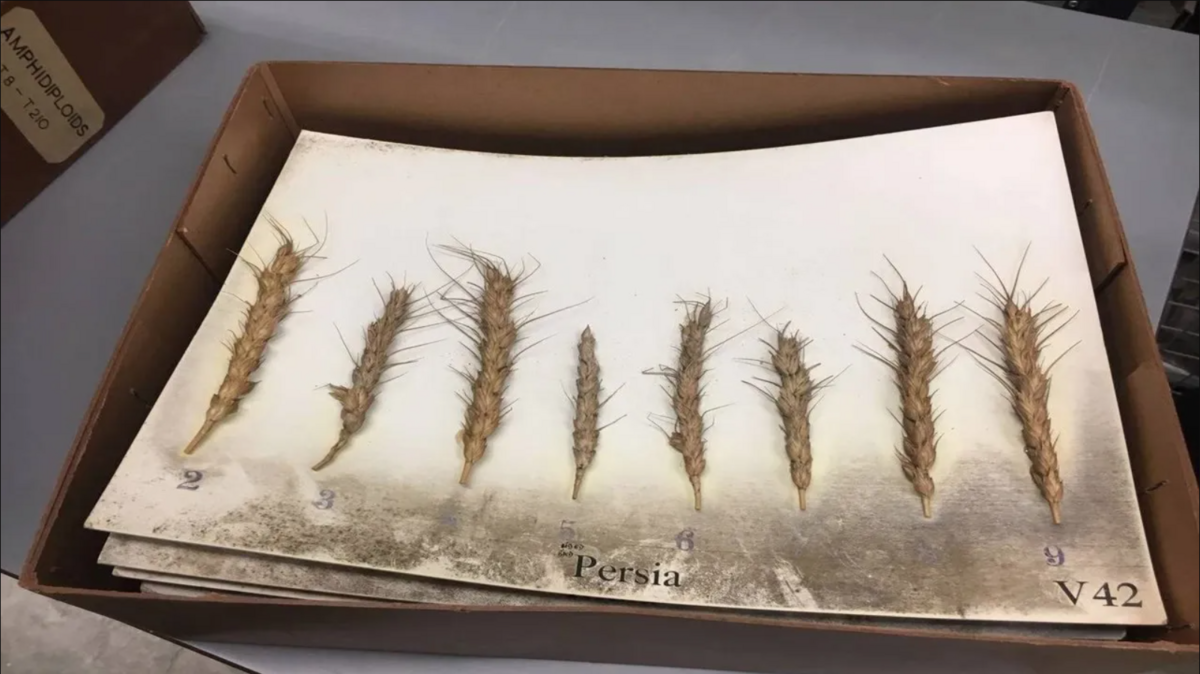
Wheat spikes collected by Watkins. John Innes Historic Collections. Courtesy of the John Innes Foundation.
From Soldier to Agriculturalist
Arthur Ernest Watkins was born in London on 23 April 1898 and attended Latymer Upper School, which remains in operation today. He later won a scholarship to study mathematics and natural sciences at St John’s College, Cambridge, but could not take up his place until 1919 because of military service. Commissioned as a second lieutenant, he served in France from Christmas 1917 until the end of World War I, according to Genetics Society Magazine.
Watkins’s interest in agriculture took shape during his military service. In the months after the war, he was assigned as an assistant agricultural officer, working with French farmers to secure food supplies for troops still stationed in the country, according to the magazine.
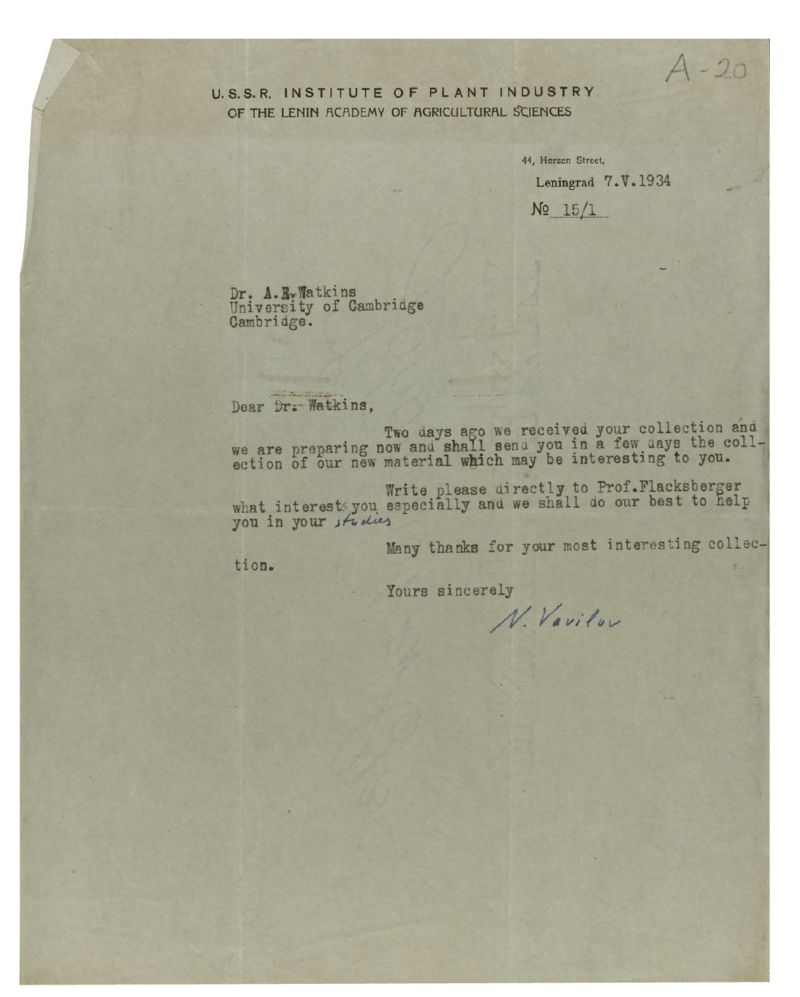
Letter from the Arthur Watkins Collection, AW/2/1/5, John Innes Historic Collections. Courtesy of the John Innes Foundation.
Quiet and reserved by nature, Watkins graduated from Cambridge with a diploma in agriculture in 1922 and remained at the university for the rest of his career. He joined the plant breeding department, where he gathered wheat landraces at the same time as fellow British collector John Percival. They were determined to preserve the crop diversity that was already starting to disappear.
During this period, Watkins exchanged genetic material with fellow scientists around the world, including Nikolai Vavilov in Russia, Shen Zonghan in China and Otto Frankel in New Zealand. The original correspondence, along with many other letters, is preserved in the archives of the John Innes Centre. Anyone seeking access to the archives should contact comms@jic.ac.uk.
He later lectured in cytology, the study of cells, in Cambridge’s Faculty of Agriculture and served on the committee of the Genetical Society. He retired in 1948, aged 50.
Arthur E. Watkins saw that the future of wheat may indeed depend on what the modern world was leaving behind. Nearly a century later, the landraces he gathered are revealing genetic possibilities that can help breeders adapt one of our most important crops for an uncertain future.
The Crop Trust salutes Arthur E. Watkins, whose work to collect and conserve wheat diversity has become increasingly important over time. Nearly a century after he assembled his remarkable collection, scientists are uncovering genetic traits that may hold the key to unlocking more resilient wheat for a changing world. His legacy earns him a rightful place among the Seed Heroes whose vision continues to influence food security today.
Timeline
1898: Born on 23 April in London
1917-18: Active military service in France during World War I
1918-19: Postwar army service in France as assistant agricultural officer
1922: Earns diploma in agriculture from Cambridge University
1923: Marries Amy Marjorie Blanch
1924: Joins the Plant Breeding Institute at Cambridge University
1931: Appointed lecturer of cytology in the Faculty of Agriculture
1941: His wife dies
1944: His son, John Halse Watkins, is killed in the D-Day landings
1948: Retires at age 50
1967: Dies on 3 January
Categories: For Educators, For Students
Related Articles