
ICRISAT Secures Long-term Crop Trust Funding for Key Legume Collections
12 September 2026
NEW DELHI, INDIA / BONN, GERMANY – 12 September 2026 – ICRISAT has secured long-term funding from the Crop Trust to conserve crop diversity that helps breeders develop higher-yielding, more resilient crops. The agreement will support essential work at its genebank in India, keeping more than 50,000 samples of groundnut, chickpea and pigeonpea safe and available for research and crop improvement.
The value of crop diversity is already evident in India. Breeders used groundnut diversity to develop GPBD 4, an early-maturing, high-yielding variety resistant to two damaging fungal diseases – late leaf spot and rust. A study estimated its economic benefits at ₹1,760 crore (INR 17.6 billion or around US$185 million) between 2006 and 2022. It also provided disease resistance used in at least five other varieties released.
The agreement comes as India pursues greater self-reliance in pulses and edible oils through national missions that promote improved crop varieties and quality seeds to boost production. Conserving the diversity of crops such as chickpea, pigeonpea and groundnut helps maintain the resources breeders need to develop those varieties.
“An answer to a farmer’s problem may come from another continent, or from a wild relative never cultivated,” said Dr Himanshu Pathak, Director General of ICRISAT. “We conserve that diversity, understand what it offers and make it available to people developing better crops. The Crop Trust’s funding helps sustain the work behind those discoveries.”
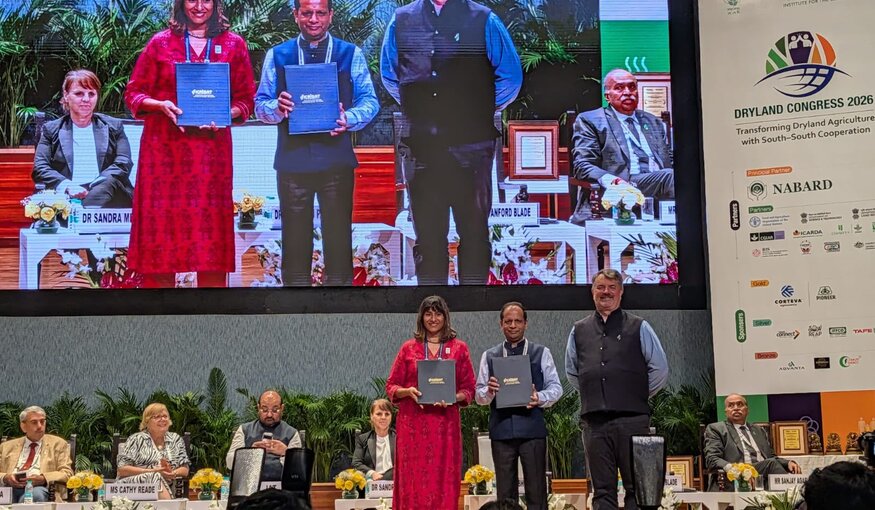
Dr Pathak and Dr Sarada Krishnan, Crop Trust Director of Science and Programs, signed the agreement on 12 September at the Dryland Congress 2026 in New Delhi.
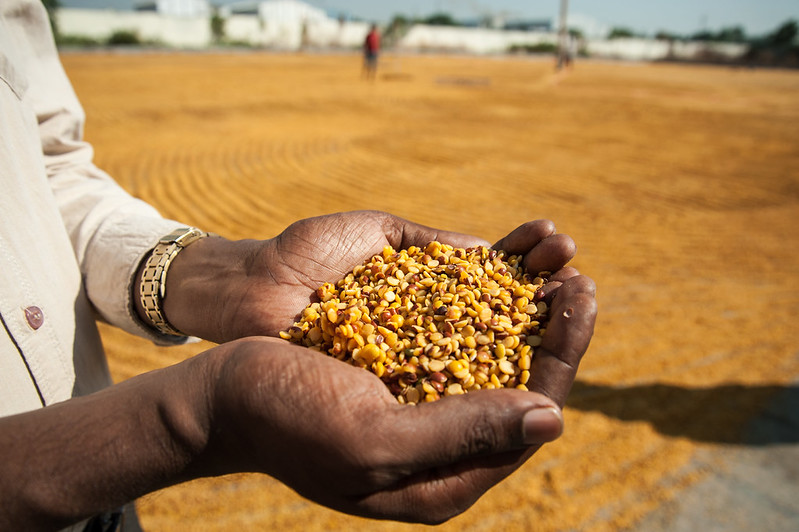
Yashi Proteins pigeonpea processing mill. Photo: Michael Major/Crop Trust
Diversity Conserved in India, Benefits Shared Worldwide
ICRISAT’s legume collections have helped develop 88 crop varieties – 38 chickpea, 33 groundnut and 17 pigeonpea varieties.
Their impact extends far beyond India. One groundnut sample from India, conserved and shared by ICRISAT, helped breeders develop varieties grown across Africa, including Baka in Malawi, Serenut 4T in Uganda, Nematil in Mozambique and Msandile in Zambia. Its resistance to the destructive rosette virus made it valuable to breeders thousands of kilometres away.
Keeping this crop diversity available requires continuous care at the ICRISAT genebank. The funding will support seed testing, growing plants to replenish seed stocks, maintaining secure backups and preparing samples for distribution. ICRISAT shares seeds with the global community for research, breeding and teaching at no cost under the International Treaty on Plant Genetic Resources for Food and Agriculture, which provides a framework for their use and exchange. As of December 2025, ICRISAT’s genebank supplied over 1.72 million seed samples to 151 countries. This means that 90% of its entire collection has been distributed at least once.
Working with partners, ICRISAT will also acquire traditional varieties and wild relatives missing from its legume collections, expanding the diversity available for future crop improvement.
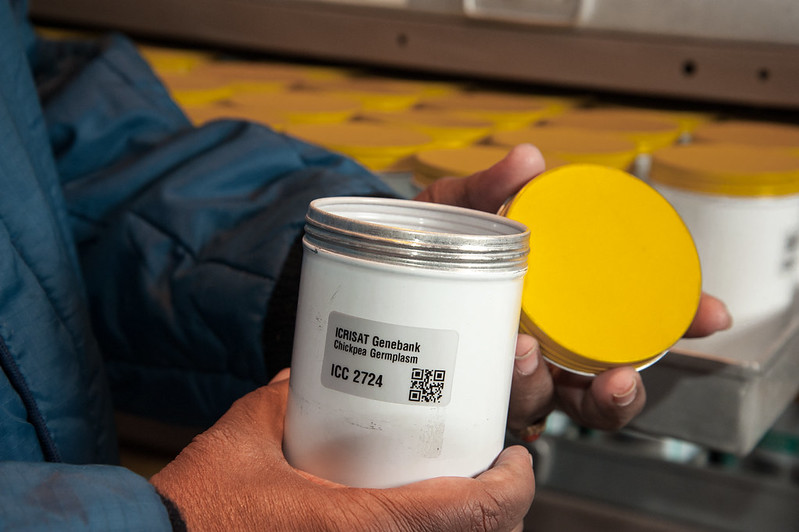
Chickpea accession in ICRISAT genebank. Photo: Michael Major/Crop Trust
Reliable Funding for the Next Generation of Crops
The new agreement replaces an earlier funding arrangement, providing more robust support through the Crop Trust Endowment Fund. ICRISAT joins a growing group of genebanks that have met the Crop Trust’s performance targets and genebank standards established by the Food and Agriculture Organization of the United Nations (FAO). This enhanced support gives its genebank team greater certainty to plan ahead and sustain essential conservation work.
“A seed conserved today can help breeders respond to a drought or disease decades from now,” said Dr Stefan Schmitz, Executive Director of the Crop Trust.
“Genebanks need expertise and reliable resources to deliver on that promise. We support genebanks with clear standards and accountability so our Endowment Fund support delivers lasting value for food security.”
The partnership dates back to 2007, when the Crop Trust agreed to support sorghum and pearl millet conservation, expanding to chickpea in 2011. The new funding complements CGIAR support for the ICRISAT genebank.
With dependable resources to conserve and share its collections, ICRISAT can keep crop diversity available to the researchers and breeders turning it into more resilient and productive crops for farmers in India and around the world.
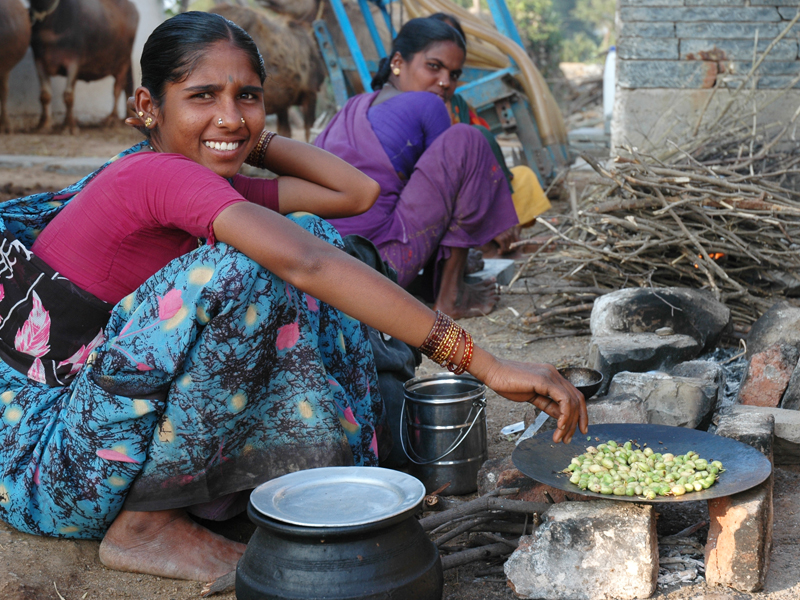
Indian women preparing fresh (green, immature) chickpeas for evening snacks in Guntur District of Andhra Pradesh state, India. Photo: ICRISAT/L. Vidyasagar
About the Crop Trust
The Crop Trust is an international organization working to conserve crop diversity and thus protect global food and nutrition security. At the core of Crop Trust is an endowment fund dedicated to providing guaranteed long-term financial support to key genebanks worldwide. The Crop Trust supports the Svalbard Global Seed Vault and coordinates large-scale projects worldwide to secure crop diversity and make it available for use, globally forever and for the benefit of everyone. The Crop Trust is recognized as an essential element of the funding strategy of the International Treaty on Plant Genetic Resources for Food and Agriculture. Learn more at www.croptrust.org
About ICRISAT
The International Crops Research Institute for the Semi-Arid Tropics (ICRISAT) is a CGIAR research center working to reduce poverty, hunger, malnutrition and environmental degradation in the drylands of Africa and Asia. Its genebank network in India and Africa conserves and makes available the diversity of 11 dryland crops and their wild relatives for research, breeding and training worldwide. Learn more at https://www.icrisat.org
Media contacts:
Crop Trust media@croptrust.org
ICRISAT info.comms@icrisat.org
Categories: For The Press, For Policymakers, Press Releases