
Crop Trust Leverages Google.org Support for Digital Innovation in Food Security
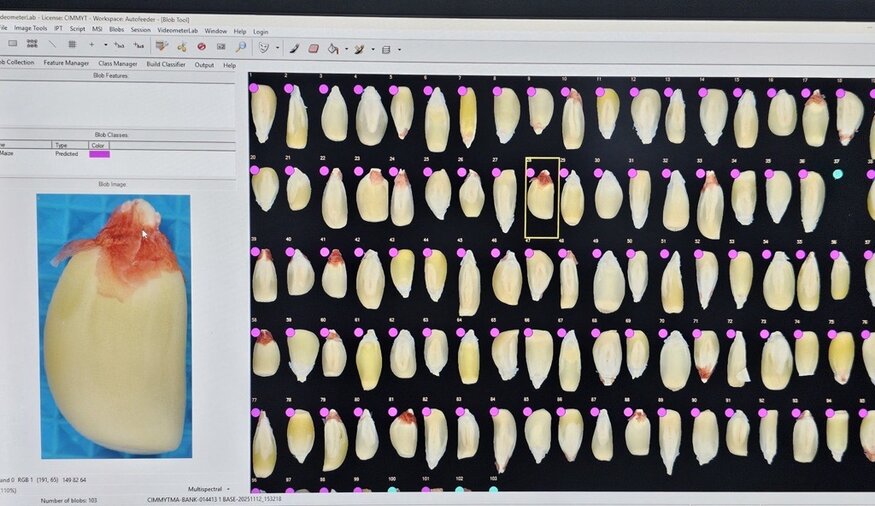
Improved data management and availability help researchers, plant breeders and even farmers locate the crop diversity they need. Photo: Marise Borja
5 February 2026
Bonn, Germany – 5 February 2026 – The Crop Trust has announced the launch of Securing Our Seeds (SOS): Digital Innovation for Global Crop Diversity Conservation, a transformative project that will define how the world monitors, protects, and uses crop diversity — the foundation of food security. This work is funded through a USD 2 million contribution from Google.org’s AI Collaborative: Food Security.
The Crop Trust is an international organization solely dedicated to building and supporting a global system of genebanks to conserve and make available the diversity of agricultural crops. Some 850+ facilities worldwide collectively safeguard millions of seed and other plant samples. These are essential for breeding crops that can withstand heat, drought, pests and diseases, as well as providing better nutrition and income opportunities. Yet genebanks face major challenges. Inadequate management and use of the available data leave much of this diversity underused or at risk. The SOS project will address these challenges with two initiatives designed to modernize the global genebank system.
“Crop diversity is disappearing – silently – just when the world needs it most,” said Dr Stefan Schmitz, Executive Director of the Crop Trust. “With Google.org’s support, we are taking critical steps to protect the crop diversity, both in genebanks and in the field, that underpins our future food supply.”
Digitizing Genebanks
The SOS project will support ten national genebanks in the Global South to become smart data hubs by:
- Expanding the adoption of the open-source GRIN-Global Community Edition (GGCE) genebank information management software
- Integrating these genebank collections with Genesys, the world’s largest portal to share information on the crop diversity conserved in genebanks
- Strengthening digital skills in the global genebank system with training in information management.
Improved data management and availability will help researchers, plant breeders and even farmers locate the crop diversity they need. And it will help genebanks work together more effectively and efficiently.
“Without reliable data, promising diversity will remain hidden,” Schmitz said. “Digitizing collections unlocks the full potential of genebanks to enable climate adaptation and solutions to other global challenges. Good data is crucial for global food security.”
Detecting Risks to Diversity
The SOS project will also explore how artificial intelligence and other approaches can aid in identifying and tracking threats to crop diversity over space and time. Today, no global system exists to monitor where crop diversity is disappearing from farms and wild ecosystems – or the reasons why such erosion of agricultural biodiversity is happening.
The Crop Trust will assess the feasibility of an early warning system that uses AI and diverse datasets to identify and visualize risks of loss of crop diversity on an interactive map. Genebanks can then respond before valuable and irreplaceable diversity is gone forever.
“Proactive intervention using AI could take crop conservation to a whole new level,” said Dr Sarada Krishnan, Director of Programs at the Crop Trust. “This partnership opens a new chapter in adapting agriculture to climate change.”
Today’s Tech for Tomorrow’s Seeds
Through this project, the Crop Trust, with support from Google.org, will build a more resilient, digitally connected global genebank system. We are using technology to ensure crop diversity is well-documented, well-protected and effectively used.
Google.org’s support reflects an ongoing commitment to harnessing AI for a more food-secure future by strengthening the institutions that safeguard one of the world’s most valuable agricultural resources – crop diversity.
“Artificial intelligence can give humanity a much-needed boost in the fight against food insecurity,” said Alex Diaz, Google.org’s Head of AI for Social Good. “The AI Collaborative for Food Security will enhance the resilience of global food systems and improve food security for the world’s most vulnerable populations by leveraging innovative AI technologies, collaborative research and data-sharing, and coordinated action to improve the pace and efficacy of hunger prediction and intervention. This critical work, led by Crop Trust, will better connect the global genebank system, enabling the conservation and use of the seeds we need to future-proof our food systems. Google.org is proud to support this global effort.”
The Crop Trust is proud to join the AI Collaborative and partner with a community of leading organizations to leverage new technologies in the effort to secure the future of food for everyone, forever.
~~~
About the Crop Trust
The Crop Trust is an international organization working to conserve crop diversity, which protects global food and nutrition security. At the core of the Crop Trust is an endowment fund dedicated to providing guaranteed long-term financial support to key genebanks worldwide. The Crop Trust supports the Svalbard Global Seed Vault and coordinates large-scale projects worldwide to secure crop diversity and make it available for use, globally forever and for the benefit of everyone. The Crop Trust is recognized as an essential element of the funding strategy of the International Treaty on Plant Genetic Resources for Food and Agriculture. Learn more at www.croptrust.org
About the Google.org AI Collaborative: Food Security
AI Collaboratives are a funding approach designed to unite public, private, and nonprofit organizations and researchers to create AI-powered solutions for urgent challenges. Supported by Google.org, the AI Collaborative: Food Security is rooted in the idea that AI’s potential lies not just in the technology itself, but also in partnerships that make its responsible application possible.
Categories: Press Releases, Securing Our Seeds