Logotonu Meleisea Waqainabete: Guardian of Crop Diversity in the Pacific Islands
-
 By David Henry Contributor
11 February 2026
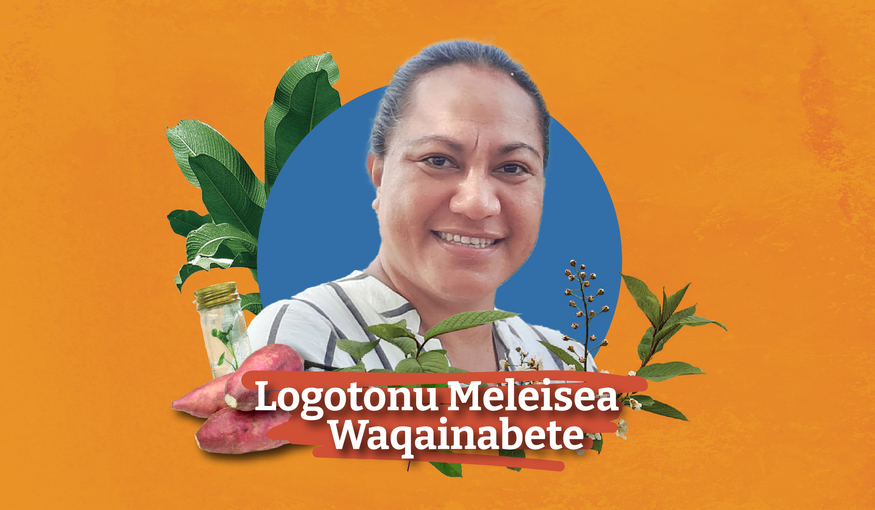
The latest in our Seed Heroes series celebrates genebank manager Logotonu Meleisea Waqainabete for her work protecting crop diversity and supporting food security at the Centre for Pacific Crops and Trees (CePaCT) in Fiji.
In Samoan mythology, people first learned to cook food after the hero Ti’i-Ti’i brought fire to humans by defeating Mafuie, the god of earthquakes and fire. For Samoans like Logotonu Meleisea Waqainabete, these myths reflect a deeper truth – natural disasters and food security have always been closely linked.
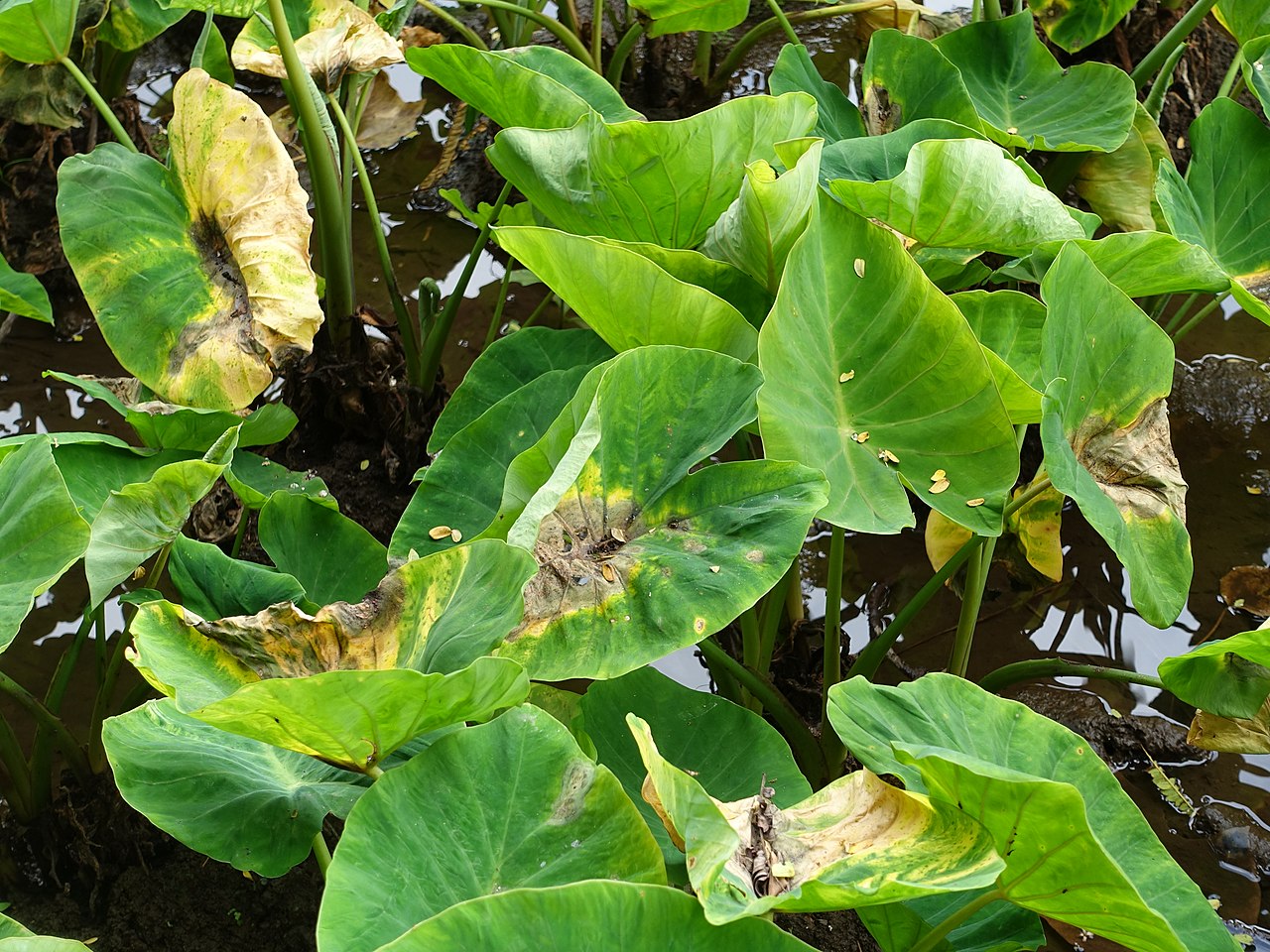
Taro leaf blight on a taro plant. Photo: Scot Nelson
Pacific Island countries have always faced cyclones, earthquakes, and tsunamis. These disasters have killed people, destroyed homes and wiped out crops. In 1993, Samoa faced a different sort of threat when taro leaf blight struck. Within just six months, this fungal disease nearly destroyed the country’s taro crop, putting food supplies, exports and indeed the entire national economy at risk.
Working at CePaCT in Suva, Fiji, Logotonu understands how this history of disasters led to the creation of a regional backup for the diversity of key crops. CePaCT now safeguards collections of taro, yam, sweetpotato, banana, cassava and breadfruit, among others.
“Taro is our main staple in Samoa,” she says. “When the taro plantations were wiped out in 1993, we knew we had to do something so it wouldn’t happen again.”
February’s Seed Hero oversees a collection of crops that cannot be stored as seeds, like happens in most other genebanks. Instead, they are conserved as living plantlets in glass test tubes and jars kept under artificial light in clean, sterile conditions. This is known as in vitro conservation, vitrum being Latin for glass.
Plant Protector
Logotonu Meleisea Waqainabete, known to all as Logo (pronounced Longo), is one of the Pacific region’s most committed protectors of crop diversity. She knows every variety stored in the CePaCT genebank. Over the years, she has cared for thousands of small tubes holding plant samples from across the Pacific. Her work helps ensure these crops are available to breeders and farmers around the world. With support from the Crop Trust, CePaCT has strengthened how it shares plant material with farmers and breeders across the Pacific and beyond, helping communities adapt their crops to climate and other challenges.
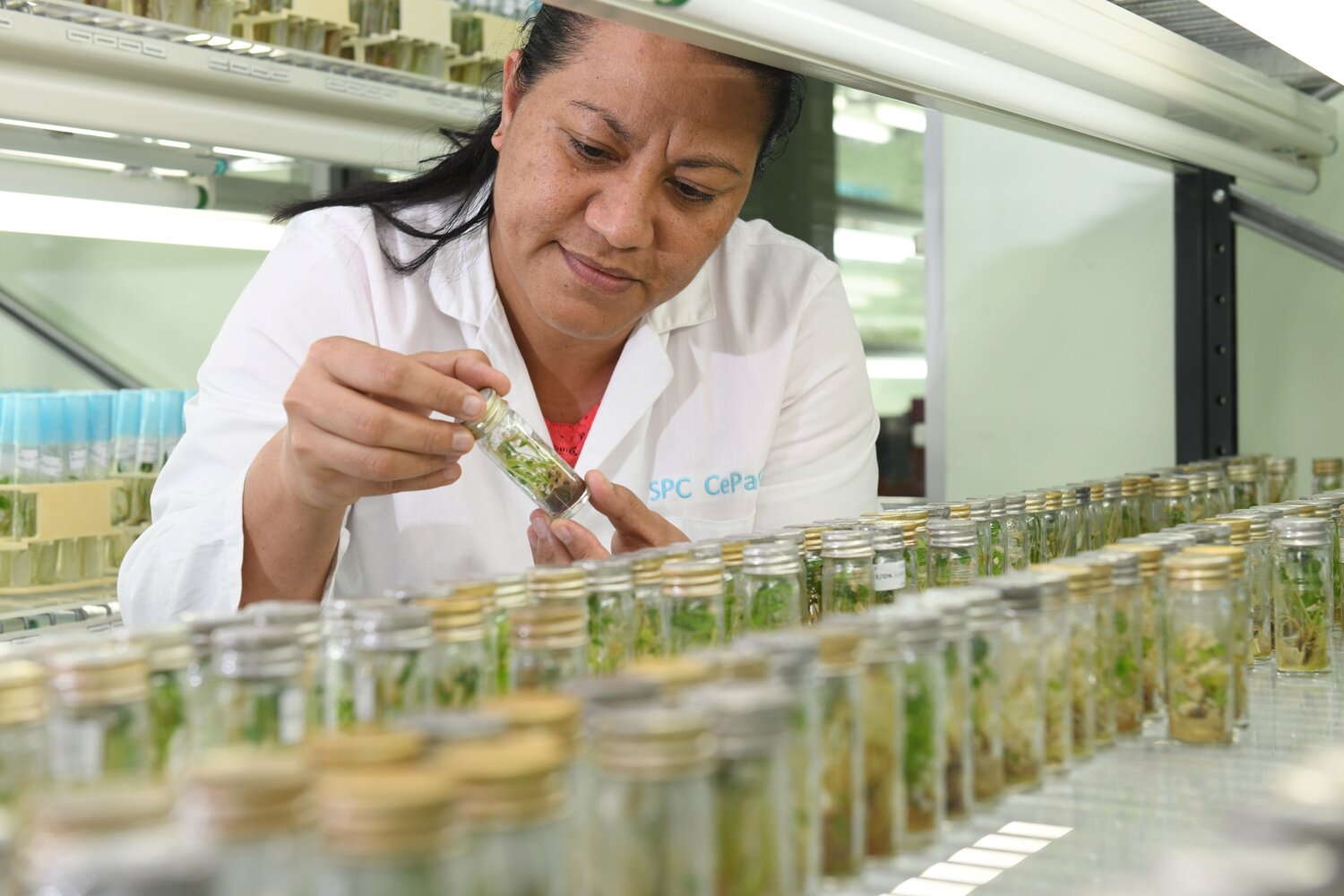
Logo at the CePaCT genebank. Photo: Neil Palmer/Crop Trust
“In Pacific countries, there is a big emphasis on fish – and fast food,” she says. “I try to remind people how valuable crops and agriculture are for a healthy diet.”
Today, the Samoan-born scientist leads the Genetic Resources program in the Land Resources Division of the Pacific Community, which hosts the CePaCT genebank. Her goal is to help Pacific Island countries conserve their crop diversity and access it when they need it.
“No matter how busy we are, just going to the genebank reminds me why we are there,” she says. “I always try to picture what will happen if we lose a variety. It motivates me.”
CePaCT is supported by the 27 Pacific Community member countries and territories. It was established in 1998 and now holds nearly 3,000 varieties of different crops. This includes the world’s largest collection of taro diversity. CePaCT receives a long-term grant from the Crop Trust every year to support the costs of part of its essential operations.
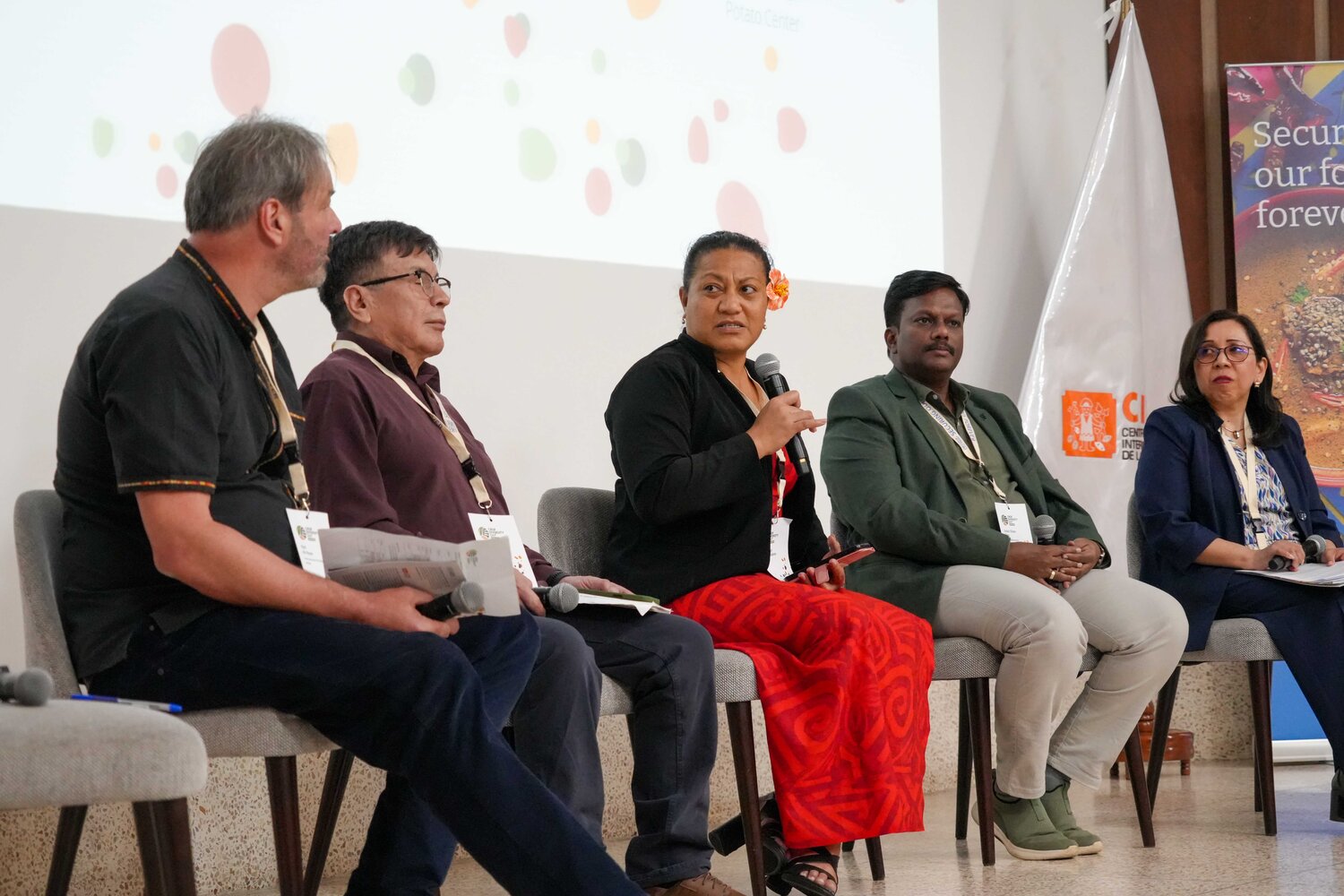
Logo shares experiences from her work at the 2025 Crop Diversity Day. Photo: Andrea Felipe Carvajal Gómez/IISD/ENB
“In the Pacific region, there have been a lot of efforts over the years to help each country to have its own crop collections,” Logo says. “But you are looking at small economies, little money, few people and very small land masses. So, how can you drive a good conservation strategy in those conditions? I value the vision of past leaders who established CePaCT as a regional resource, recognizing those challenges and the value of conserving unique crop diversity.”
Early Life
Logo grew up in Poutasi, a small village in Samoa’s Falealili district. Most people there depend on agriculture for their livelihoods. In 2009, the village was extensively damaged by an earthquake and tsunami.
Both of her parents were high school head teachers. Her father also served as a matai, a traditional leader in the community.
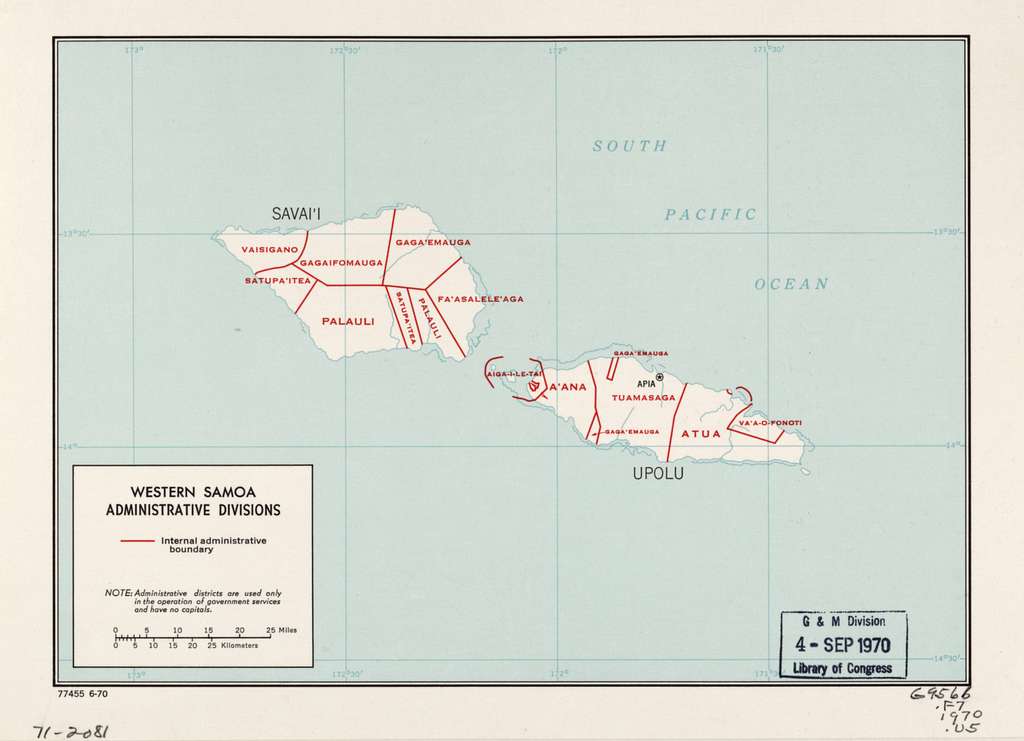
Logo was born in Poutasi, a small coastal village on the island of Upolu. Map: Central Intelligence Agency of the United States (Source)
As a child, Logo often woke up before sunrise to help her father spray banana plants to prevent pest damage. Her mother loved growing flowers in her garden. In a 2021 blog, she wrote that these experiences inspired her future career. “I believe my calling began there,” she wrote. “Through my parents, I learned that agriculture doesn’t just feed people, it also makes the world more beautiful.”
Following school, she worked briefly as a science teacher and after deciding that that wasn’t really for her, Logo decided to pursue a degree in biochemistry. After graduating, she worked in a government laboratory, where she learned about plant tissue culture.
Moving to Fiji, Logo took short-term jobs with the Pacific Community to gain experience. In 2007, she became a laboratory technician. Two years later, she joined CePaCT as assistant curator. She became curator in 2014.
In her current role, she works closely with CePaCT’s donors, including Australia’s Department of Foreign Affairs and Trade (DFAT), to set long-term priorities for the genebank. Together, they developed a business plan that guides conservation efforts and helps prepare the region’s agriculture for climate-related challenges.
Across the Pacific, where natural disasters and plant diseases regularly disrupt food systems, this work is critical. By conserving and sharing crop diversity at CePaCT, Logo helps ensure that farmers and communities have options when those shocks occur. Shocks like taro leaf blight, which was overcome when CePaCT’s predecessor was able to bring new taro diversity into the region to improve local varieties. Her work underscores why genebanks matter and how protecting plant diversity today supports food security tomorrow.
The Crop Trust celebrates the work of Logotonu Meleisea Waqainabete. Through her leadership at the CePaCT genebank, she helps safeguard crop diversity and strengthen food security across the Pacific, supporting the Crop Trust’s mission to conserve crop diversity and make it available for use into the future.
Categories: Food Security, Nutritional Security
Related Articles