Svalbard Global Seed Vault Crosses Major Milestone - 1.4 Million Seed Samples Secured
17 June 2026
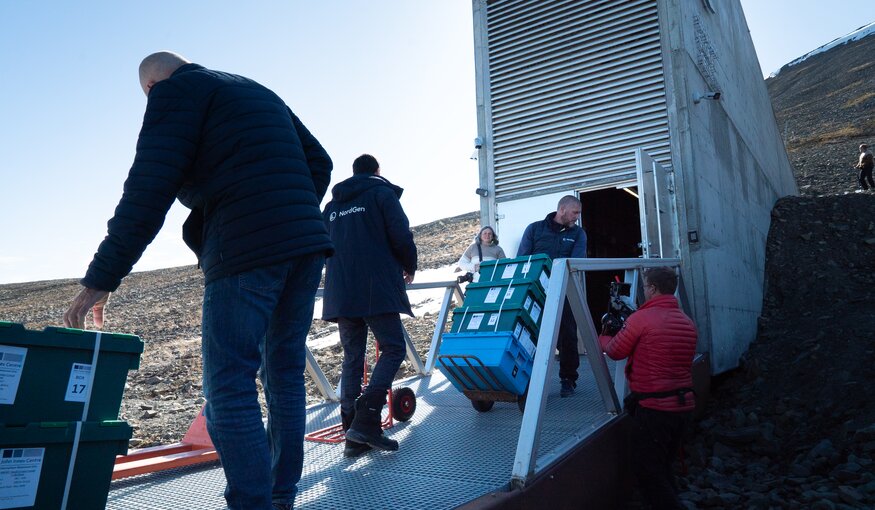
LONGYEARBYEN, NORWAY, 17 June 2026 – The Svalbard Global Seed Vault opened its door for the second time this year, adding over 15,000 new seed samples. This marks a major milestone for the Seed Vault. Its collection has now surpassed 1.4 million seed samples, each stored as a safeguard for the future of food and humanity.
- Since the opening of the Seed Vault in 2008, this is the 70th deposit occasion and brings the total number of seed samples in the Seed Vault to 1,401,285.
- In total, 15,387 seed samples from 11 genebanks were deposited for long-term safeguarding in the world’s largest secure seed-storage facility.
- Burkina Faso and Niger became first-time depositors with support from the Benefit Sharing Fund of the International Treaty on Plant Genetic Resources for Food and Agriculture (Plant Treaty).
Located under permafrost deep inside a rocky mountain on the Norwegian island of Spitsbergen, the Svalbard Global Seed Vault is managed by the Norwegian Government, the Nordic Genetic Resource Center (NordGen) and the Crop Trust.
The largest shipments for deposit at June’s opening came from the Rural Development Administration (RDA) of South Korea and the John Innes Centre (JIC), based in Norwich, England. The RDA genebank deposited 6,000 seed samples of 50 species, including cereals, vegetables and legumes. The JIC deposited the entire UK national oat collection (~2,600 accessions), about 1,000 accessions of a global barley landrace collection, and a few hundred wheat varieties.
Genebanks of Burkina Faso’s National Commission for Plant Genetic Resources (CONAGREP) and Niger’s National Agronomic Research Institute of Niger (INRAN) joined the latest Svalbard opening with the help of the Plant Treaty’s Benefit Sharing Fund (BSF). The Fund receives and uses the financial resources generated from the International Plant Treaty’s Multilateral System of Access and Benefit Sharing and other sources. BSF supports high-impact projects in developing countries to help ensure the flow of seeds and plant material from farmers to genebanks and back.
Sudan’s Agricultural Plant Genetic Resources Conservation and Research Center (APGRC) managed to send seeds under extremely difficult circumstances, through the support of the Emergency Reserve for Genebanks, managed by the Crop Trust and the Plant Treaty. The national genebank, which has been rebuilding its collection due to disruptions from an ongoing civil war, deposited 982 seed samples of 19 crops. They included pearl millet, sorghum and other tropical, grain, legume and vegetables.
Global Conservation Effort
The June deposit featured almost twice as many samples as the February deposit and showcases a global assortment of crop diversity. Thousands of seed samples from genebanks across the Americas, Europe, Africa and Asia are now secured on the icy shelves of the Global Seed Vault.
From Africa, Burkina Faso’s CONAGREP genebank delivered samples of okra, maize, groundnut, hibiscus, pearl millet, rice, sesame, sorghum, bambara groundnut and cowpea. Meanwhile, Niger’s INRAN delivered 204 seed samples of four species – groundnut, pearl millet, sorghum and cowpea. Morocco-based ICARDA also shipped 30 species of chickpeas, lentils and cereals.
From Asia, RDA made a large deposit that included oat, a crop not yet widely cultivated in South Korea. It is considered important for South Korea’s future because of its high nutritional value and potential industrial uses. The Taiwan Agricultural Research Institute also deposited 320 seed samples of cucumber, soybean, tomato, aubergine and winged bean.
From Europe, Poland’s National Centre for Plant Genetic Resources (IHAR) genebank shipped 1,000 samples of 15 species, including rye, oats, buckwheat, common millet, faba bean, maize, tomatoes, cucumber, melon and sorghum. The Netherlands Centre for Genetic Resources (CGN) genebank deposited 660 seed samples of 43 species, including 160 peppers, 64 beans as well as other vegetables, legumes and cereals. The John Innes Centre’s deposit included Chevallier Heritage Barley, a once-commercial UK variety last widely grown in the 1930s that has been rediscovered by brewers.
From the Americas, the US Seed Savers Exchange deposited 18 species of vegetables, legumes and cereals, while Brazil’s Embrapa national genebank added samples of cashew tree, groundnut, castor bean, lima bean and sesame. In Brazil, lima bean is an important regional crop that remains underutilized. It supports food and nutrition security, culinary traditions, agricultural diversification and resilient family farming.
This second deposit of 2026 is yet another example of effective global cooperation in the effort to conserve crop diversity. We welcome the two newcomers to the Seed Vault community and appreciate the trust of the world’s genebanks in continuing to secure valuable seed collections.
~~~
Notes for Editors
The Svalbard Global Seed Vault provides safe, long-term storage for duplicate seed samples from genebanks around the world. Seed collections stored inside remain the property of the depositing institutions. The Seed Vault does not distribute seeds. It provides secure, long-term storage so genebanks can recover lost material if collections are damaged or destroyed.
Quotes and Figures
Crop Trust:
“Crop diversity conserved in the Svalbard Global Seed Vault is the foundation for the agriculture of tomorrow. This latest round of deposits shows that many countries are committed to safeguarding the genetics we need for a resilient and productive global food supply. Whether it’s pearl millet from Sudan or oats from the UK, every crop counts in the drive to protect livelihoods, nourish healthy communities and achieve enduring food security,” says Dr Stefan Schmitz, Executive Director of the Crop Trust.
NordGen:
"It is highly encouraging that the number of seed samples safeguarded in the Seed Vault now surpassed 1.4 million. This deposit event demonstrates the continued importance of the Svalbard Global Seed Vault and the strong international commitment to conserving plant genetic resources. I would like to express my sincere gratitude to all new and returning depositors for their contribution to maintain agricultural biodiversity and ensuring future food security,” says Dr Lene Krøl Andersen, Executive Director at NordGen.
International Treaty on Plant Genetic Resources for Food and Agriculture:
“First-time deposits by Burkina Faso and Niger, supported by the Plant Treaty’s Benefit-sharing Fund, show how countries can move from safeguarding diversity locally with farming communities to contributing to a global system that benefits all. As climate change puts increasing pressure on crops and farming systems, reaching this milestone at the Svalbard Global Seed Vault demonstrates how effective multilateralism can deliver tangible results for food security,” says Álvaro Toledo, Deputy Secretary of the International Treaty on Plant Genetic Resources for Food and Agriculture.
Seed Deposits | June 2026
Genebank | Country | Seed Samples | Boxes | Crops |
APGRC | Sudan | 982 | 1 | 19 species, including 444 pearl millet, 238 sorghum and other tropical, grain, legume and vegetable species |
CGN | Netherlands | 660 | 1 | 43 species, 160 peppers, 64 beans and different vegetables, legumes and cereals |
CONAGREP (new, BSF-supported) | Burkina Faso | 370 | 1 | 10 species: okra, maize, groundnut, Hibiscus, pearl millet, rice, sesame, sorghum, bambara groundnut and cowpea |
Embrapa | Brazil | 24 | 1 | 5 species: cashew tree, groundnut, castor bean, lima bean and sesame |
ICARDA | Morocco | 1172 | 4 | 30 species of chickpea, lentils and cereals |
IHAR | Poland | 1000 | 2 | 15 species of rye wheat, oats, buckwheat, common millet, faba bean, maize, tomatoes, cucumber, melon and sorghum |
INRAN (new, BSF-supported) | Niger | 204 | 1 | 4 species: groundnut, pearl millet, sorghum and cowpea |
John Innes Centre | United Kingdom | 4602 | 10 | 17 species: wheat, barley, oats and rye wheat |
RDA, National Agrobiodiversity Center | South-Korea | 6000 | 7 | 50 species: cereals, vegetables and legumes |
Seed Savers Exchange | USA | 53 | 1 | 18 species: vegetables, legumes and cereals |
Taiwan Agricultural Research Institute | Taiwan | 320 | 3 | Cucumber, soybean, tomatoes, aubergine and winged bean |
TOTALS | 15,387 | 32 |
| |
Meet the Partners
The Norwegian Ministry of Agriculture and Food is the legal and administrative body of the Seed Vault and has the overall responsibility for its management, security and funding. The Ministry has assigned Statsbygg, the key adviser on construction and property to the Norwegian Government to be responsible for the construction and maintenance of the Seed Vault. For more information see www.regjeringen.no
NordGen is the Nordic countries’ genebank and knowledge centre for genetic resources. As the operational manager of the Seed Vault, NordGen is responsible for handling the seeds inside the Seed Vault; communicating with genebanks, and maintaining a publicly accessible online database with information on the seed samples stored in the Seed Vault (seedvault.nordgen.org). Read more about NordGen at www.nordgen.org
The Crop Trust is an international organization working to conserve crop diversity and thus protect global food and nutrition security. At the core of Crop Trust is an endowment fund dedicated to providing guaranteed long-term financial support to key genebanks worldwide. The Crop Trust supports the Svalbard Global Seed Vault and coordinates large-scale projects worldwide to secure crop diversity and make it available for use, globally forever and for the benefit of everyone. The Crop Trust is recognized as an essential element of the funding strategy of the International Treaty on Plant Genetic Resources for Food and Agriculture. Learn more at www.croptrust.org
Categories: For The Press, Press Releases