
Alliance of Bioversity International & CIAT
Locations
Rome, Italy
Cali, Colombia
Leuven, Belgium
Montpellier, France
Parent Organization
CGIAR
Overview
The Alliance of Bioversity International and the International Center for Tropical Agriculture (CIAT) was formed in 2019, but its components have much longer histories. CIAT was founded in 1967, while the International Board for Plant Genetic Resources (IBPGR), the predecessor of Bioversity International, was established in 1974.
CIAT’s program addressed nearly every aspect of tropical agriculture, including the crop varieties farmers grow, the production systems they manage, the agricultural landscapes they inhabit, the markets they participate in, and the policies that influence their choices and decisions.
IBPGR was established to coordinate an international program for plant genetic resources, which included emergency collection missions and the development and expansion of national, regional and international genebanks. The subsequent International Plant Genetic Resources Institute and Bioversity International adopted a broader vision of the organization’s role in agricultural and forest biodiversity and research-for-development activities.
The Alliance brings together this long history of collaboration and these complementary efforts to address today’s global challenges of climate change, biodiversity loss, environmental degradation and malnutrition.
The Collection
The Alliance operates two genebanks—Future Seeds at its Cali, Colombia, campus and the International Musa Germplasm Transit Centre in Leuven, Belgium.
Future Seeds is a state-of-the-art genebank that preserves the Alliance’s expanding collections of crops while distributing samples to farmers and researchers worldwide at no cost (Genesys). It includes long-term and short-term seed storage, in vitro and cryopreservation facilities, and fields for bean regeneration at four locations in Colombia at different elevations, as well as for forages at three locations with varying soils and elevations. The Data Discovery and Biotechnology Lab supports discoveries by leveraging genomics and big-data technologies to continually improve crops for higher yields, better nutrition and climate resilience.
The International Musa Germplasm Transit Centre holds some 1,700 banana accessions in vitro and nearly 1,000 accessions under cryopreservation. The cryopreserved collection is safety duplicated at the Institut de Recherche pour le Développement (IRD) in Montpellier, France (Genesys).
Mission
The Alliance's strategy from 2020 to 2025 states that its mission is “to deliver research-based solutions that harness agricultural biodiversity and sustainably transform food systems to improve people’s lives in a climate crisis.” It aims to accomplish this by pursuing four strategic objectives:
- People consume diverse, nutritious and safe foods
- People participate in and benefit from inclusive, innovative and diversified agrifood markets
- People sustainably manage farms, forests and landscapes that are productive and resilient to climate change
- Communities and institutions sustainably use and safeguard agricultural biodiversity
Related Projects
- The Alliance provides support to BOLDER and the Power of Diversity Funding Facility through gap analyses, on-farm experimentation and food systems assessments.
Crops


Related Stories
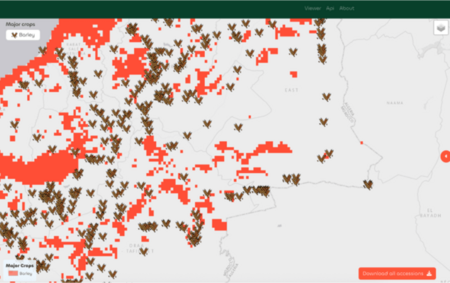
The Alliance of Bioversity International and CIAT: Gap Analysis
11 Dec 2025
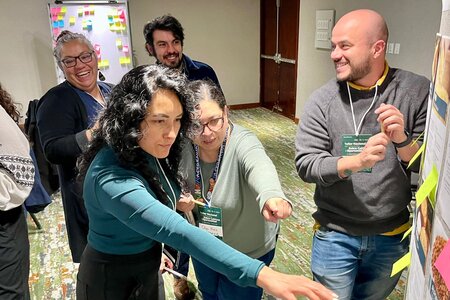
Colombia Chooses Its Opportunity Crops
23 Jul 2025
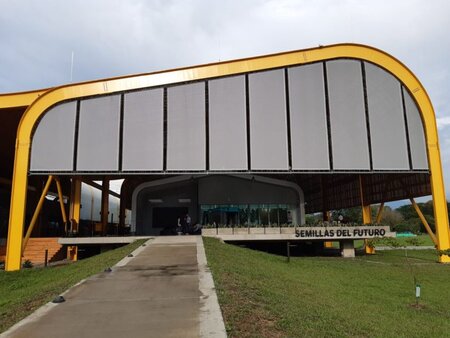
New Seed Bank to Support Agriculture of the Future
30 Mar 2022