
Genetic Resources Research Institute (GeRRI)
Location
Nairobi, Kenya
Parent Organization
Kenya Agricultural and Livestock Research Organization (KALRO)
Overview
The Genetic Resources Research Institute (GeRRI) functions as Kenya’s national genebank and operates under the Kenya Agricultural and Livestock Research Organization (KALRO). Its mandate is to collect, conserve, document, and distribute plant genetic resources across all of Kenya’s agroecological zones, from the coastal lowlands and drylands to the highlands.
GeRRI maintains about 51,000 accessions, making it one of the most comprehensive genebanks in Africa. It supports the conservation of both staple and opportunity crops that are crucial for food security, nutrition, and climate resilience. The genebank’s infrastructure includes both long-term and short-term seed storage, in vitro and cryopreservation facilities for crops that are not suitable for traditional seed banking, and several field genebanks across various KALRO Centres.
GeRRI plays an important role in strengthening Kenya’s agricultural biodiversity and resilience by supporting farmers, researchers, and policymakers through germplasm exchange, regeneration, characterization, and data management.
Mission
To conserve and promote the sustainable use of genetic resources in technology generation that catalyses sustainable growth and development in agriculture and livestock product value chains.
The Collection
- The GeRRI genebank conserves over 51,000 accessions, representing a wide diversity of crops of national importance (Genesys).
- The main conventional crops conserved include common bean (Phaseolus vulgaris) – 3,525 accessions, oats (Avena spp.) – 4,197 accessions, maize (Zea mays) – 1,825 accessions, and rice (Oryza spp.) – 697 accessions (Genesys).
- Most accessions are conserved as seeds under long-term storage, while clonally propagated and non-orthodox species are maintained in field genebanks.
Opportunity Crops in Kenya
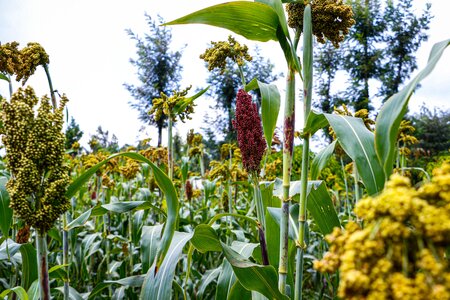
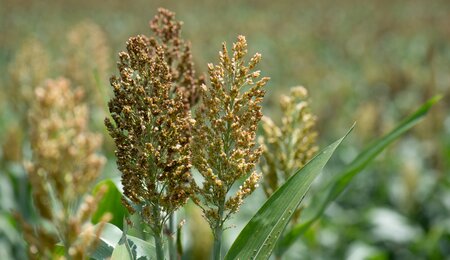
The most widely cultivated opportunity crops in Kenya are finger millet (Eleusine coracana), sorghum (Sorghum bicolor), and pigeon pea (Cajanus cajan). Finger millet is a nutrient-dense cereal adapted to semi-arid areas and tolerant to drought. Sorghum is a versatile grain used for food, feed, and brewing, thriving where maize production is unreliable. Pigeon pea is a hardy legume that improves soil health and supplies protein for smallholder households.
GeRRI places strong emphasis on the conservation of opportunity crops, which are nutrient-dense, locally adapted, and culturally important species contributing to food security and resilience. Key opportunity crops conserved at GeRRI include sorghum (Sorghum bicolor) – 5,490 accessions, finger millet (Eleusine coracana) – 2,931 accessions, sesame (Sesamum ssp.) – 2,491 accessions, pigeon pea (Cajanus cajan) – 701 accessions
Opportunity crops in Kenya support smallholder farmers by offering climate-resilient and high-nutrition alternatives that reduce dependence on major cereals.
Related Projects
- Power of Diversity Funding Facility: In cooperation with GeRRI, this initiative seeks to safeguard the genetic diversity of amaranth (Amaranthus spp.) and finger millet (Eleusine coracana), while establishing an integrated national conservation system for opportunity crops.
- Seeds for Resilience:
Crops


Related Stories

How Digital Technology is Transforming Genebank Management Across Africa
12 Dec 2025
Power of Diversity Funding Facility Stakeholders Choose their Opportunity Crops
14 Oct 2025
Crop Trust Signs Landmark Agreement With Kenya’s National Genebank
15 Jun 2021