
National Plant Genetic Resources Centre
Location
Entebbe, Uganda
Parent Organization
Tanzania Plant Health and Pesticides Authority (TPHPA)
Overview
The National Plant Genetic Resources Center (NPGRC) was founded in 1991 within the Tropical Pesticides Research Institute, now known as the TPHPA. The NPGRC is part of the Technical Services Directorate at the TPHPA.
The NPGRC has been actively collecting crop diversity recently, with nearly 75% of the collection acquired in the past ten years.
The NPGRC has conducted extensive collecting in Tanzania in collaboration with local institutions, government research organizations, universities, NGOs, local government authorities, and international organizations, including the Millennium Seed Bank, Kew, ICRISAT, Alliance Bioversity International and CIAT, CIMMYT, IRRI, Crop Trust, and the World Vegetable Center.
Nearly a third of the collection has been safety-duplicated at the SADC Plant Genetic Resources Centre (SPGRC), with additional backups at the Svalbard Global Seed Vault, the Millennium Seed Vault, Kew, and at WorldVeg.
The NPGRC has organized seed fairs and established farmers’ groups to conserve plant genetic resources in six villages across four districts. It has also established eight community seed banks and twelve community field genebanks.
Mission
The mission of NPGRC is to:
- Collect and conserve plant genetic resources both in-situ and ex-situ and promote their utilization for sustainable agriculture.
- Facilitate access and benefit sharing of plant genetic resources in compliance with international treaties such as the Convention on Biological Diversity, the International Treaty on Plant Genetic Resources for Food and Agriculture, and the Nagoya Protocol.
- Document information on the diversity and distribution of genetic resources.
- Maintain an inventory of various plant genetic resources in Tanzania.
- Expand knowledge on the sustainable use of agricultural plant biodiversity.
- Contribute to and participate in developing research proposals related to plant genetic resources.
The Collection
- The genebank holds over 11,000 accessions, while just over 7,000 are registered in Genesys.
- The majority of the collection is held as seed, with approximately 80 accessions kept in field genebanks.
- The main crops conserved include grain cereals (finger millet (Eleusine coracana), maize (Zea mays), rice (Oryza sativa) and sorghum (Sorghum bicolor).
Opportunity Crops in Tanzania
The most widely cultivated crops grown in Tanzania are finger millet (Eleusine coracana), cowpea (Vigna unguiculata), and African eggplant (Solanum aethiopicum). Finger millet is a drought-tolerant cereal rich in calcium and iron, commonly cultivated in semi-arid regions. Cowpea is a versatile legume valued for both its grains, pods and leaves, contributing to soil fertility and dietary protein. African eggplant is a nutrient-rich vegetable widely consumed but underrepresented in research and commercial seed systems.
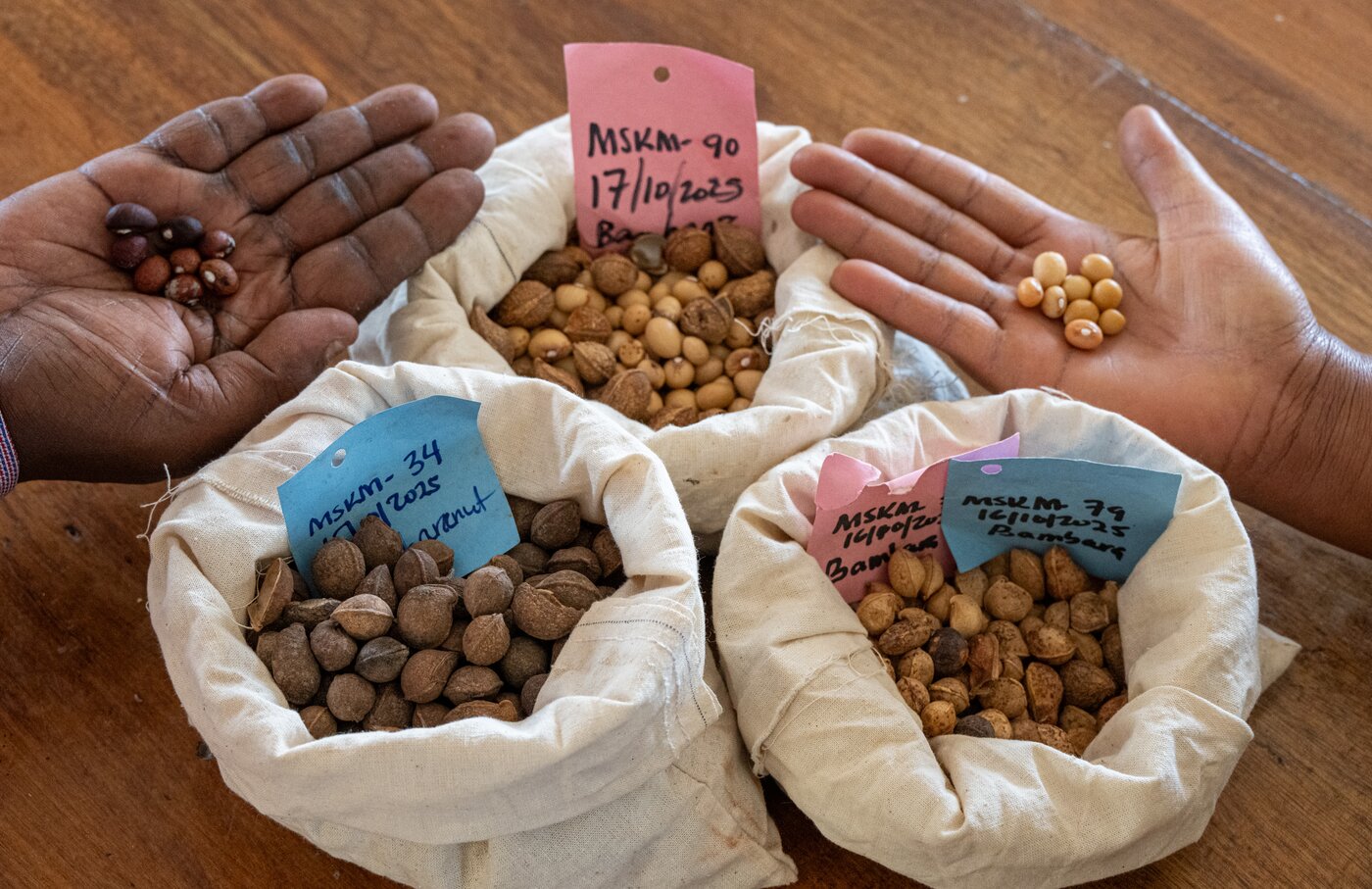
Opportunity crops held by NPGRC include Atlantic giant pumpkin (Cucurbita maxima), finger millet (Eleusine coracana), Bambara groundnut (Vigna subterranea), okra (Abelmoschus esculentus) and pearl millet (Cenchrus americanus).
These crops are important for food security in Tanzania because they enhance resilience to climate stress, improve nutrition through diverse diets, and support smallholder livelihoods in marginal and dryland farming systems.
Related Projects
- BOLDER: The genebank is one of the implementing genebank partners in BOLDER. Its focus is on increasing awareness about the importance of conserving neglected and underutilized crop germplasm in Tanzania.