
Uganda National Genebank
Location
Entebbe, Uganda
Parent Organization
Plant Genetic Resources Centre (PGRC), National Agricultural Research Organisation (NARO)
Overview
The Uganda National Genebank (UNGB) was established in 2004 as part of the PGRC, with the Entebbe Botanic Gardens serving as the other component. The Centre operates within the Biodiversity and Biotechnology Program under the National Agricultural Research Laboratories (NARL) of NARO. Its aim is to ensure the conservation, management, and sustainable use of Uganda’s plant genetic resources for food and agriculture (PGRFA), while maximizing their potential to support national development goals.
The Genebank is situated next to the historic Entebbe Botanic Gardens, established in 1898. The Gardens preserve over 500 plant species, including exotic and native species.
The PGRC contributes to both ex-situ and in-situ conservation of crop diversity and utilization of germplasm through characterization, evaluation, and genetic enhancement. The UNGB maintains strong connections for on-farm conservation via a network of over 37 community seed banks across the country and has robust links for participatory germplasm evaluation and selection. It also collaborates with international genebanks for safety duplication of its collection, including at the Svalbard Global Seed Vault.
The PGRC has a clear role in generating knowledge and information that guide policymaking on plant genetic resources. The Centre serves as the National Focal Point for the International Treaty on PGRFA.
Mission
The strategic objectives of the PGRC, which the National Genebank is part of, are to:
- Collect and conserve stocks of diverse plant germplasm
- Enhance utilization of germplasm through characterization, evaluation and genetic enhancement
- Develop information and documentation systems and strengthen linkages among stakeholders
- Promote community-based and on-farm conservation of plant genetic resources as a basis for sustainable natural resource management.
- Enhance the role of the Botanic Gardens in national development
- Bioprospect conserved plant genetic diversity in ways that contribute to livelihood needs and national development
- Contribute to the formulation and implementation of policies and legal frameworks for efficient conservation and sustainable use of PGR
The Collection
- Approximately 5,500 accessions in the seed genebank (Genesys)
- The main holdings include finger millet (Eleusine coracana), soybean (Glycine max), common bean (Phaseolus vulgaris), sorghum (Sorghum bicolor), rice (Oryza sativa) and groundnuts (Arachis hypogaea).
- Field genebank holdings include over 600 accessions of avocado (Persea americana), 480 accessions of African cherry (Prunus africana), 400 accessions of Osyris lanceolata (commonly referred to as African sandalwood), 256 accessions of five coffee species, 25 cocoa accessions, 16 accessions of shea tree and 10 accessions of three rice wild relative species in field genebanks.
Opportunity Crops in Uganda
The most widely cultivated opportunity crops in Uganda are finger millet (Eleusine coracana), cowpea (Vigna unguiculata), and pigeon pea (Cajanus cajan). Finger millet is a nutrient-rich cereal that thrives in drought-prone areas and stores well for extended periods. Cowpea is a versatile legume that offers both edible leaves, pods and grains while enriching the soil through nitrogen fixation. Pigeon pea is a hardy crop that performs well in dry regions and serves as a dependable source of protein and income for smallholders.
Opportunity crops conserved by the Uganda National Genebank include Solanum species (103 accessions); African cabbage (Cleome gynandra) (60 accessions); Okra (Abelmoschus esculentus) (37 accessions); amaranth (Amaranthus species) (149 accessions); Bambara groundnut (Vigna subterranea) (19 accessions), squash (Cucurbita maxima) (307 accessions); shea (Vitellaria paradoxa) (672 accessions in Breeding Seed Orchards and 16 in the shea butter genebank); and avocado (627 accessions).
These crops are important for food security in Uganda because they enhance dietary diversity, improve resilience to climate variability, and strengthen rural livelihoods through their adaptability to marginal environments.
Related Projects
- BOLDER: UNGB is involved in collecting and conserving the diversity of jackfruit, cowpea, pumpkins and pearl millet and in research on seed systems under BOLDER, part of the BOLD Project.
Related Stories
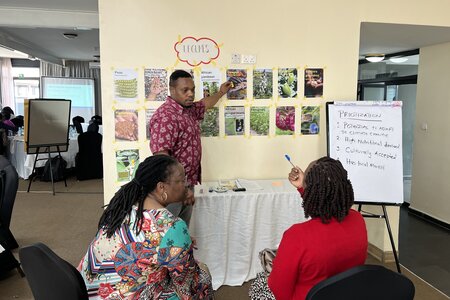
From 100 to Four: Favorites in Focus for BOLDER Opportunity Crops
14 Apr 2025
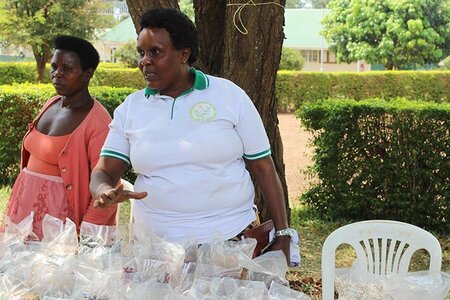
Connecting for Better Outcomes for Farmers
1 Aug 2023
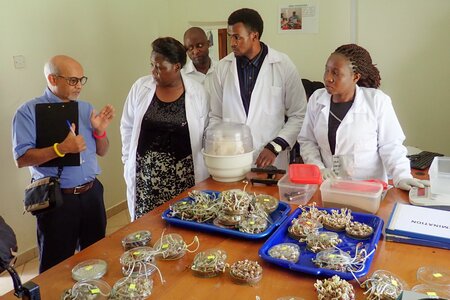
Urgent Action Needed as Farmer Varieties Disappear from Use
7 Feb 2023