National Seed Bank, Lebanese Agricultural Research Institute (LARI)
Location
Tal Amara, Lebanon
Parent Organization
Lebanese Agricultural Research Institute (LARI)
Overview
The National Seed Bank of Lebanon was established in 2013 by the Lebanese Agricultural Research Institute (LARI) to conserve and coordinate sustainable use of agriculturally important plant genetic resources in Lebanon. The Seed Bank is located at the Tel Amara site in the Bekaa Valley.
- The Seed Bank holds nearly 2,400 samples covering some 1,000 species from 462 genera.
- The Millennium Seed Bank (MSB), Kew, UK, and LARI have been conducting joint collecting missions in Lebanon, with all samples collected being stored at MSB until 2013.
- In 2013, some 1,300 seed samples were repatriated from MSB to the National Seed Bank.
- Crop wild relatives collected in Lebanon under the Crop Trust-led Crop Wild Relatives Project are all safety-duplicated at MSB and the genebank of the International Center for Agricultural Research in the Dry Areas (ICARDA) in Lebanon.
- In 2020, the Seed Bank deposited 453 seed samples in the Svalbard Global Seed Vault.
- The genebank has a history of informal collaboration with researchers and breeders at LARI, ICARDA and many others in Lebanon.
- The Seed Bank has distributed a total of some 1,000 samples over the past 5 years, mostly internationally.
Mission
- To ensure ex situ conservation of plant genetic resources for food and agriculture and improve their access and usefulness
- To make available plant genetic resources and information on their potential use
- To enhance farm diversification and improve farmers livelihood
- To enhance utilization of inter- and intraspecific diversity
The Collection
Lebanon is particularly rich in crop genetic resources, such as wheat, barley, lentils, medics, onion, garlic and many fruit trees, such as almonds, pears, plums and pistachio. Also, wild harvested plants are used as food including leafy vegetables and aromatic plants. The country is included in the center of diversity for many wild species, particularly Triticum (wheat) (T. thoudor, T. dicoccoides, T. urartu and T. boeoticum), Hordeum (barley) (H. spontaneum, H. murinum, H. marinum and H. bulbosum), Aegilops (wheat), Allium (onion), Astragalus (medicinal herb), Avena (oat), Capsicum (pepper), Cicer (chickpea), Dactylis (forage grass), Lathyrus (grasspea), Lens (lentil), Lolium (rye grass), Medicago (forage, including alfalfa), Phaseolus (bean), Pisum (pea), Trifolium (clover), Trigonella (fenugreek) and Vicia (vetch).
The National Seed Bank has 2,491 accessions recorded on Genesys including 169 accessions of wheat (Triticum spp.) and 122 accessions of barley (Hordeum spp.).
Related Projects
- As part of the Crop Wild Relatives Project, staff from the Seed Bank collected and conserved 400 accessions of 11 Annex I crops: alfalfa, barley, bread wheat, chickpea, faba bean, grasspea, lentil, oat, pea, rye and vetch.
- The National Seed Bank was one of fifteen national genebanks that received capacity building, technical and financial support through the BOLD Project
Crops


Related Stories
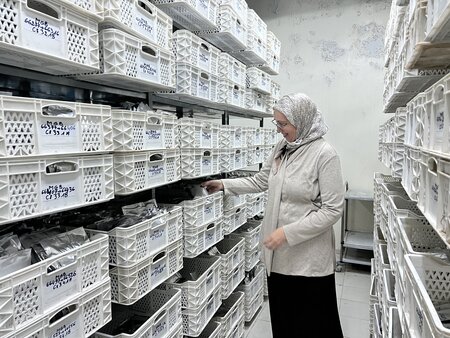
Support for National Genebanks Underway
16 Jun 2022
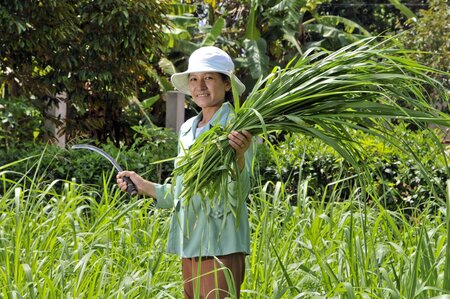
Daily Star Lebanon: How the Mideast Can Help Protect Crop Diversity
12 Nov 2014