Women Hold the Key to Unlocking the Potential of Opportunity Crops
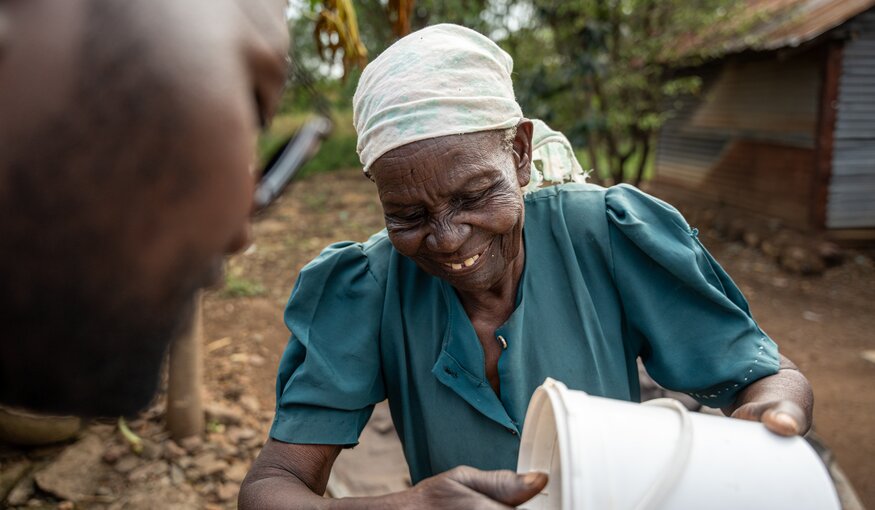
Jocinta Mwai Ogola speaks with members of a collecting mission at her homestead near Homa Bay in western Kenya. Photo: Kreis Visual Storytelling/Crop Trust
-
 By Cody Gildart Chief Communications Officer
31 August 2026
What if one of the greatest opportunities to strengthen food security was already in farmers' fields – and in the knowledge passed from mother to daughter?
Across Africa, Asia and Latin America, women have cultivated, selected, exchanged and improved traditional crops for generations. They know which varieties thrive in drought, which make the most nutritious (and delicious) meals, which store well and which are best for local markets. Their knowledge has helped conserve crop diversity long before genebanks existed.
For opportunity crops to reach their full potential, this knowledge must become central to agricultural policy, according to a new Crop Trust brief: Gender Perspectives in Opportunity Crop Development.
Developed with support from the Power of Diversity Funding Facility, the new brief draws on research from Nigeria, Kenya, Zambia, Colombia and India. Its message is clear. Investing in women is one of the most effective ways to unlock the nutrition, resilience and economic possibilities that opportunity crops can provide.
Women Already Lead, Policy Needs to Catch Up
Opportunity crops – traditional grains, legumes, vegetables, roots and fruits – have sustained communities for centuries. They are often highly nutritious, adapted to local conditions and better able to withstand climate stress than more widely grown crops.
Women are at the center of this. They save seeds, maintain crop diversity, process harvests, develop food products and connect crops with local markets. In many communities, they also pass knowledge about seeds and cultivation from one generation to the next, preserving both biodiversity and cultural heritage.
Yet despite these contributions, women often have less access to land, finance, agricultural extension, markets and decision-making. As demand for opportunity crops grows, there is a real risk that commercialization could bypass the very people who have protected these crops for generations.
Without deliberate action, expanding opportunity crop value chains could reinforce existing inequalities rather than reduce them.
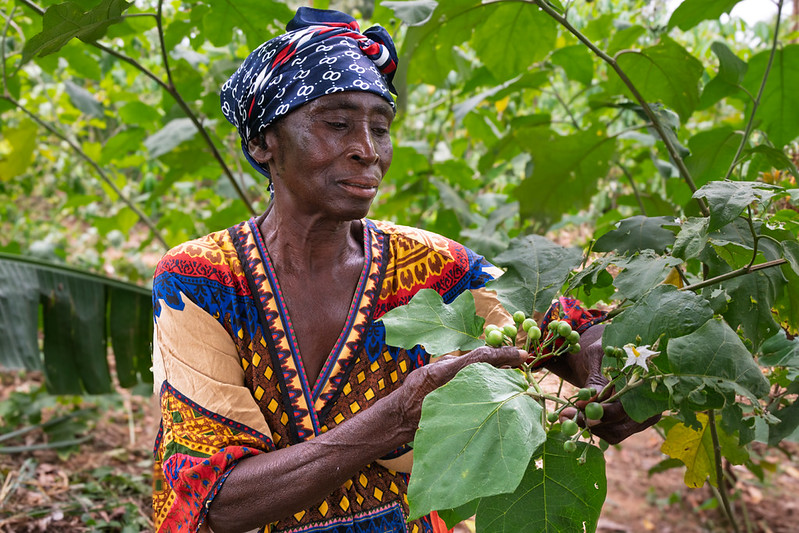
Dora Amsong Yeboah inspects turkey berry berries on her farm in Ghana. Photo: Mike Major/Crop Trust
A Smarter Investment for Food Security
For development partners and policymakers, the findings point toward a practical agenda.
Supporting opportunity crops is about much more than introducing new varieties. It means strengthening the entire system that allows these crops to flourish – from conservation in national genebanks and farmer-managed seed systems to processing, markets and consumer demand.
Equally important is ensuring women can participate at every stage. That includes improving access to land, water and other productive resources, supporting women's cooperatives and enterprises, strengthening leadership opportunities, collecting gender-disaggregated data and designing research and extension services that reflect women's priorities and Indigenous knowledge.
The brief also highlights the importance of recognizing farmer-managed seed systems, supporting community seedbanks and creating policies that protect farmers' rights to save, exchange and use seed – particularly for traditional crops.
Building Opportunity from Conservation
These recommendations align closely with the work of the Crop Trust's Power of Diversity Funding Facility.
Across seven countries, the Funding Facility is helping identify and promote opportunity crops with strong potential to improve nutrition, strengthen resilience and create new economic opportunities. At the same time, it is investing in conserving these crops in national genebanks, ensuring their diversity remains available for future generations.
Conservation and use go hand in hand. Crop diversity stored in genebanks provides the foundation for future research, breeding and adaptation, while gender-responsive policies ensure these benefits reach the communities that have nurtured this diversity for centuries.
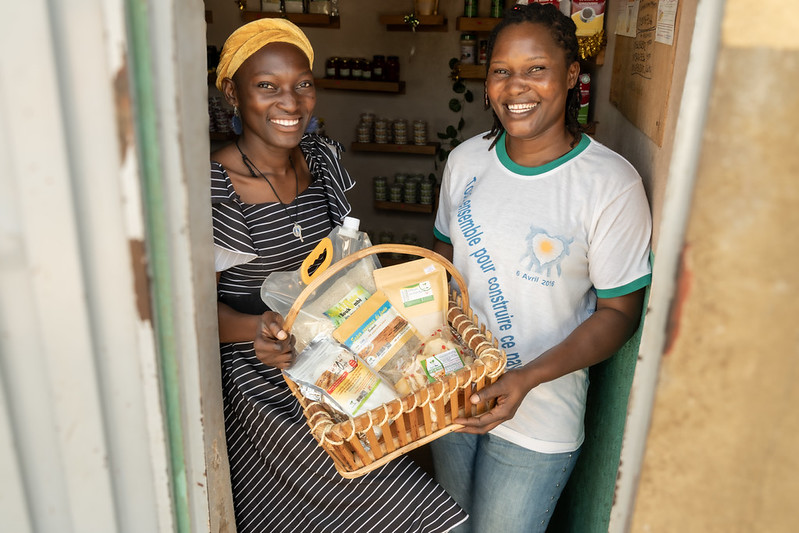
Women showcasing fonio products at a women-led fonio processing and commercialization business in Natitingou, Benin. Photo: Mike Major/Crop Trust
From Evidence to Action
The policy brief concludes with a simple message. Opportunity crops can transform food systems, but only if the people who sustain them are fully included in that transformation.
For governments, development organizations and donors, this means moving beyond crop promotion alone. It means investing in gender-responsive seed systems, supporting women-led businesses, strengthening local markets and embedding gender equality into agricultural policy and research.
Opportunity crops represent an opportunity to build food systems that are more resilient, nutritious and inclusive. Realizing that opportunity will require investment – not only in crops, but also in the women whose knowledge, innovation and leadership have safeguarded them for generations.
By supporting gender-responsive policies alongside crop diversity conservation, we can unlock the full potential of opportunity crops to improve livelihoods, strengthen food security and build resilient food systems for the future.
The Power of Diversity Funding Facility is a multi-donor initiative managed by the Crop Trust, dedicated to conserving, cultivating and promoting the consumption of relatively neglected opportunity crops across Africa, Asia, the Pacific, and Latin America and the Caribbean.
Categories: Power of Diversity, Food Security
Related Articles