Before We Lose Them: Securing the Future of Coffee and Cacao at CATIE
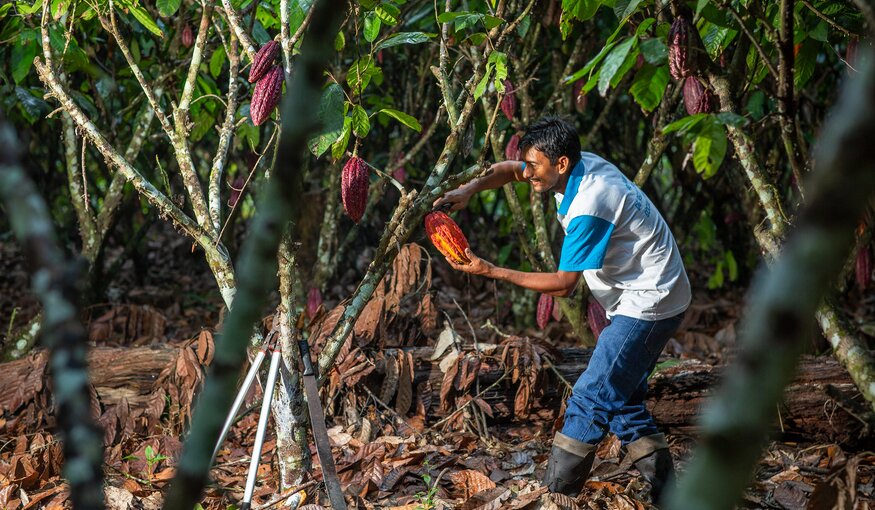
Compared to rice or maize, coffee and cacao may seem like luxuries. But for many people, it's their entire livelihood. Photo: Marlon del Aguila Guerrero/CIFOR
-
 By Marta Millere Outreach and Engagement Lead
16 January 2026
Coffee and chocolate are among the world’s most cherished indulgences. Yet behind every cup and every bar lies a vulnerable biological foundation that millions of livelihoods depend on.
An estimated 125 million people worldwide rely on coffee for their incomes, while 40–50 million people depend on cacao, the tree that gives us chocolate. The future of these crops, and of the people who make a living from them, hinges on access to their diversity. It is only comprehensive, properly-conserved collections of coffee and cacao diversity that will allow breeders, researchers and farmers to adapt these crops to new market demands, pests, diseases and a rapidly changing climate.
Some of the most important of these collections are safeguarded by the Tropical Agricultural Research and Higher Education Center, CATIE. This diversity is protected as a global public resource under the International Plant Treaty, which means it can be shared with researchers and breeders around the world according to agreed rules of access and benefit sharing.
CATIE faces many challenges in fulfilling this huge responsibility, but it is not on its own.
A Serious Risk to Irreplaceable Diversity
CATIE’s coffee and cacao collections are conserved in field genebanks and greenhouses and have not been duplicated elsewhere. If trees are lost, unique genetic diversity could disappear permanently. Years of declining and unpredictable funding have left these collections exposed, just as pressures from pests, diseases and climate variability are intensifying.
For coffee, the risks have been there for a while. The collection’s original site suffered from drainage problems and growing disease pressure; plus, the trees were getting old. Relocating the coffee trees to a new location was the only possible solution to save the collection, but it came at a significant expense. CATIE searched for funding for years before relocation work finally began in 2022, with initial support from the Plant Treaty and the Crop Trust, followed by additional backing in 2024 from the German Agency for International Cooperation (GIZ) and Germany’s Federal Ministry for Economic Cooperation and Development (BMZ). Without this support, the collection faced a gradual but irreversible loss.
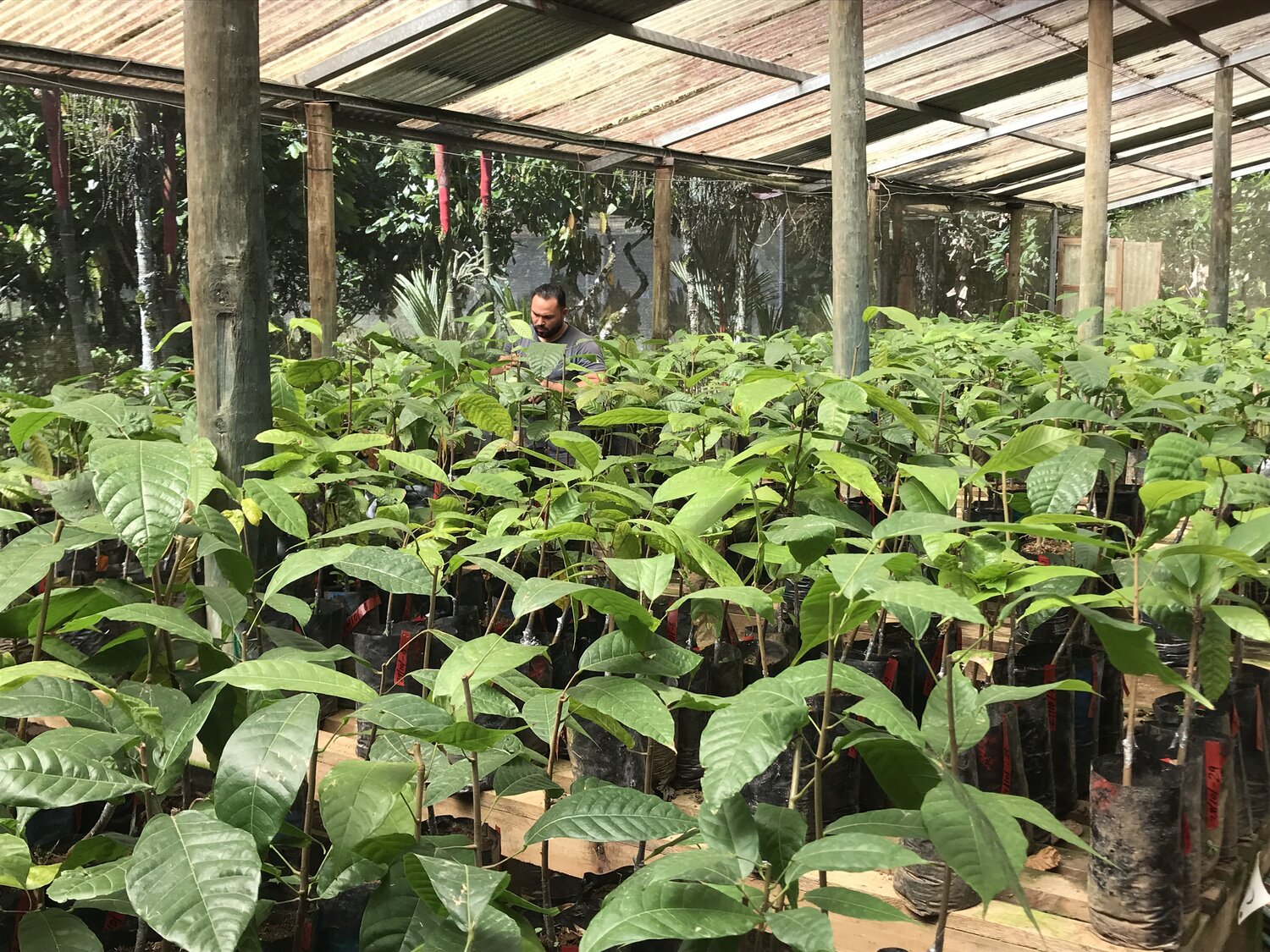
CATIE maintains over 1,300 cacao accessions from 20 countries and four continents. Photo: Marleen Engbers/Crop Trust
The urgency is heightened by the biological reality of coffee production in Latin America. Most cultivated varieties originate from a narrow genetic base. While this delivers desirable traits – such as yield, taste and aroma – it increases the vulnerability of the crop. Underground menaces such as nematodes attack the roots of certain varieties, weakening trees and shortening their productive lives. Without access to diversity, coffee improvement efforts cannot keep pace with these growing threats.
Cacao faces a similarly precarious situation. In 2025, CATIE’s cacao collection entered an acute funding crisis following the withdrawal of several long-standing public and private donors. This collection includes diversity from 20 countries and four continents, spanning all 10 known genetic groups of cacao, including wild relatives and rare criollo varieties – traditional, genetically distinct types native to Central America, prized for their fine, complex flavors and low bitterness, but relatively low-yielding and disease-prone compared with others. It underpins breeding programs that have already delivered improved cacao varieties and holds the potential for further advances – but only if it survives.
Emergency Support and Real Progress
In response to the imminent risk of loss, the Crop Trust, together with the International Plant Treaty, provided a grant through its Emergency Reserve for Genebanks for the coffee collection. Established in 2021, the Emergency Reserve is the world’s first funding mechanism designed to respond rapidly when genebanks face immediate threats. It is funded by the 10-year Biodiversity for Opportunities, Livelihoods and Development (BOLD) project, led by the Crop Trust and supported by the Government of Norway.
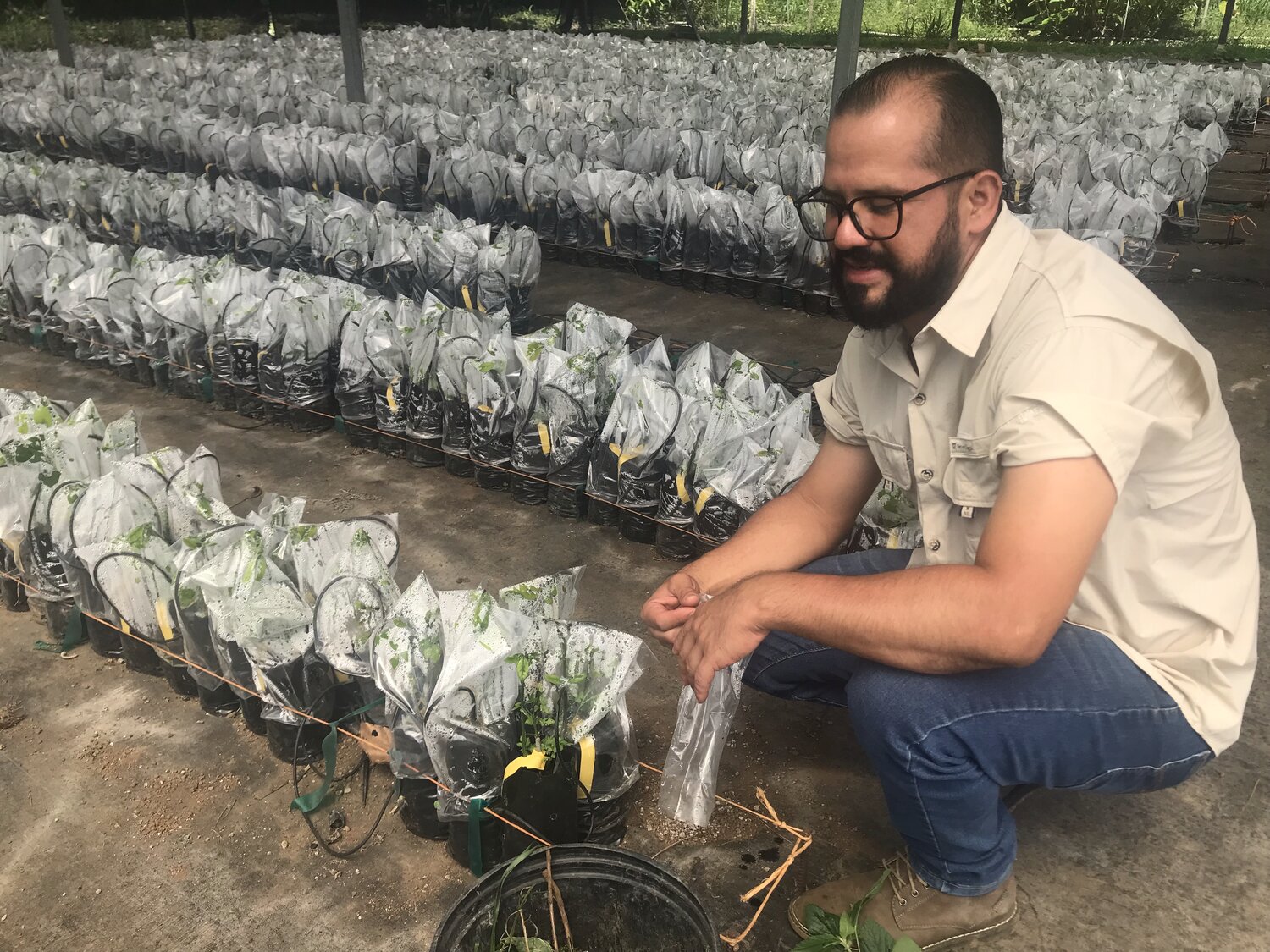
To multiply the coffee accessions, they are grafted onto a rootstock. The graft is then wrapped in plastic to create the right microclimate for the plant to develop. Photo: Marleen Engbers/Crop Trust
With support provided in 2022 and 2024, and reinforced by the recent Emergency Reserve grant funding, CATIE has already made substantial progress in securing its coffee collection. More than 70 percent of the accessions have already been successfully relocated. A new site with better climate and soil conditions has been identified and prepared; shade establishment and field layout have been planned; and batches of Nemaya rootstocks have been produced to support grafting and long-term plant health. Nemaya is a nematode-resistant Robusta coffee variety onto which Arabica coffee plants can be grafted to protect them from root damage.
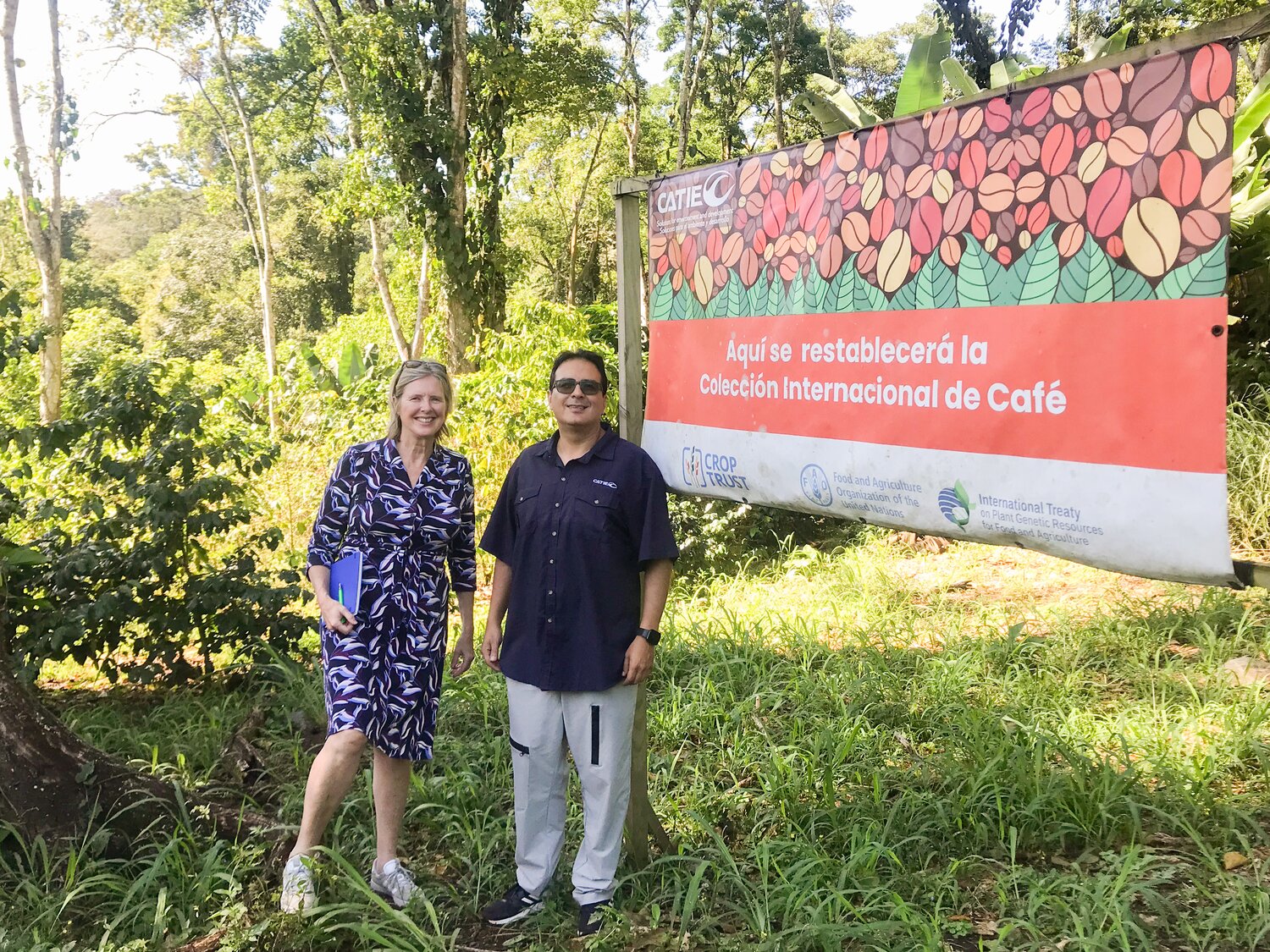
After years of effort, Dr Rolando H. Cerda of CATIE and Marleen Engbers of the Crop Trust stand at the new site that secures the future of CATIE’s coffee collection. Photo: Marleen Engbers/Crop Trust
The Emergency Grant has also stabilized the cacao collection at a critical moment. Funding has enabled essential field operations to continue, preserved staff capacity and prevented the deterioration of collection plots at a time when disease pressure and ageing plants pose severe risks.
Dr William Solano, Researcher in Genetic Resources and Biotechnology at CATIE, underscores the urgency: “This support is buying time – allowing us to sustain relocation efforts and maintain the cacao collection while we mobilize the long-term financing needed to secure these globally significant genetic resources. The Emergency Grant is critically important to CATIE. Without it, a significant number of our coffee and cacao trees would have been lost.”
A Narrowing Window to Act
All of us who enjoy coffee and chocolate – and who care about the millions of farming families whose livelihoods depend on them – have a narrow and urgent window to act.
Emergency funding can buy time. But it cannot secure the future.
Completing the CATIE coffee collection’s relocation and safeguarding the ageing cacao collection require stable, long-term investment. This is why instruments such as the Crop Trust’s Endowment Fund matter: they move conservation beyond a crisis response and help to make sure that irreplaceable crop diversity is protected, forever, for the benefit of all.
Categories: BOLD, Coffee, Food Security, Nutritional Security