From Nettle Soup to Genebanks: Joachim von Braun on Food, Science and the Seeds of the Future
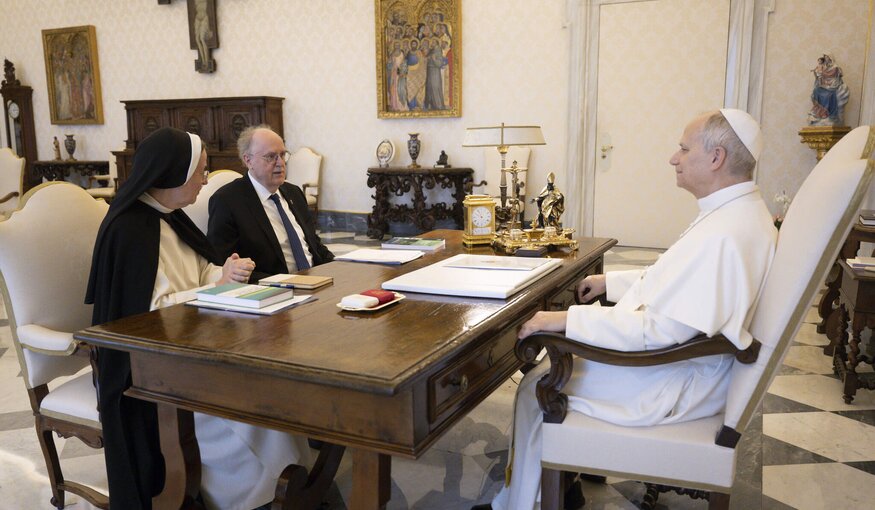
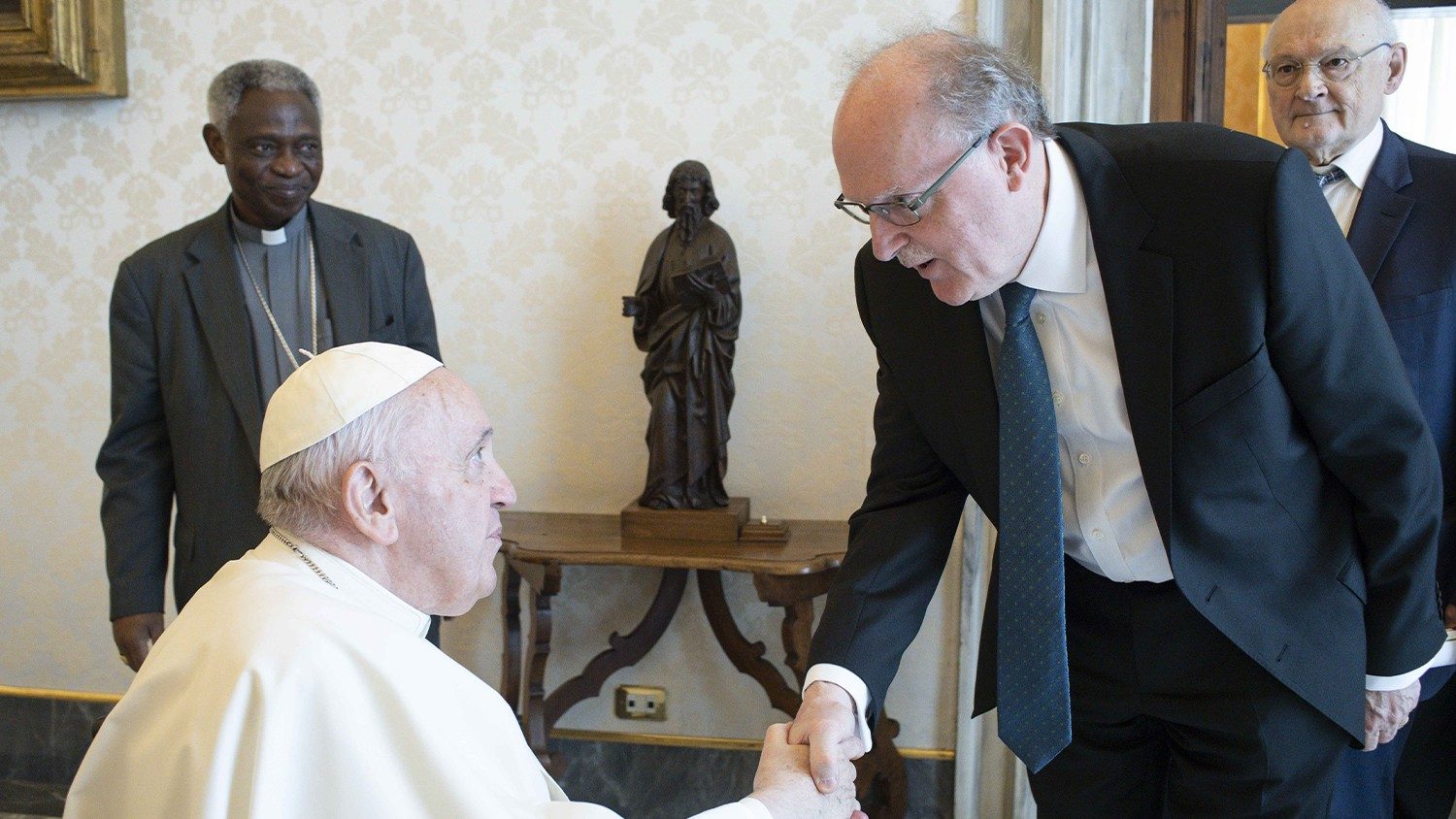
Prof. Joachim von Braun, President of the Pontifical Academy of Sciences, and Sr. Prof. Helen Alford, President of the Pontifical Academy of Social Sciences, meet with Pope Leo XIV during an audience at the Vatican to discuss global challenges including artificial intelligence, climate change, health equity and the freedom of science. Photo: Vatican Media
-
 By Marta Millere Outreach and Engagement Lead
30 April 2026
For more than four decades, Joachim von Braun has been at the forefront of understanding and improving how the world produces and shares food. As a professor at the University of Bonn, he started the Center for Development Research (ZEF) to advance research on technological and economic innovations and trained a generation of students now working across the global food system. He shaped global thinking on food security, poverty and sustainable development in leadership roles at the International Food Policy Research Institute (IFPRI) and as advisor to the United Nations. Today, he serves as President of the Pontifical Academy of Sciences at the Vatican, the oldest scientific academy in the world, and ensures that food security is on the agenda.
What began with childhood curiosity – cooking nettle gathered in the wild with his mother – grew into decades of research, policy work and teaching aimed at strengthening food systems and reducing hunger.
In his work, von Braun has also focused on crop diversity and the role of genebanks to safeguard the building blocks of agriculture. He currently sits on the Crop Trust Executive Board, working to ensure vital collections of crop diversity are conserved in genebanks for future generations.
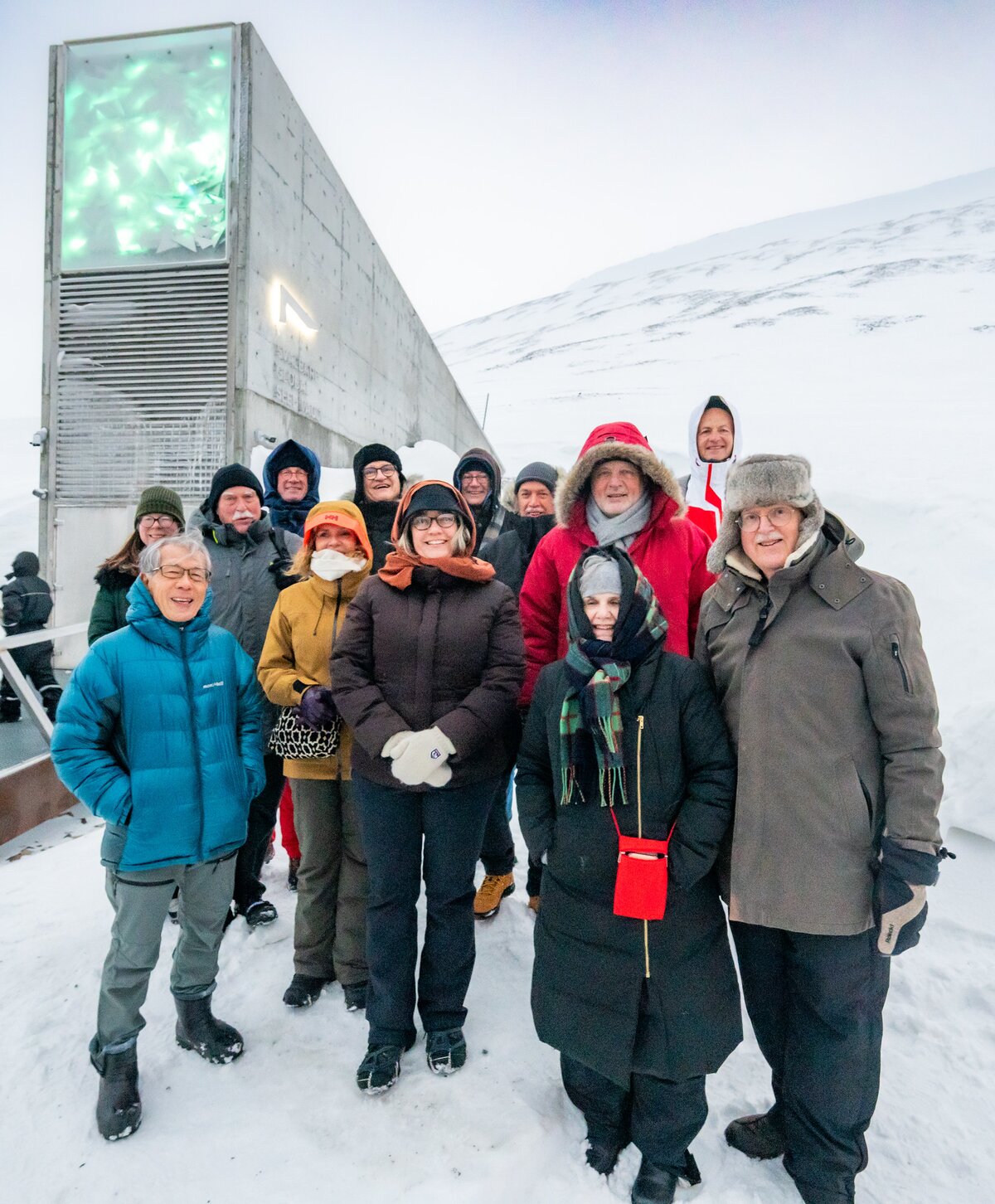
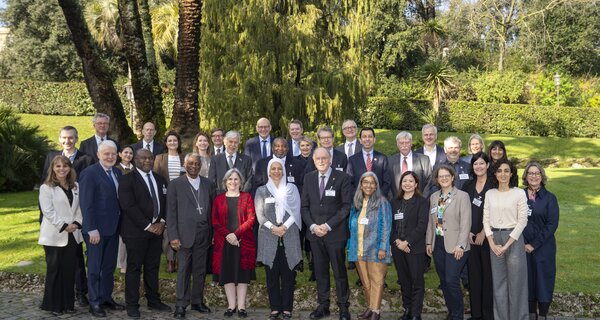
The Crop Trust’s Executive Board at the February 2025 Svalbard Global Seed Vault deposit event. Photo: Mike Major/Crop Trust
Despite the long list of titles, von Braun is down-to-earth – proud of his daughters who made sure to steer clear of agriculture-related careers, fond of Roman pasta and quick to laugh about his wife’s hatred for cooking. For someone who has spent years studying hunger crises, he remains what his wife calls an “eternal optimist”.
In the conversation below, von Braun reflects on childhood nettle soup, climate change, AI and why seeds conserved in genebanks are one of humanity’s most valuable resources for facing an uncertain future.
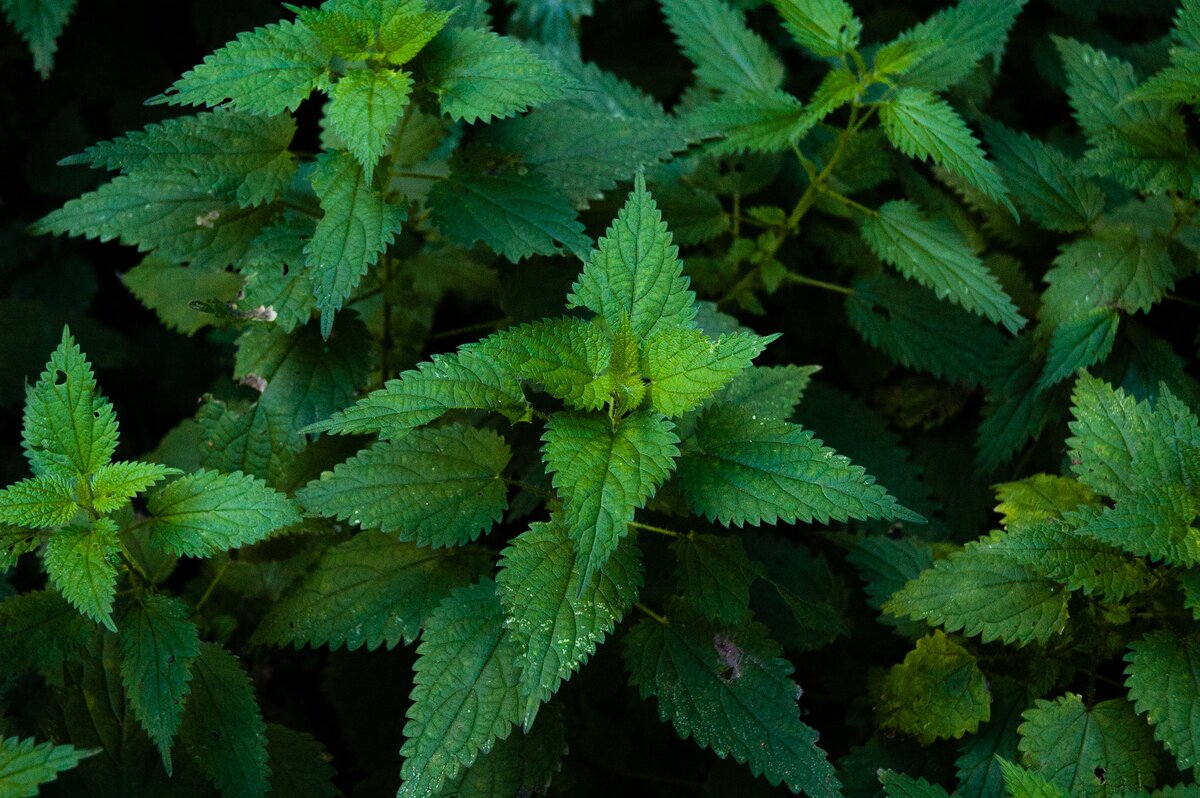
Stinging nettle. Photo: Jan Ingemansen/Flickr
Crop Trust: What are your earliest food memories?
Joachim von Braun: I became a cook at a very young age. My mother was kind enough to let me help. She had learned to cook wild vegetables, and one of them was nettle soup. You know, you touch nettles once and don’t want to touch them again. So I found it very curious that she went out with gloves, harvested nettles and we cooked this green soup together.
When I was six or seven years old, I was already cooking little soups over a fire in the garden. And from there on, I’ve kept cooking. If I have time, I cook almost every day – partly because my wife hates cooking.
Crop Trust: What first drew you to agriculture and food systems research and what does your work mean to you now?
Joachim von Braun: As a young boy I spent every summer holiday on a small farm in Bavaria, in the south of Germany, where I helped to milk and herd cows in the mountains. We got milk, butter and cheese from these animals… I enjoyed seeing the whole value chain in action.
At the end of high school, I visited Tunisia with a soil scientist who was testing water quality to see whether it would be suitable for gardening in the desert. I found it fascinating that science could determine whether water would support gardens for Bedouin communities in such marginal environments.
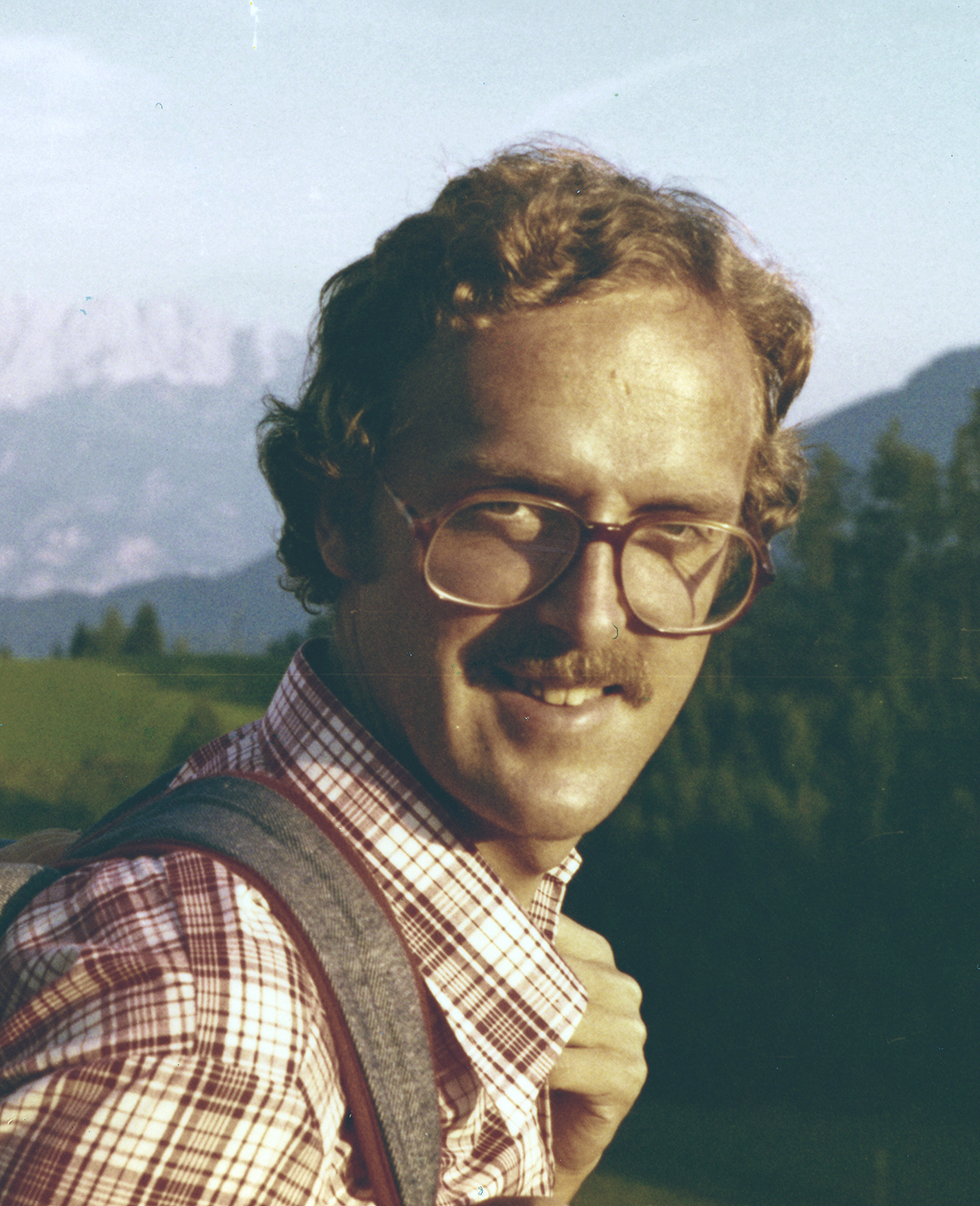
Young Joachim von Braun. Photo from personal archives
That motivated me to study agriculture. Later, as a postdoc in Egypt, I worked on irrigation models and studied producer and consumer behavior. The idea that research could serve farmers, consumers and national economies – and help us manage soils, water and seeds – fascinated me.
My wife says I am an eternal optimist. When I worked on famine and hunger crises – in Darfur and Ethiopia – I experienced how people struggle and cope under very difficult circumstances. It gave me enormous respect for them. In that context it is hard to justify pessimism. The real issue is responsibility: respect for people who cope with hardship, and sometimes frustration with policymakers who fail to do their job.
Crop Trust: When did crop diversity and genebanks become important in your work?
Joachim von Braun: As a professor in Kiel, Germany, I decided to study seedbanks and seed systems. I wrote a journal article on the information embedded in seeds and encouraged one of my students, Dr Detlef Virchow, to study the economics of crop diversity conservation.
We asked important questions – What is the value of crop diversity? How many seedbanks do we need? Virchow’s dissertation in the mid-1990s became one of the first comprehensive studies on the economics of seedbanks.
Dr Virchow then also got involved in the negotiations in Leipzig ahead of the International Plant Treaty with Dr Cary Fowler and others, which I followed closely. It became clear to me that the world needed an international understanding to both protect seeds and make them accessible.

Crop Trust: What’s top of mind to you now and how are you addressing it?
Joachim von Braun:
Food security is hindered by wars and armed conflicts. At the same time, climate change is still underestimated as a risk by policymakers around the world. Their perspective is too short-term. We need more climate education and related science. We must do more to improve adaptation and resilience, while reducing greenhouse gas emissions through policies and technology.
The Pontifical Academy of Sciences hosts a series of conferences on climate resilience. It’s not only about extreme climate shocks but also the creeping increase in temperatures. We must prepare for a world that is maybe even three degrees warmer.
This will have huge ecological implications and will greatly increase the value of seeds that are adapted to meet challenges like higher heat or longer drought. It will not be easy to manage, and the poor will suffer the most unless much more investment to build sustainable food systems and for reduction of hunger is forthcoming.
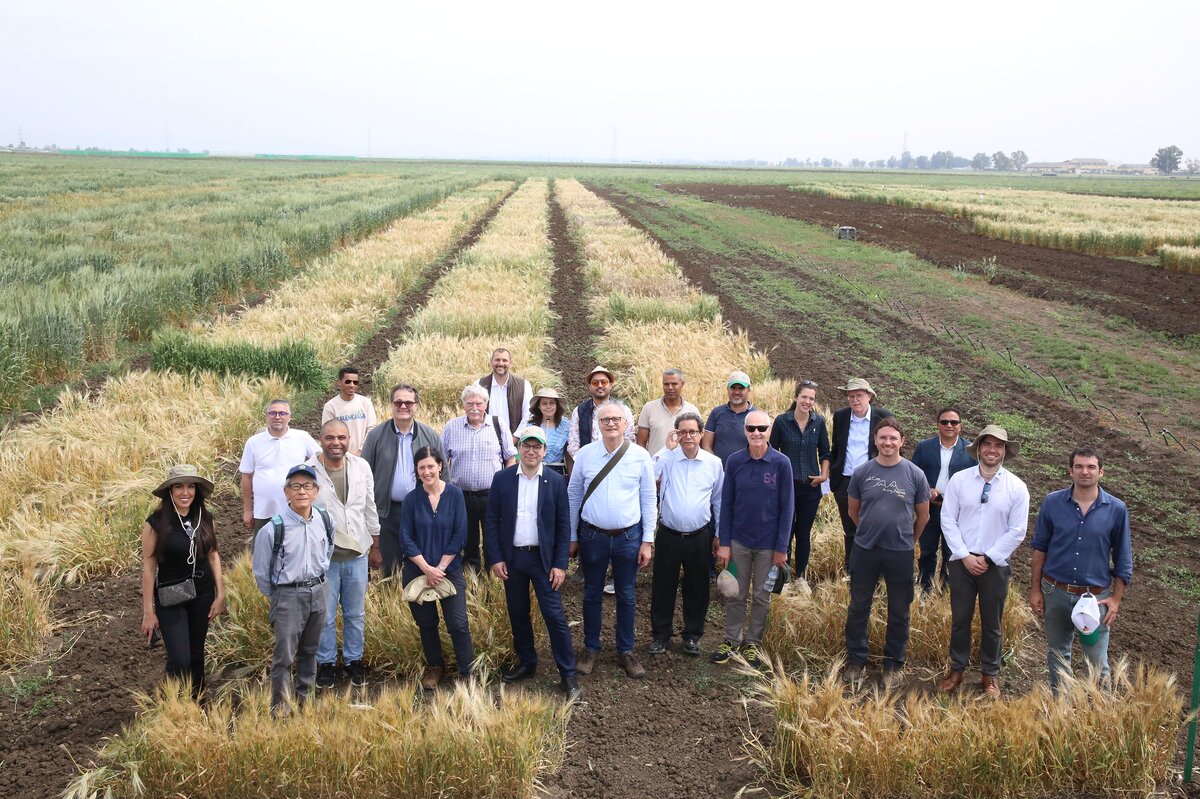
The Crop Trust’s Executive Board visits ICARDA’s field genebank in Merchouch. Photo: Luis Salazar/Crop Trust
Crop Trust: How do genebanks and your work with the Crop Trust make a difference in this challenge?
Each seed stored in genebanks contains potentially valuable information that can help us manage current and future risks and uncertainties in food systems. It is lifesaving information for humanity’s future. Risk management means, for example, what a world that is 2.5 or three degrees warmer might mean for farming and healthy food.
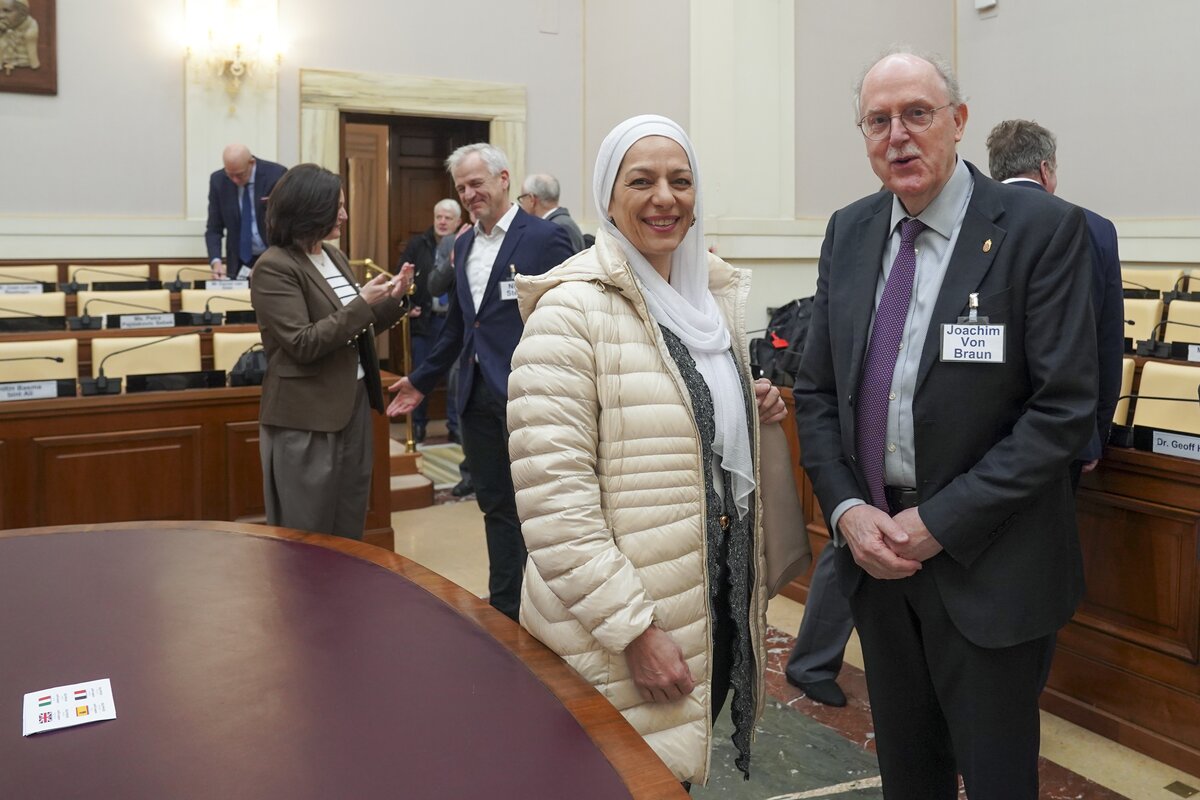
Her Royal Highness Princess Basma bint Ali of Jordan and Prof. von Braun at the 'Conservation and Use of Crop Diversity in the Bio-Digital Age' workshop organized by the Crop Trust and Pontifical Academy of Sciences. Photo: Petra Pajdakovic/Crop Trust
We cannot simply conserve crop diversity and leave it unused. We need to test seeds in different agroecological contexts that resemble the world we are moving toward. The international research of the CGIAR, supported and strengthened by the Crop Trust, plays a key role in that. Rapid shifts and irreversible tipping points mean we may have to dig deep into genebanks to find varieties that can grow under conditions we cannot yet imagine.
I believe that we can build more resilient food systems and improve food security, but we must be prepared. Genebanks help us do exactly that. And they need more support.
This is why I am happy to see the collaboration between the Crop Trust and the Pontifical Academy of Sciences. We recently brought experts together to look at how AI, genomics and new technologies are changing genebanks – not just how they conserve diversity, but how they can actively support breeding and food systems.
The big question now is how to make sure all genebanks can benefit from new and innovative technologies and AI. Together, we can explore how to overcome barriers, advance the mission of the Crop Trust and secure the future of food for all.
Category: Food Security
Related Articles