
The Risk of One Potato: Shangi and the Challenge of Diversity in Kenya
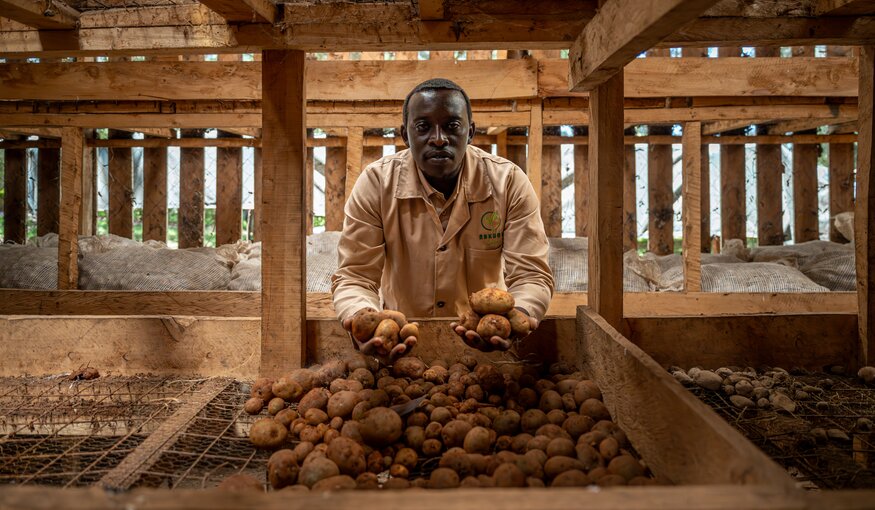
Enock Rugut displays seed potatoes stored in a diffused light store at Nakuru Tubers in Nakuru County, Kenya. The ventilated storage system keeps seed potatoes healthy and ready for sale to farmers for the next planting season. Photo: Kreis Visual Storytelling
15 June 2026
In the bustling potato markets of Kenya, one name reigns supreme – Shangi. This single variety is so dominant that it currently commands 60 to 70% of the country’s total potato production. For the 800,000 smallholder farmers who grow it, Shangi is a favourite. It matures quickly, allowing up to three harvests per year.
"Farmers love Shangi," says Winnie Wambugu, a potato seed producer in Elburgon, Kenya. "If they don’t get Shangi, they go nuts".
The Danger of Uniformity
However, such heavy reliance on a single variety is not good. It makes the system fragile. When a disease hits Shangi, thousands of farmers can see their harvests decline at the same time. Over recent years, Shangi has lost its natural resistance to pests and diseases, particularly the devastating fungus known as late blight.
The impact can be seen in Kenya’s harvest numbers. In the last 25 years, average potato yields in Kenya have nearly halved, dropping from 22 tonnes per hectare to just 12 tonnes per hectare in 2025. When climate stress or a new wave of disease hits, the lack of diversity means entire regions can see their harvests collapse simultaneously. But even with these issues, replacing Shangi would be a challenge.
Breaking the Cycle
Shangi is deeply embedded in Kenya’s potato supply chain. Traders and chip vendors prefer it, making farmers hesitant to switch to newer varieties even when they offer better resilience. According to them, it is an exceptionally versatile potato. It holds its shape well and is highly preferred for French fries, chips, mashing and home cooking.
"We need to rethink how to come up with new varieties other than Shangi that can cope with the climate and the disease pressure," says Enock Rugut, co-founder of the potato seed producer Nakuru Tubers.
The Crop Trust is working with breeders to broaden potato crop diversity. Through our BOLD project, they are tapping into wild relatives and reintroducing traits that improve blight resistance and heat tolerance. These potatoes also need to have a good taste and versatility for cooking.
“We are identifying many promising new potatoes, together with our partners and the farmers who evaluate them in the field. I have no doubt that the next generation of varieties for East Africa will come from the materials we see here today,” says Thiago Mendes, potato breeder at the International Potato Center (CIP) and leader of the BOLD potato pre-breeding program.
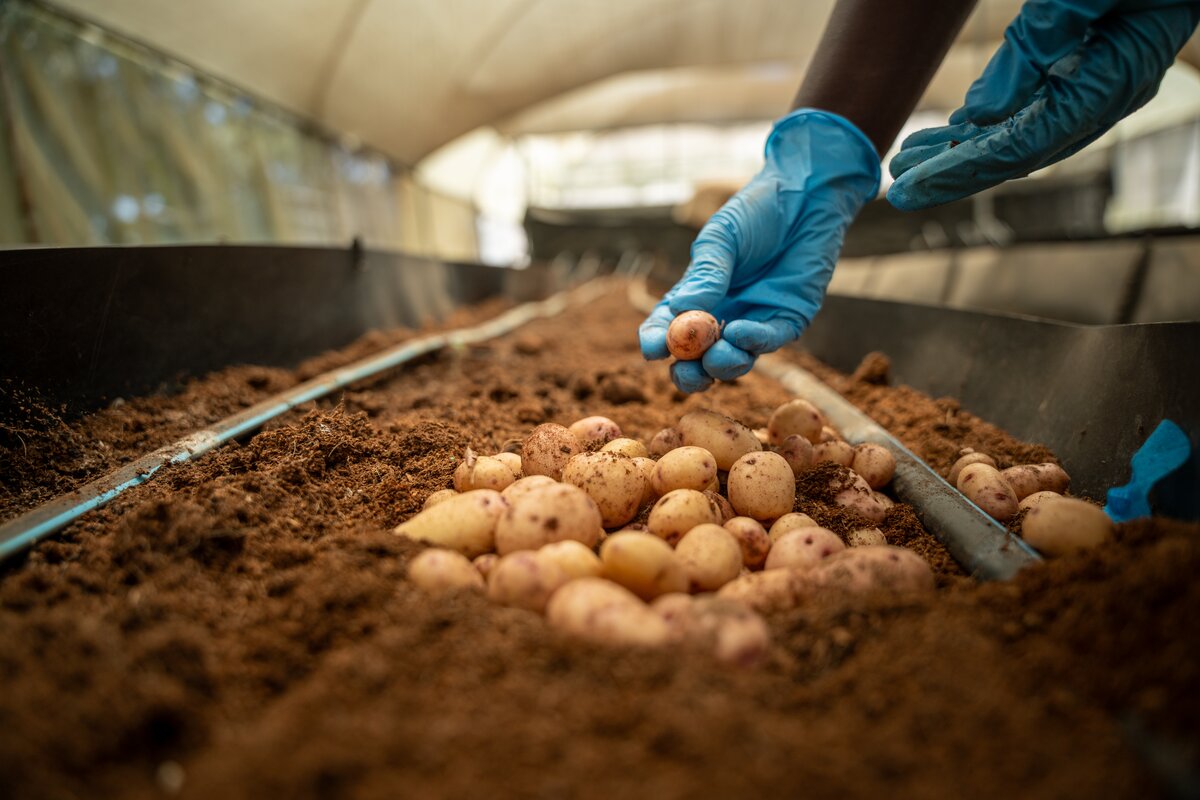
Harvest of mini-tubers produced from root cuttings in a seed multiplication tunnel at Nakuru Tubers in Nakuru County, Kenya. These early-generation seed potatoes are used to produce large quantities of seed for farmers. Photo: Kreis Visual Storytelling
A System-Wide Shift
Developing a better potato is only half the battle. The other half is getting it into farmers’ hands and into the soil. Through BOLD, institutions like CIP collaborate with local seed producers, such as Nakuru Tubers, to ensure new varieties with resilient traits reach the market.
By involving farmers in field trials and focusing on the tuber qualities that farmers, traders and consumers demand, these partnerships are diversifying Kenya's fields. Shangi still reigns supreme, but by working with genebanks, Kenya’s farmers now have more options. And soon may have new varieties that hold up in fields and in fryers.
As Wambugu notes, success looks like a farmer buying a bag of a new, resilient variety and seeing their yields and their livelihoods improve. Food security isn't built on the success of one potato, but on the strength of many.
This story is part of UNTAMED – a series exploring the diversity of some of the world’s most important crops, and the farmers, scientists and genebanks working to keep that diversity alive in a changing climate.
Read this next: The Genetic Memory of the Potato: How Andean Diversity Shapes New Varieties for East African Farm
Categories: BOLD, Potato, Nutritional Security, Sustainable Agriculture
Related Articles
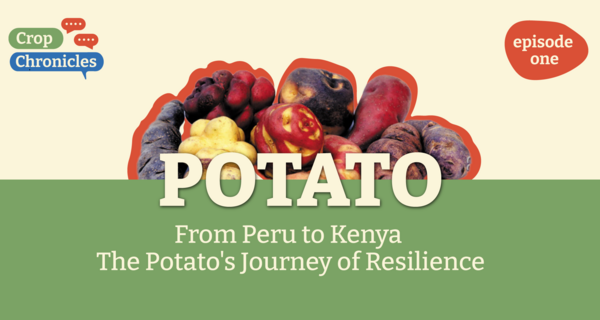
Crop Chronicles Podcast: From Peru to Kenya - The Potato's Journey of Resilience
28 May 2024