Vietnam’s Seed Clubs Fed a Nation. Now They Face New Barriers
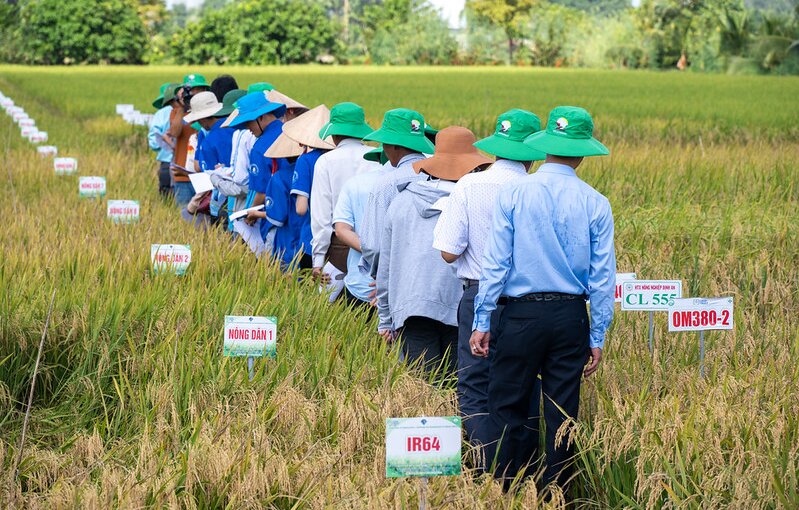
Seed club at Dinh An, Lap Vo, Dong Thap, Vietnam. Photo: Michael Major / Crop Trust
30 June 2026
New study underlines the need for more flexible policies to support farmer-led seed innovation after 30 years of success.
Around the world, seed systems are being tested by climate shocks, rising costs, disrupted trade and growing concerns about food security. These pressures point to an important question: how do we ensure that farmers have access to quality seed that is affordable, adapted to their local environment and there when they need it?
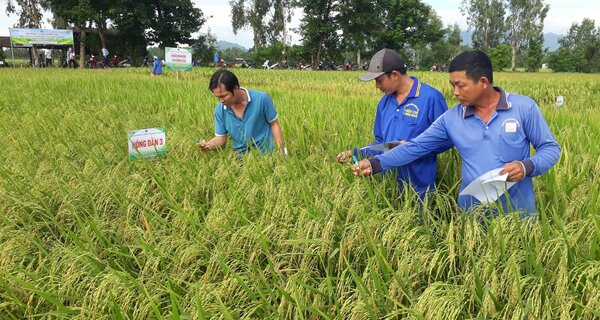
Vietnam’s seed clubs offer one answer. Over three decades, these farmer-led groups have helped to supply rice seed to meet needs, supported participatory breeding and kept hundreds of traditional varieties and farmer-developed lines alive in the country’s seed system. Thanks to the trust, knowledge and support of seed club custodians, Can Tho University was able to add more than 750 samples of traditional rice varieties from 11 Mekong Delta provinces to its genebank.
Seed clubs are not alone in the game. They’re backed by non-profits, researchers and the local governments. This has allowed them to evolve from small crop improvement initiatives into major actors in the Mekong Delta rice seed system.
A new study supported by the Crop Trust BOLD project shows how this happened and what may be needed next. The authors conclude that continued success of seed clubs depends on policy and market systems that better support – rather than constrain – farmer-led innovation.
Seed club meeting in Vietnam. Photo: Michael Major / Crop Trust. Photo: Michael Major / Crop Trust
Clubs for Seeds
Seed clubs are farmer-led groups that work together to improve rice varieties, produce quality seed and share it with other farmers. Members are farmers that test and select varieties suited to local conditions, learn seed production and quality-control techniques and, in some cases, develop entirely new varieties.
The rise of seed clubs was closely tied to Vietnam’s food insecurity in the 1980s and 1990s. The government intensified rice production to address shortages and demand for seed increased sharply. The formal seed system struggled to keep up. This created space for more community-based approaches to seed production and crop improvement.
Over time, seed clubs became deeply embedded in the rice economy of the Mekong Delta. These clubs did more than just help meet demand for good seed, they also became custodians of rice diversity.
Over three decades, seed club farmers helped collect and conserve more than 750 traditional local rice varieties and participated in the selection and development of nearly 500 stable rice lines. Six farmer-developed varieties have been formally released nationally, while many others continue circulating locally among farming communities.
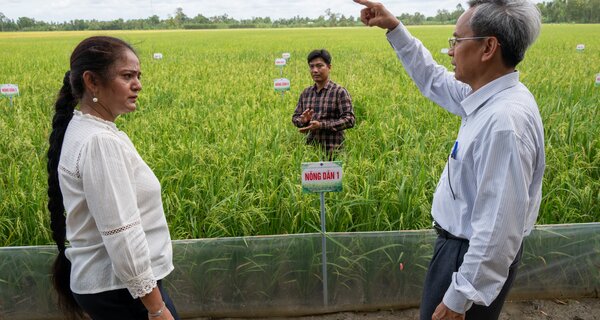
The Crop Trust is supporting the move of farmer-developed Vietnamese varieties into the formal system. Through partnerships with Can Tho University, several varieties are progressing through approval. Last year, two farmer-developed varieties supported by the Crop Wild Relatives and BOLD projects – Nông Dân 1 and 2 – attained plant variety protection status. More recently, Nông Dân 2 was officially released as a variety. Both can now be sold commercially.
According to the study, the scale of this participatory breeding work – both in terms of the number of farmer groups involved and the number of varieties and breeding lines developed – may be unmatched among participatory plant breeding programs. In the process, seed clubs kept valuable rice diversity alive in Vietnam’s seed system.
The study focused on An Giang Province, home to more than half the region’s seed clubs. By 2021, seed clubs had become the province’s largest category of seed producers, with more than double the production volume of private companies and cooperatives combined.
Yet the study also points to a growing tension.
Seed Clubs Today
Many seed clubs now operate primarily as outgrowers for commercial seed companies, under contract to produce seed for varieties owned by public or private actors. This arrangement has helped seed clubs expand production and remain economically viable. But it also makes it much harder to promote the use of the hundreds of farmer-developed varieties produced by the clubs.
“The seed clubs were established to promote and maintain diversity in the seed system. This has provided the basis for seed companies to scale up seed production in the province. Yet at the same time, it has been much more difficult to scale up production and dissemination of farmer-developed varieties,” says Dr Sarah Paule Dalle of the Norwegian University of Life Sciences, one of the study’s authors.
Part of the challenge lies in Vietnam’s changing regulatory environment.
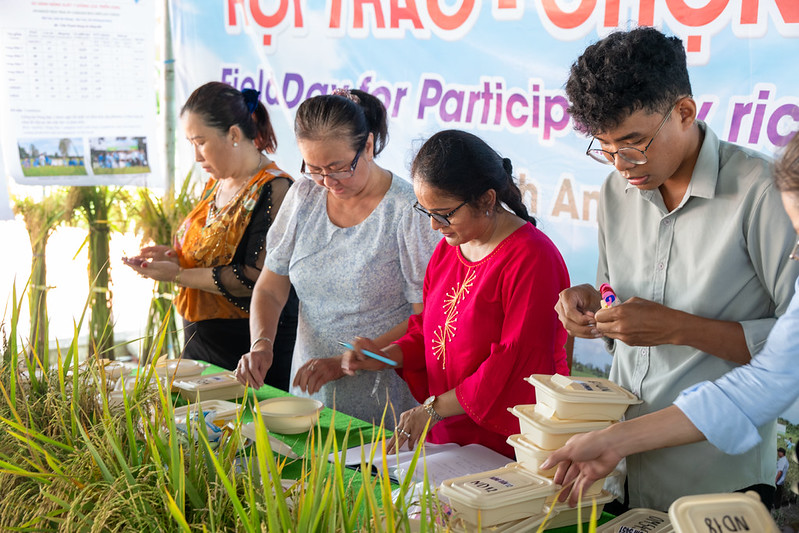
Seed club at Dinh An, Lap Vo, Dong Thap, Vietnam. Photo: Michael Major / Crop Trust
Policy Promotes Production
The study asserts that seed clubs flourished during a period of relative policy openness in the 2000s. At the time, decentralization and government support programs created space for community-based seed production and participatory breeding. More recent regulations, however, have tightened requirements around plant variety protection and commercialization.
Under Vietnam’s 2018 Crop Production Law, plant variety protection is required before varieties can be sold commercially. For many seed clubs, the registration process is too complex and expensive to navigate.
As a result, most farmer-developed varieties remain confined to local, non-commercial exchange systems, even when they are well adapted to local growing conditions. At the same time, private-sector varieties dominate commercial markets due to strong consumer demand for traits such as aroma and grain quality.
Seed clubs also often lack the equipment needed to process seed themselves, meaning much of their production is sold unprocessed to seed companies, cooperatives or extension centers at lower prices. Much of this is done on contract, which limits the seed clubs’ ability to influence the varieties that will be produced and sold.
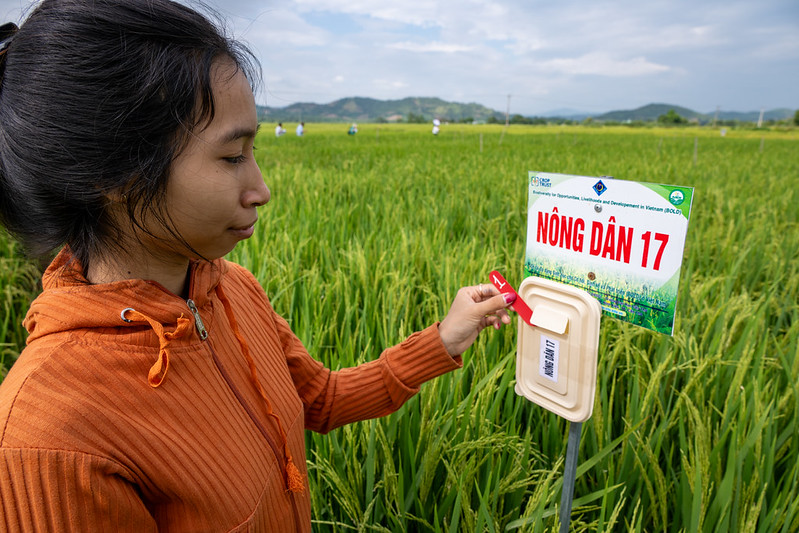
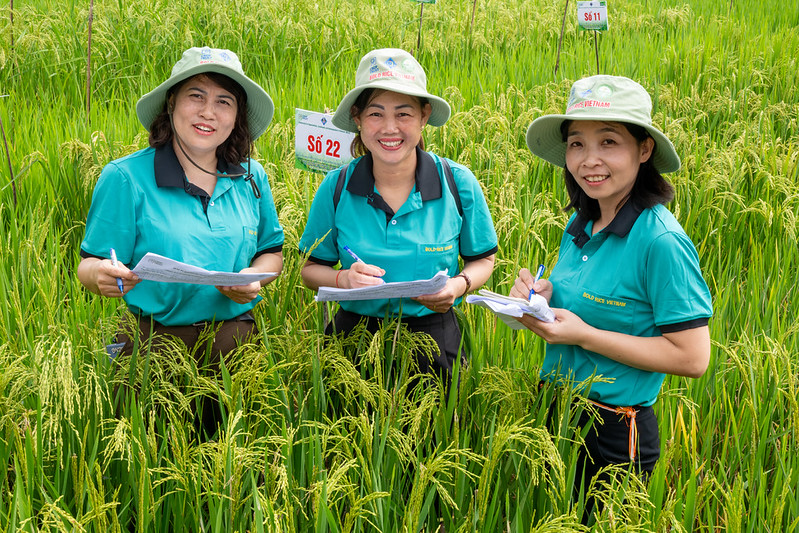
Rice trials and farmer participatory evaluations supported by Can Tho University in Mekong Delta and Central Vietnam. Photo: Michael Major / Crop Trust
Moving Forward
The authors argue that seed clubs have already proved their value to Vietnam’s seed systems and future food security. The question now is whether policies can evolve to match that reality.
“Seed clubs can work in countries where farmers need to restore the seed quality of locally adapted varieties, or where there is a need to identify well-adapted varieties by comparing and evaluating new materials,” says Loi Huu Nguyen, the study’s lead author. “They can also multiply and supply quality seed to local farmers.”
The study calls for more flexible regulations, lower registration costs and greater support for farmer-developed varieties. It also points to examples from countries such as Nepal, where simplified procedures have helped farmer-bred varieties enter formal markets more easily.
“Market and regulatory environments are important when initiatives such as seed clubs aim to scale up sustainably. This is the main lesson we have learned,” Dalle says. “In many cases, seed clubs are quietly tolerated. But in this case, there has been proactive engagement by these government agencies with the seed clubs.”
Vietnam’s seed clubs show what is possible when farmers are treated not only as seed users, but as innovators, breeders and partners in national food security. Their next chapter will depend on collaboration – seed clubs, government agencies, researchers and companies working together to make farmer-developed varieties easier to register, share and scale. For Vietnam, that means protecting a homegrown source of resilience. For other countries, it offers a powerful lesson. When policy makes room for farmer-led innovation, seed systems become more diverse, more responsive and better prepared for an uncertain future.
The Biodiversity for Opportunities, Livelihoods and Development (BOLD) project is a 10-year project coordinated by the Crop Trust and funded by the Government of Norway.
Category: BOLD