Crop Diversity Day 2026 Puts Flavour and Healthier Diets on the Menu
-
 By Marta Millere Outreach and Engagement Lead
6 October 2026
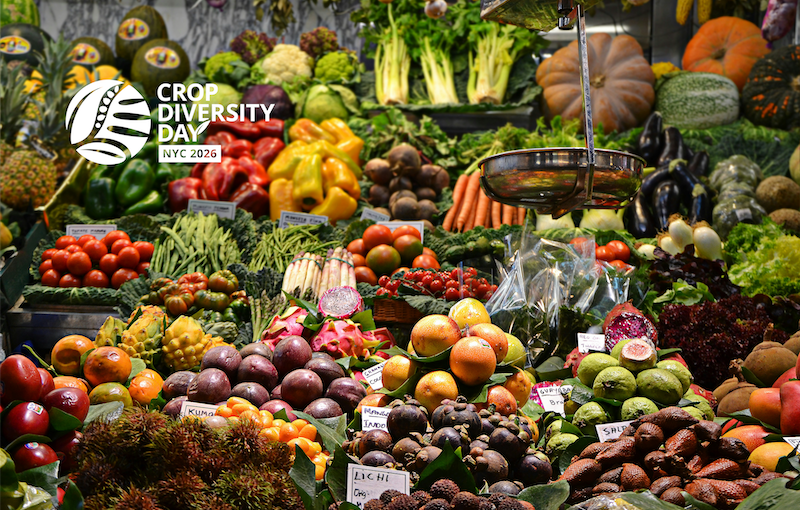
One bite of food tells a whole story – about the plant it came from, the place it grew and the people who prepared it. Its flavour can bring back memories or introduce us to something entirely new. Behind those experiences lies the diversity of plants we conserve, cultivate and consume.
Crop Diversity Day, an annual event hosted by the Crop Trust and partners, invites guests to explore that diversity in different locations around the world. For its 2026 edition, the Crop Trust, New York Botanical Garden and partners gathered at the Garden during Climate Week NYC. Through science, stories and a shared meal, the day connected the work of farmers, genebanks and botanic gardens with something everyone could relate to – food that tastes good and helps us eat well.
The conversation has been growing since the 2023 Global Crop Diversity Summit in Berlin called for stronger cooperation among the world’s genebanks. Crop Diversity Day 2024 in Rabat highlighted conservation and use across the Middle East and North Africa. In Lima, Crop Diversity Day 2025 linked advances in cryo conservation with a celebration of vegetables and opportunity crops. This year widened the conversation to the flavours, traditions and knowledge that keep food diversity part of our lives.
“We need new relationships to address climate change and other issues,” said Stefan Schmitz, Executive Director of the Crop Trust. “We can redefine this triangle of people, plants, and the planet.”
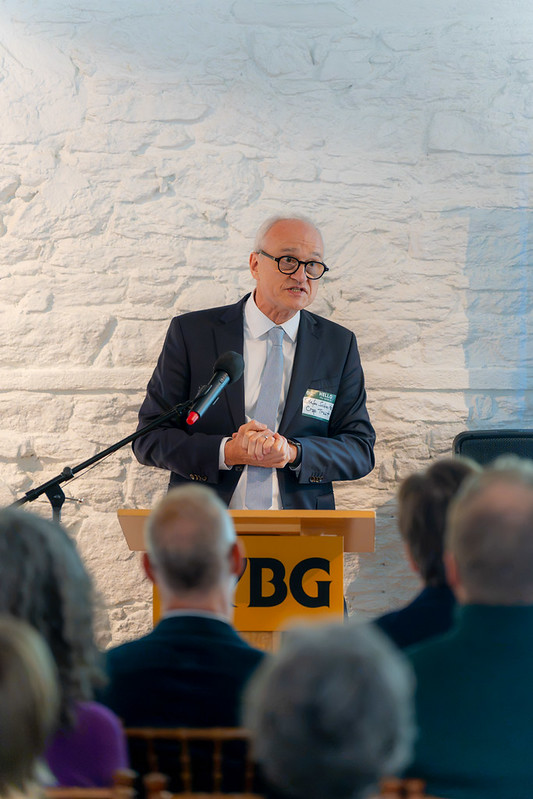
Executive Director Stefan Schmitz (Crop Trust) providing opening remarks at Crop Diversity Day 2026, held at New York Botanical Garden on 25 September 2026 alongside Climate Week NYC 2026. Photo Credit: NYBG
A Growing Community for Food Plants
Botanic gardens often introduce people to plant biodiversity. They give visitors a chance to ‘meet’ food plants long before they reach a market stall or supermarket shelf. Their living collections also help conserve fruits, nuts and other plants that cannot easily be kept in conventional seed storage.
The New York Botanical Garden’s Edible Academy takes a hands-on approach – children and adults learn to grow and prepare vegetables, fruits and herbs. The day’s programme included a visit to explore this work.
Connecting botanic gardens with genebanks is at the heart of the Global Conservation Consortium for Food Plants, which celebrated its first anniversary at the Crop Diversity Day 2026. Hosted at the New York Botanical Garden and supported by the Crop Trust and partners, the Consortium unites botanical gardens, genebanks and the wider conservation community.
The benefits reach well beyond the institutions involved. Mauricio Diazgranados, Chief Science Officer and Dean of Science at the New York Botanical Garden, said the Consortium’s work matters “for producers and others who make their living within food systems, for communities and their food security, and for anyone who eats, which is all of us.”
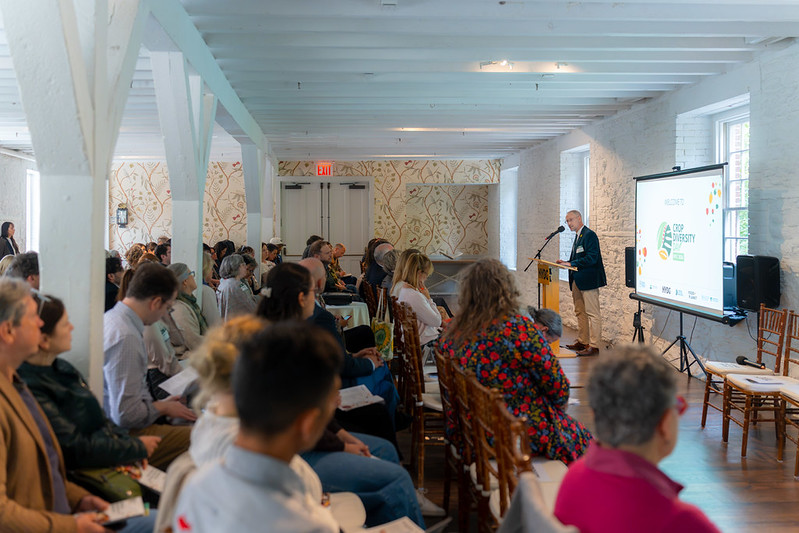
Mauricio Diazgranados (Chief Science Officer, NYBG) speaking about the one year anniversary of the Global Conservation Consortium for Food Plants at Crop Diversity Day 2026, held at New York Botanical Garden on 25 September 2026 alongside Climate Week NYC 2026. Photo Credit: NYBG
A World of Foods to Rediscover
A highlight of the event was the launch of the latest World Food Map, which gave guests a new lens through which they can explore the world’s edible plant diversity. More than 25,000 plant species have been used as food worldwide – including foods that are familiar in one place and barely known in another.
The map combines information on what people eat with where food plants grow and how well they are conserved. Based at Wageningen University & Research, the platform helps identify local foods that could fill gaps in diets. Its Stories of Food bring this knowledge to life.
One story shared at Crop Diversity Day 2026 took guests to three Aymara communities in Peru, where farmers grow many potato varieties together to spread the risk of an unpredictable harvest. Working with them, a team from the International Potato Center CIP identified 83 native varieties, each with its own story and flavors ranging from earthy and nutty to something resembling egg yolk.
“Diversity is farmers’ food insurance,” said Martin van Zonneveld, Head of Genebank and Biodiversity Science Leader at CIP. That insurance also extends beyond the fields – two of the communities had turned to the genebank to recover native varieties they could no longer find locally.
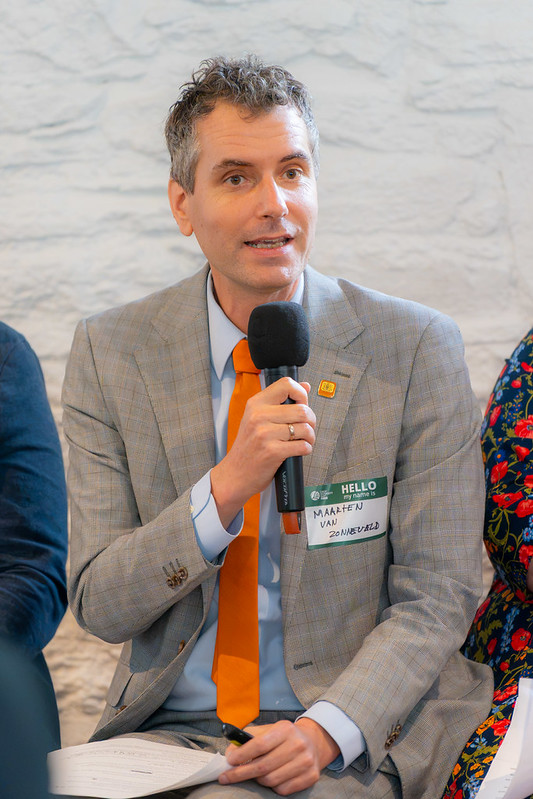
Maarten van Zonneveld (International Potato Center -- CIP) contributed a personal story of food at Crop Diversity Day 2026, held at New York Botanical Garden on 25 September 2026 alongside Climate Week NYC 2026. Photo Credit: NYBG
Good Taste Has a Part to Play
There is more to discover inside these foods, too. Jenny Gallo-Franco, of the Periodic Table of Food Initiative and the Alliance of Bioversity International and CIAT, showed how green vegetables that might seem interchangeable contain different combinations of compounds. Looking alike on the plate does not mean being alike in composition.
Through the Crop Trust’s Power of Diversity Funding Facility, researchers are also using the initiative’s methods to examine opportunity crops in different countries. Measuring them in the same way makes the findings comparable and could help farmers make a stronger case for these foods in local markets.
Guests could taste that diversity over lunch, with dishes including smoked carrot “lox,” crispy za’atar sunchokes and delicata squash with pumpkin seed dukkah. The menu gave the day’s discussions an edible form.
As Arielle Johnson, author of Flavorama, explained, flavor carries information about a plant’s growing conditions, the way it is cooked and the memories we bring to eating it. “Flavor is really the tasteable connection between the diversity of plants and the diversity of human experience,” she said.
Making room for more diversity on our plates starts with protecting the diversity of plants – and supporting the people who conserve, grow and cook them. From genebanks to farmers’ fields, gardens and kitchens, that work keeps a world of flavors within reach.
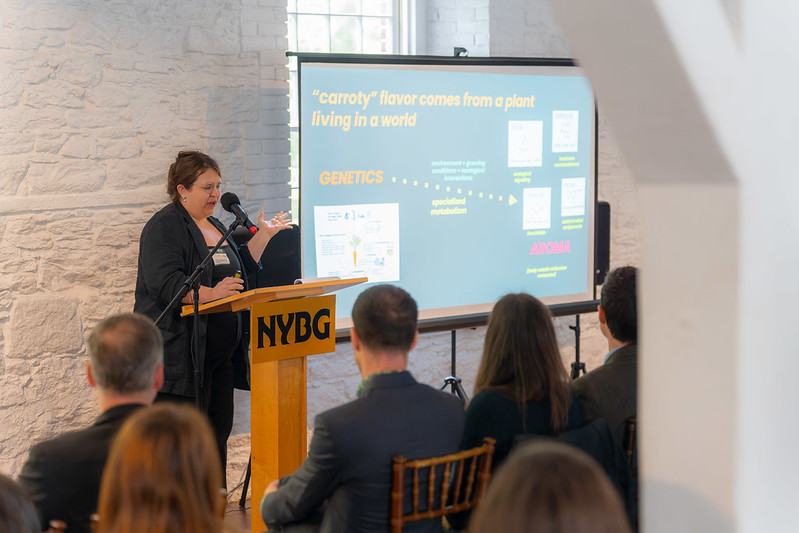
Author of Flavorama, Ariella Johnson, provided a keynote address on unlocking the art and science of flavor at Crop Diversity Day 2026, held at New York Botanical Garden on 25 September 2026 alongside Climate Week NYC 2026. Photo Credit: NYBG
Crop Diversity Day 2026 took place on 25 September 2026 and was organized by the Crop Trust, New York Botanical Garden, Wageningen University & Research, the Periodic Table of Food Initiative, Food + Planet and the International Plant Treaty. More images from the event can be found on our Flickr.
Category: Nutritional Security
Related Articles