Insights from Genesys: Over 120 Years of Crop Collecting in Under 40 Seconds
27 August 2026
What nearly one million landrace records in Genesys can, and cannot, tell us about the history of collecting missions.
For more than a century, researchers and genebank staff have travelled the world collecting crop diversity and securing it for the future. Now, records held in Genesys offer a glimpse of how those efforts have unfolded over time. Genesys is the Crop Trust-managed global online portal for information about crop diversity conserved in genebanks.
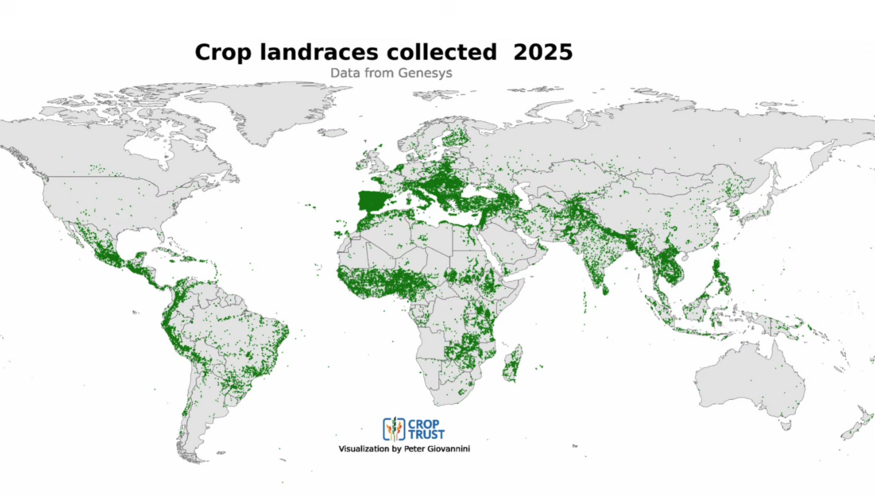
A new 38-second animation shows the recorded collecting locations of traditional crop varieties, or landraces, collected and conserved in genebanks. As the years advance from 1900 to 2025, dots spread across countries and continents, revealing the changing geographical reach of where seeds were collected.
Equally important is what the animation leaves out. Many records could not be included in the animation because only around a third of the landrace accessions in Genesys have both a valid collecting date and geographical coordinates. Without complete and accurate records, it is difficult to know exactly what crop diversity is already conserved and where gaps remain that should be prioritized for future collecting. Incomplete or inaccurate passport data can also affect the confidence of such analyses, so the animation reflects patterns in the data currently available through Genesys rather than a complete picture of collecting worldwide.
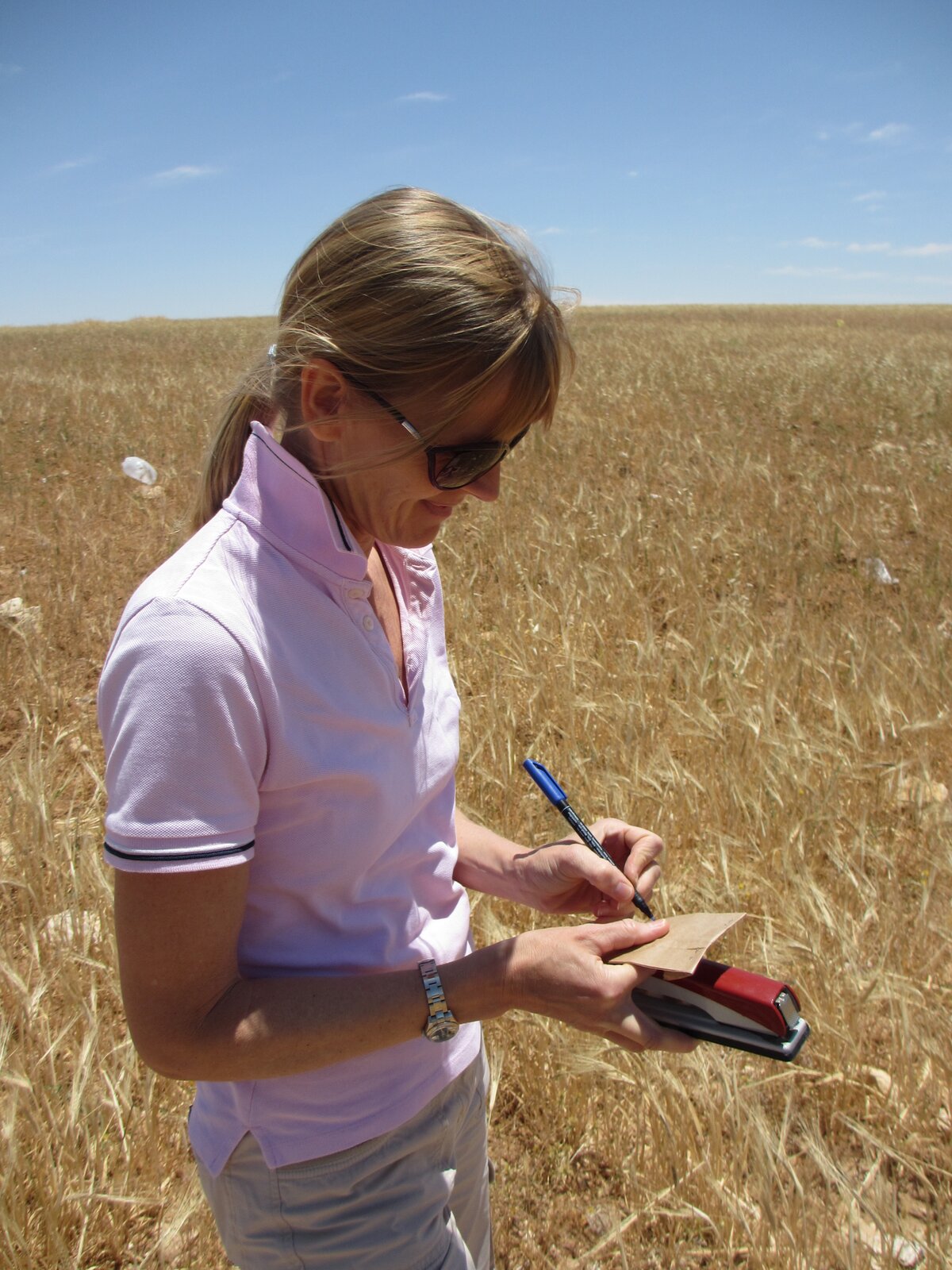
Dr Imke Thromann notes down a collecting number for a barley landrace found in Jordan. Twenty-three years later, the barley she collected is still safeguarded at the genebank of the Leibniz Institute of Plant Genetics and Crop Plant Research (IPK) and is made available via Eurisco and Genesys. Photo from Dr Thormann’s personal archives
The animation was created by Peter Giovannini, project coordinator at the Crop Trust, as part of an exploratory data analysis of the available landrace data with geographical coordinates in Genesys.
We asked Peter how he created the animation, what it reveals and why the quality of the underlying data matters.
What made you want to map 125 years of collecting?
I was looking at how the risk of crop diversity loss could be modelled geographically and wanted to understand how Genesys data on traditional crop varieties with geographical coordinates are distributed by collection date.
First I looked at the number of data points that have both geographical coordinates and collection year data. Then, I grouped records by year and mapped their collection locations over time to get a sense of change and trends. The animation builds this history year by year from 1900, while keeping earlier collection points visible.
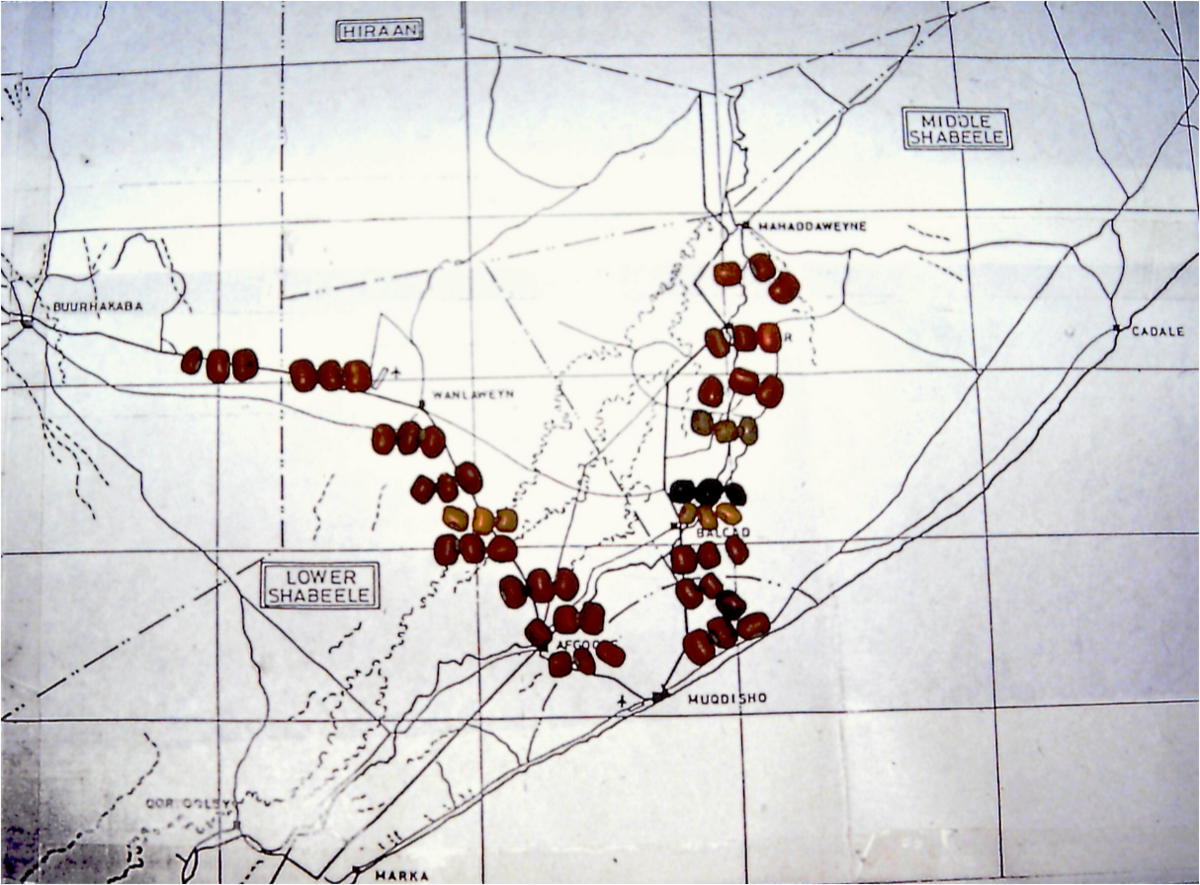
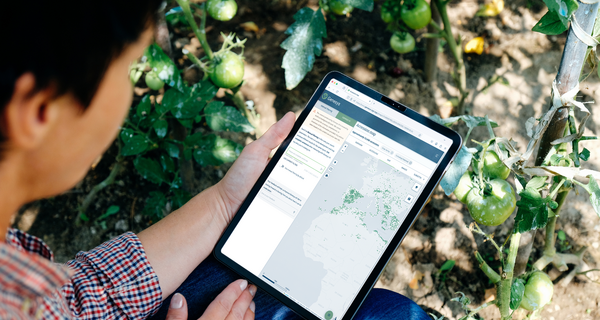
Cowpea samples shown on a map of Somalia near the locations where Dr Stefano Padulosi collected them during an IITA mission in 1988. Photo from Dr Padulosi’s personal archives.
What stands out?
Collecting activities represented in the dataset increased markedly from the 1970s. This was a period when international efforts to conserve crop diversity were expanding rapidly.
The map also shows that collecting has not stopped. Between 2010 and 2025, landraces were collected across Africa, Asia, Europe and Latin America and are now documented in Genesys. Some missions were designed to fill known gaps in genebank collections identified through the CGIAR Genebank Platform, while others formed part of national collecting programs.
What doesn’t the map show?
That is just as important. Genesys contains more than 970,000 records identified as landraces, but only about 228,000 had both a valid collecting year and the geographical coordinates needed for this analysis.
A blank spot on the map does not necessarily mean that nothing was collected there. Information might be missing, not yet digitized or not published through Genesys.
Better data helps make individual genebank samples easier to find and use. It also gives us a clearer picture of what is already conserved, where important gaps may remain and where future conservation efforts could be directed.
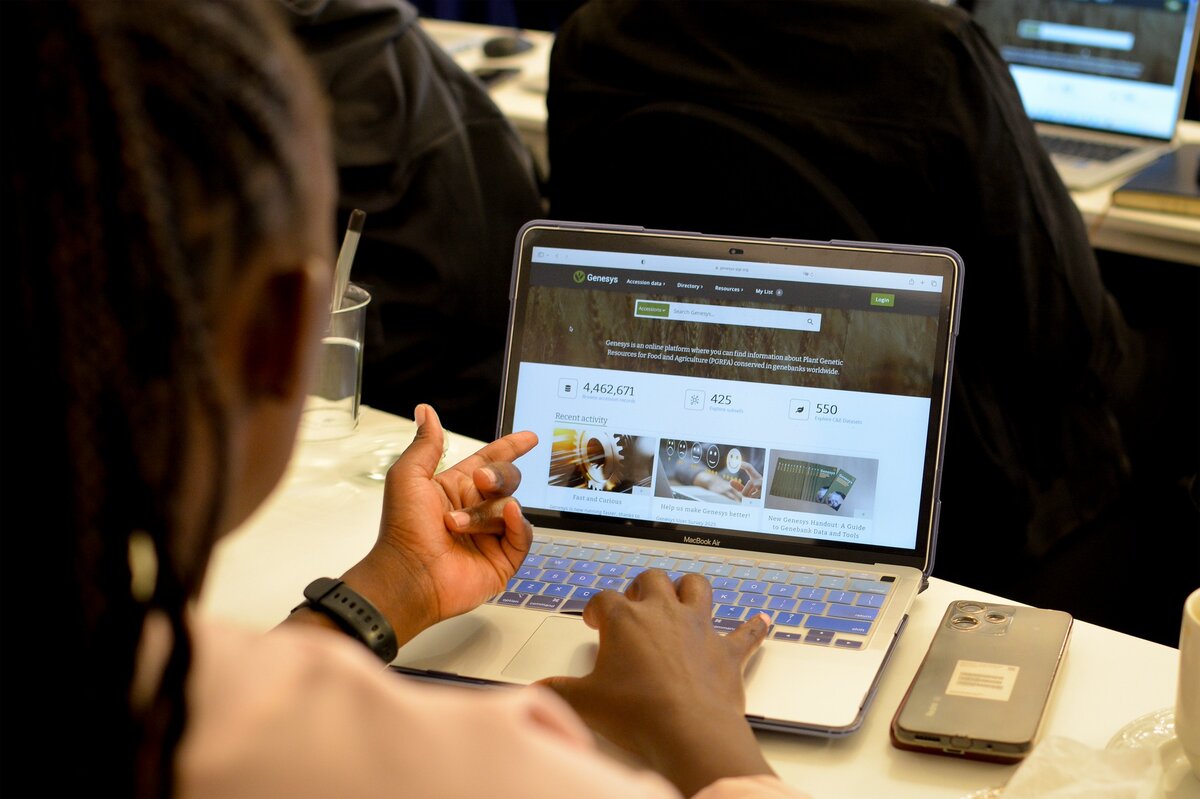
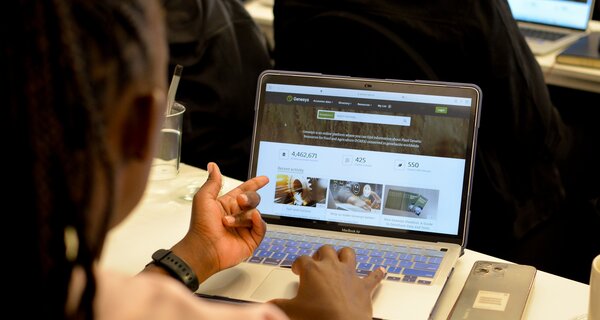
A participant learns how to use the Genesys platform during a GOAL workshop in Johannesburg, South Africa. Photo: Natalia Rodriguez/Crop Trust
Behind the Scenes: Genebank Data
Improving genebank data takes more than fixing individual records. Genebanks also need the systems and skills to manage their data well over time.
This is one of the aims of Securing Our Seeds, a Crop Trust project supported by Google.org. The project enables genebanks to digitize their collections and strengthen their internal data management through GGCE. This helps them standardize, validate and maintain passport data while reducing the risk of errors.
Better data makes individual genebank samples easier to find and use. It also gives us a clearer picture of what is already conserved – where important gaps may remain and where to direct future conservation efforts.
Developed and operated by the Crop Trust for over a decade, Genesys links information from genebanks around the world. It helps researchers and plant breeders find crop diversity that may be useful in developing more resilient and productive varieties. Its development, maintenance and operation receive long-term support from the Crop Trust Endowment Fund, as well as through individual projects.
Originally published on Genesys.
Categories: For Educators, For Partners, For Students
Related Articles