National Genebanks Advance Africa’s Food Future
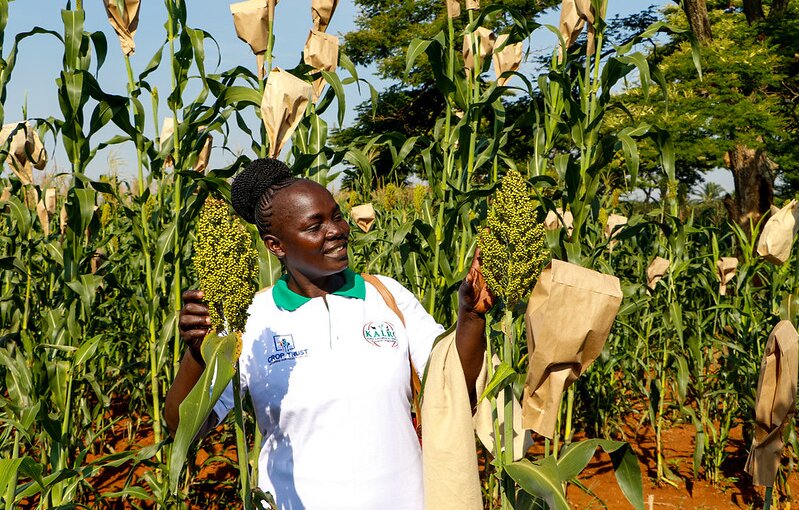
According to this farmer in Busia, crop diversity contributes to food security. This is why, on her own plot, she mixes sorghum with cassava and other resilient local vegetable crops. Photo: Manon Koningstein/Crop Trust
-
 By Marta Millere Outreach and Engagement Lead
18 August 2026
Farming in much of sub-Saharan Africa is not easy. But in Ghana, Kenya, Nigeria and Zambia, the risks have multiplied.
Pressures vary but point in the same direction – failed rains and depleted water sources in Kenya, droughts and floods in Zambia, conflict and climate shocks in northern Nigeria, and another season of disrupted planting in northern Ghana. And all of this has happened just in the last three years.
In today’s volatile reality, crop diversity offers options – traits that can help breeders develop crops that need less water or fertilizer, or can better withstand heat, pests and diseases.
For many countries, these options are held in their own national genebanks. The collections they conserve account for almost 85% of the world’s crop diversity stored in genebanks. They also hold culturally significant samples – local varieties, traditional crops and wild relatives.
Much of this diversity is not stored anywhere else.
In Nigeria, the crop diversity in the national genebank includes sorghum, a staple crop for millions of people. It is especially important in the country’s northern regions where drought, high temperatures and erratic rainfall are becoming more common.
“The sorghum in our collection is drought tolerant, adapted to poor soils, resistant to pests and diseases and suitable for different food and cultural uses,” said Dr Anthony U. Okere, genebank manager at Nigeria’s National Centre for Genetic Resources and Biotechnology (NACGRAB).
For Dr Okere, conserving this diversity gives breeders and researchers access to the genetic resources needed to develop improved varieties. This can help farmers adapt to climate change while supporting food and nutrition security, even in difficult times.
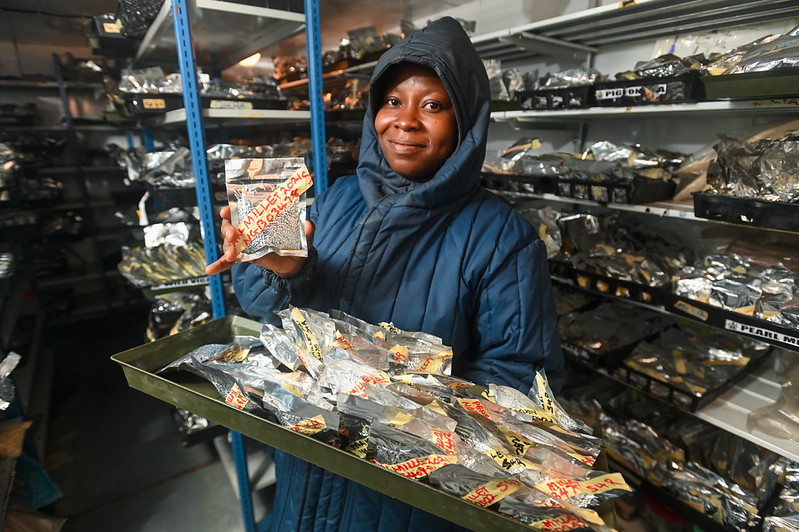
Long-term crop conservation in the cold room of the National Centre for Genetic Resources and Biotechnology (NACGRAB) in Ibadan, Nigeria’s national genebank. NACGRAB has over 10,600 accessions of 40 crop species conserved in the coldrooms. The largest collection is Sorghum, with over 2,300 accessions. Photo: Neil Palmer/Crop Trust
Seeds for Resilience
Through the Seeds for Resilience project, the Crop Trust works with national genebanks in Nigeria and three other countries – Ghana, Kenya and Zambia – to strengthen their ability to conserve and share crop diversity. This includes technical support that is central to high-performing genebanks – for example, through independent external reviews.
Experts visited the four genebanks in 2019, at the start of the project, and again in 2024 to assess progress across facilities, equipment, documentation, conservation procedures, staffing, distribution and long-term planning.
Such reviews can be demanding, but they give genebanks an independent diagnosis of what works, what is holding back progress and what needs investment.
“Reviews are a great opportunity for our partner genebanks to take stock, as we bring in reviewers with extensive experience in crop conservation,” says Michael Bolton, project manager with the Crop Trust.
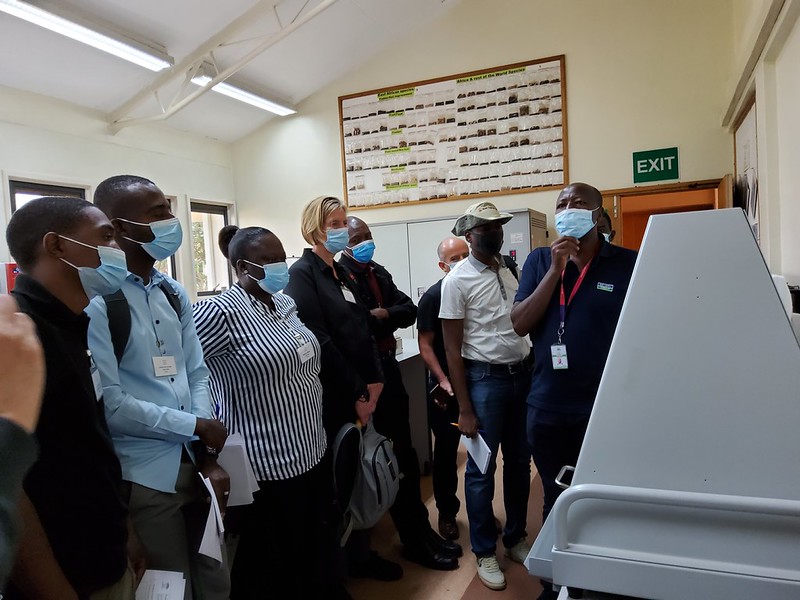
The CSIR Plant Genetic Resources Research Institute (PGRRI) team attends a data management session at the International Centre for Research in Agroforestry (ICRAF) in Nairobi. Photo: CSIR-Plant Genetic Resources Research Institute/Crop Trust
External Review Results Show Real Progress
For the Seeds for Resilience partners, genebank teams modernized systems, addressed long-standing bottlenecks and made their collections more visible and secure.
More than 108,000 sample records were made available through Genesys, a platform that shows the diversity conserved and where it is held.
Over 5,900 accessions were backed up at the Svalbard Global Seed Vault, adding a much-needed layer of security. In 2023, Ghana’s genebank became the 100th depositor to the Seed Vault.
But the reviews also showed where the work must continue.
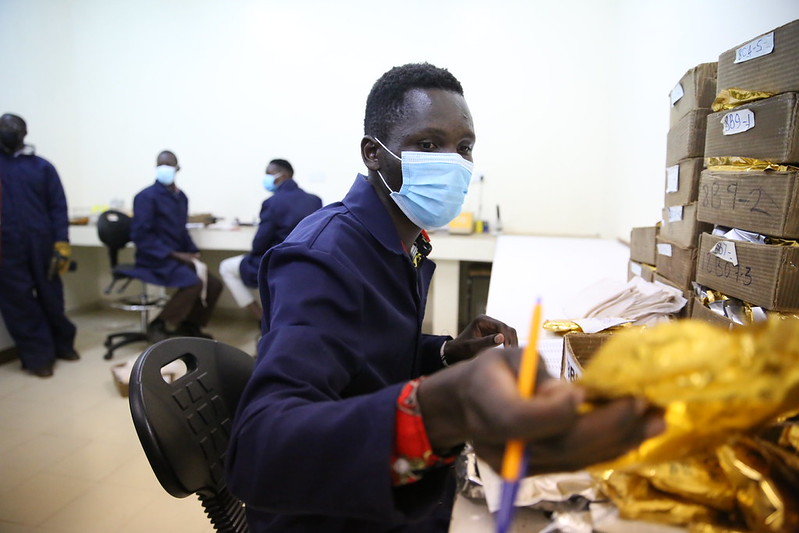
Located in Muguga South, the Genetic Resource Research Institute (GeRRI) of the Kenyan Agriculture and Livestock Research Organization (KALRO) conserves 51,000 accessions of about 2000 crop species of mainly landraces and their wild relatives. Photo: Luis Salazar / Crop Trust
Plant Health: An Urgent Priority
The reviews pointed to a vital gap. National genebanks need stronger plant health systems so they can share seeds and other plant material safely. Seeds can carry pests and diseases, sometimes across borders. Without the right checks in place, moving crop diversity comes with risk.
Under the Seeds for Resilience project, the Crop Trust is teaming up with the International Institute of Tropical Agriculture (IITA) Germplasm Health Unit to help partner genebanks identify urgent gaps, improve seed health checks and safe handling, and develop practical guidance for staff.
“Weak phytosanitary systems can compromise genebank material quality and allow accidental pest or disease spread during germplasm distribution,” said Dr Lava Kumar, lead of IITA’s Germplasm Health Unit. Strong plant health systems — phytosanitary systems — keep crop diversity from becoming a liability.
“These systems help protect collections from deterioration and allow genebanks to share material without spreading pests and diseases,” Dr Kumar explained.
As African countries look to strengthen food systems, breeders, researchers, farmers and genebanks need clean, well-documented material they can trust. Stronger phytosanitary systems help ensure that diversity can deliver benefits without passing the burden of testing, cost and risk to those receiving it.
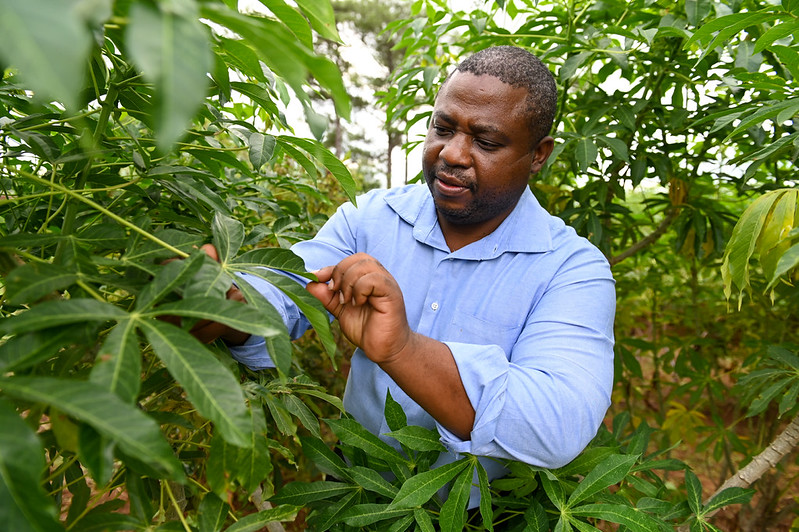
Mathias Tembo, pathologist at the Zambia Agriculture Research Institute (ZARI), checks the cassava field genebank at ZARI’s Mt. Makulu Central Research Station in Lusaka. Photo: Neil Palmer/Crop Trust.
Full Steam Ahead
The reviewers were clear – progress made so far should not stall. Continued support helps these genebanks move closer to international performance standards.
It is also a national investment. Food security depends on many things – roads, markets, extension, seed systems, finance and policy. But it also depends on whether countries can draw on their own crop diversity when conditions change.
Dr Okere puts it simply: “Every seed conserved carries traits that open options to meet the challenges that may come.”
In Ghana, Kenya, Nigeria and Zambia, national genebanks are keeping those options alive – and making sure they can be used.
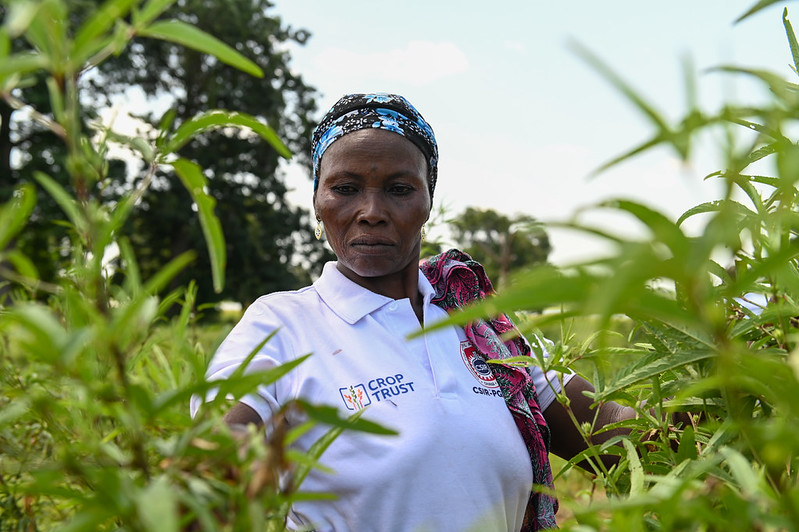
Roselle is an indigenous African leafy vegetable that requires little to grow and is rich in nutrients, but the lack of a seed system hinders wider planting. The Seeds for Resilience project works with partners like the Plant Genetic Resources Research Institute (PGRRI) to develop stronger seed systems for opportunity crops, in plots such as this one in Tamale, Ghana. Photo: Neil Palmer/Crop Trust
Categories: For Partners, For Policymakers, Seeds for Resilience, Sorghum, Food Security, Sustainable Agriculture
Related Articles