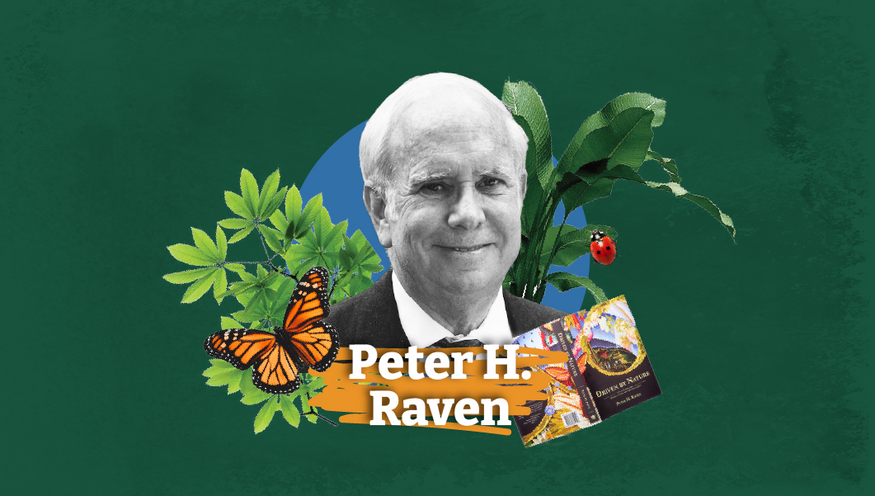
Peter H. Raven: U.S. Evolutionary Biologist Who Redefined Botanical Gardens
-
 By David Henry Contributor
23 September 2026
In this edition of our Seed Heroes series, we celebrate Peter H. Raven, whose groundbreaking work reshaped our understanding of evolutionary biology and transformed the Missouri Botanical Garden into a global force for biodiversity conservation.
Seeds stored deep under ice in the Svalbard Global Seed Vault. Plant breeders in lab coats germinating a new variety. Farmers caring for heirloom varieties in their fields. These are the images that come to mind when we think of conserving crop diversity.
But botanical gardens are also vital partners in conserving crop diversity. Ex situ conservation in gardens protects plant species outside their natural habitats as the threat of extinction intensifies.
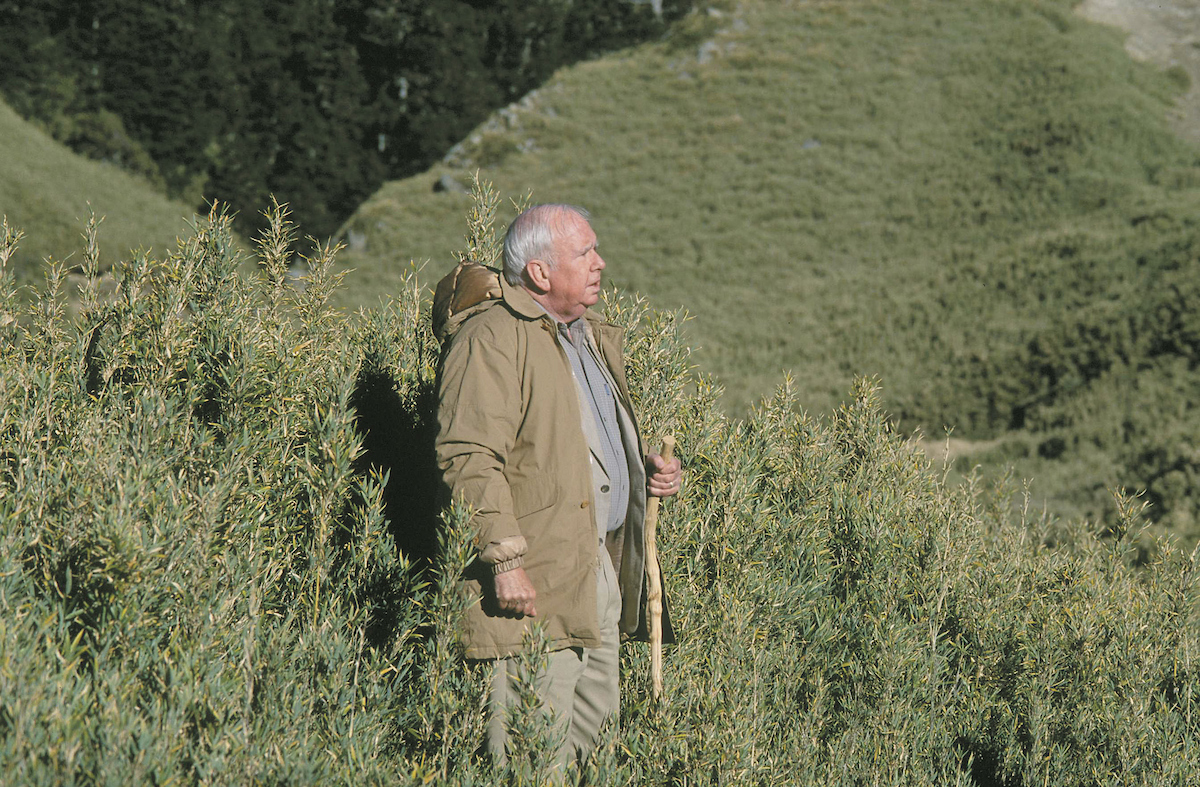
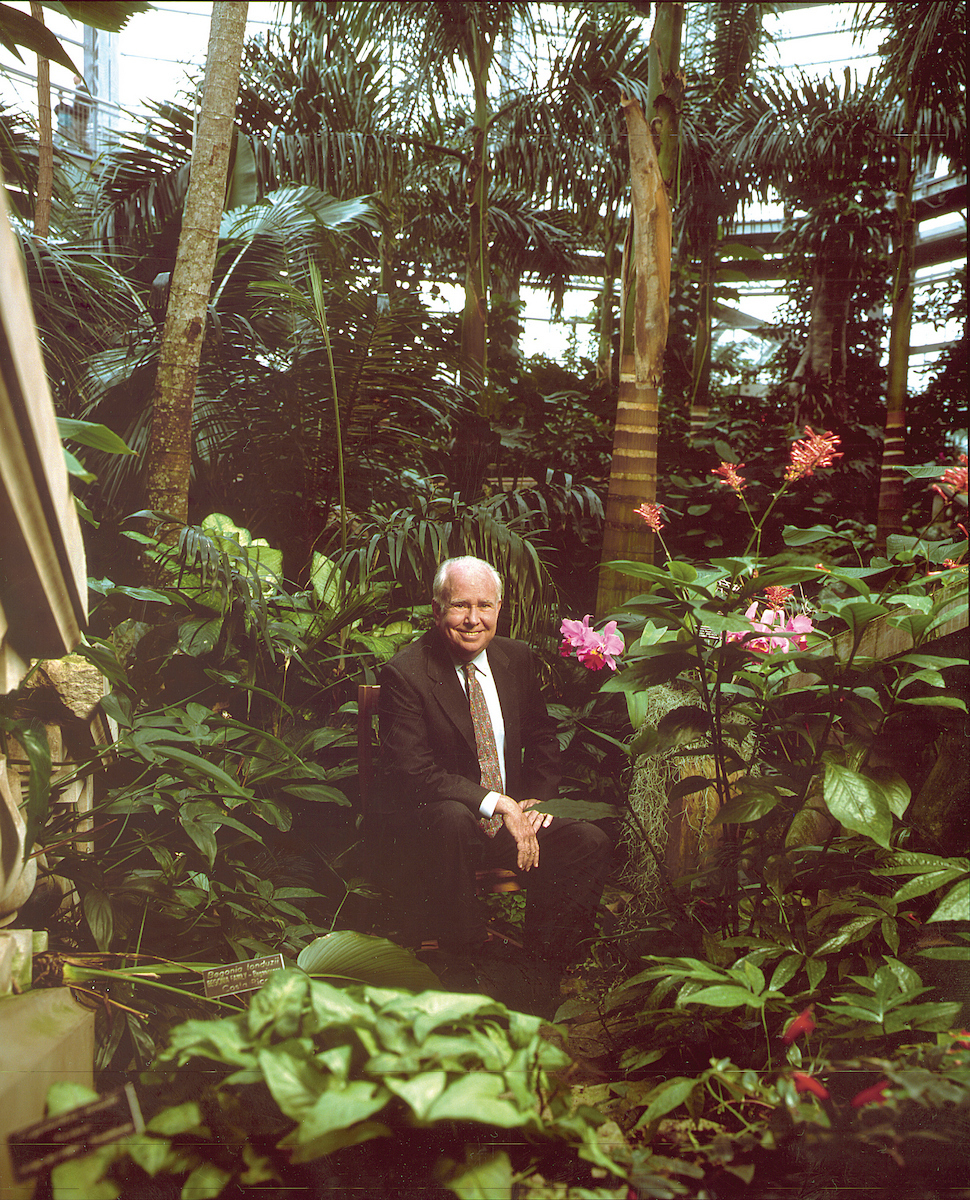
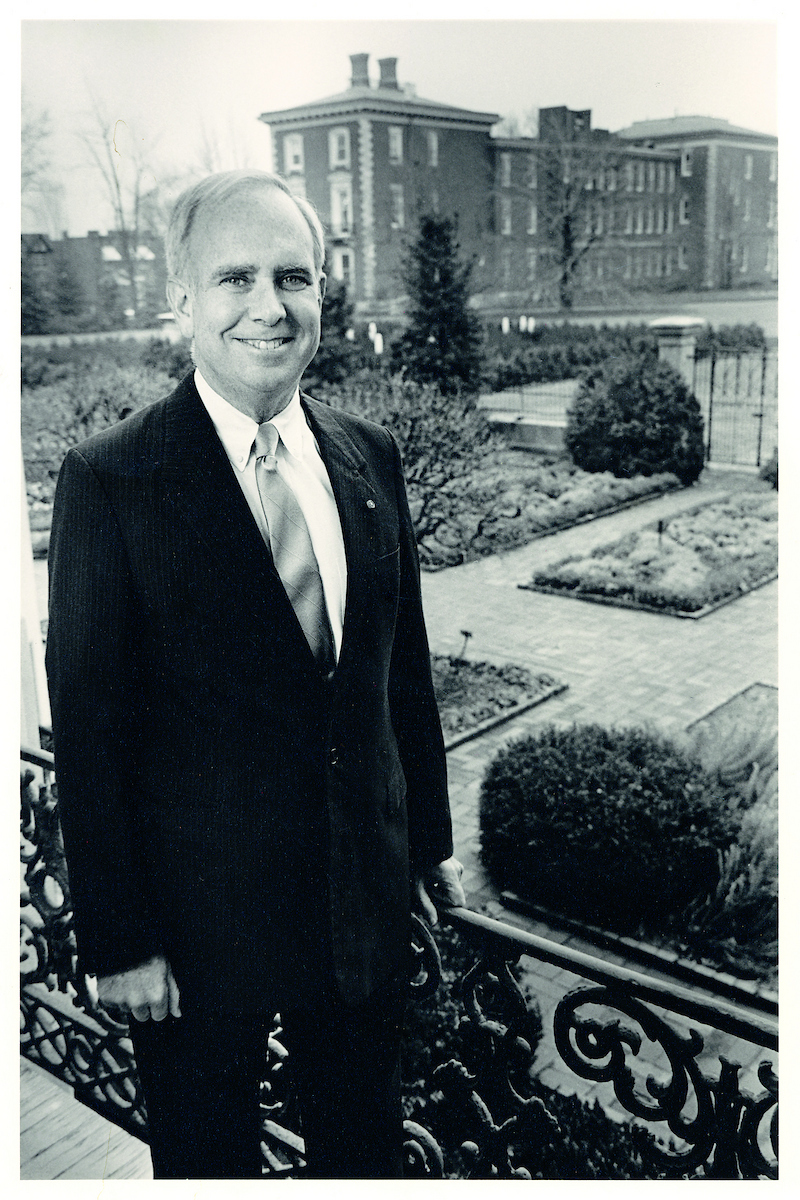
For decades, Dr Peter H. Raven worked at the forefront of biodiversity conservation in botanical gardens. As president and director of Missouri Botanical Garden from 1971 to 2010, he transformed the Garden into an international hub for research and scientific collaboration.
Raven put conservation first, expanding the Garden’s herbarium into one of the world’s largest botanical collections, a research resource holding over 7.5 million specimens. He also established a Center for Conservation and Sustainable Development (CCSD), which operates a dedicated genebank to conserve plant genetic material over the long term.
The CCSD is a member of the Center for Plant Conservation (CPC), working to collect and conserve rare plants from throughout the southeastern United States. The CPC is a network of over 75 botanical institutions across the U.S. and Canada. Together, they conserve the world's largest living collection of rare and endangered plants.
Raven was an early advocate of the CPC and supported the organization from its founding in the mid-1980s. After his tenure at the helm of the Missouri Botanical Garden, he served on the CPC Board of Trustees from 2010 to 2018. The Garden was the CPC’s home institution for more than a decade.
The U.S. botanist died this year at the age of 89, leaving an extraordinary legacy of transformative leadership, research and conservation.
Courtesy of the Missouri Botanical Garden
Continuing the Conservation
“We honor him by continuing the work he championed – preventing plant extinction, advancing botanical science, and ensuring that plants receive the attention, care, and conservation investment they deserve,” Wesley Knapp, chief executive officer of the CPC, said in a statement after Raven’s passing.
According to the latest State of the World’s Plant Genetic Resources for Food and Agriculture, more than 3,000 botanical gardens operate worldwide, with over 350 maintaining genebanks across 74 countries.
In 2025, the New York Botanical Garden, the Crop Trust and other partners launched the Global Conservation Consortium for Food Plants. The Consortium unites botanical gardens, genebanks, research institutions and others around a shared goal – safeguarding the wild and cultivated plants that feed the world.
“The Consortium builds on the foundation laid by the pioneers of conservation in botanical gardens. Raven showed us what is possible when gardens work together and collaborate with a wide community of scientists. His work with rare and endangered plants is an inspiration as we engage botanical gardens to secure the future of food,” says Dr Colin Khoury, global conservation lead at the Crop Trust.
Courtesy of the Missouri Botanical Garden
Advocate for Plants
As population growth and environmental degradation placed mounting pressure on the natural world, Raven raised the profile of plants as a building block of life itself. While many conservationists focused on animals, the St. Louis-based scientist dedicated his career to preventing plant extinctions and demonstrating how closely plants are connected to human wellbeing.
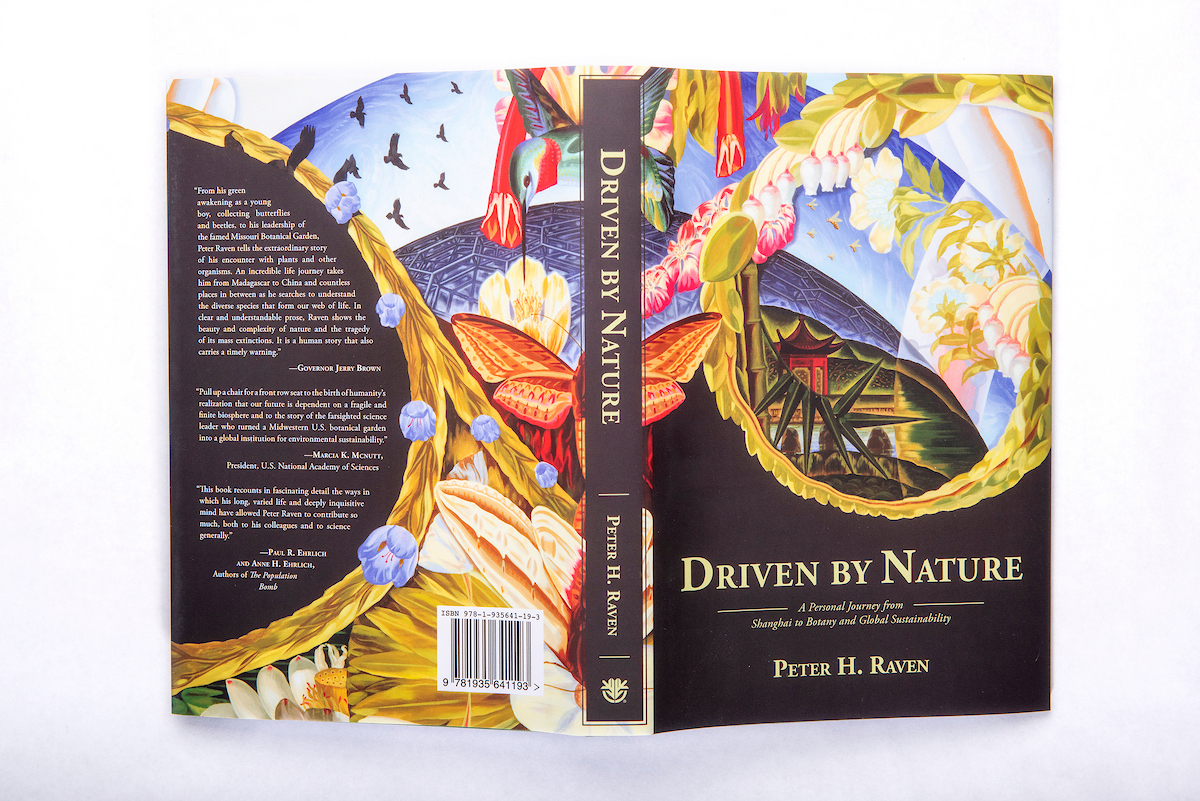
“We have relatively short lives, and yet by preserving the world in a condition that is worthy of us, we win a kind of immortality. We become stewards of what the world is,” he wrote in his 2021 autobiography, Driven by Nature (Missouri Botanical Garden Press).
Named a “Hero of the Planet” by Time magazine in 1999, Raven helped transform our understanding of coevolution through a seminal paper published in 1964. With Stanford University colleague Paul R. Ehrlich, Raven explored the intricate relationships between plants and other organisms, including insects. Together, they introduced the now widely accepted idea that species that depend on one another can drive each other’s evolution through natural selection.
Courtesy of the Missouri Botanical Garden
A Lifetime of Learning
Peter Hamilton Raven was born in Shanghai on 13 June 1936 to Walter Francis Raven and Isabelle Marion Breen. His great-uncle, Frank Raven, had built a business empire in the city, inspiring the family to follow him there in search of opportunity. They moved to San Francisco after Japan invaded China in 1937.
At the age of six, Raven began collecting butterflies and beetles. Encouraged by his parents, he developed a lifelong fascination with the extraordinary diversity of the natural world.
Raven earned a bachelor’s degree in biology from the University of California, Berkeley, in 1957 and a PhD in botany from the University of California, Los Angeles, in 1960.
After almost a decade as an assistant and then associate professor at Stanford University, Raven took the helm of the Missouri Botanical Garden in 1971. Two years later, he became the George Engelmann Professor of Botany at Washington University in St. Louis, a position he held until his retirement in 2010. He remained active at the university as professor emeritus.
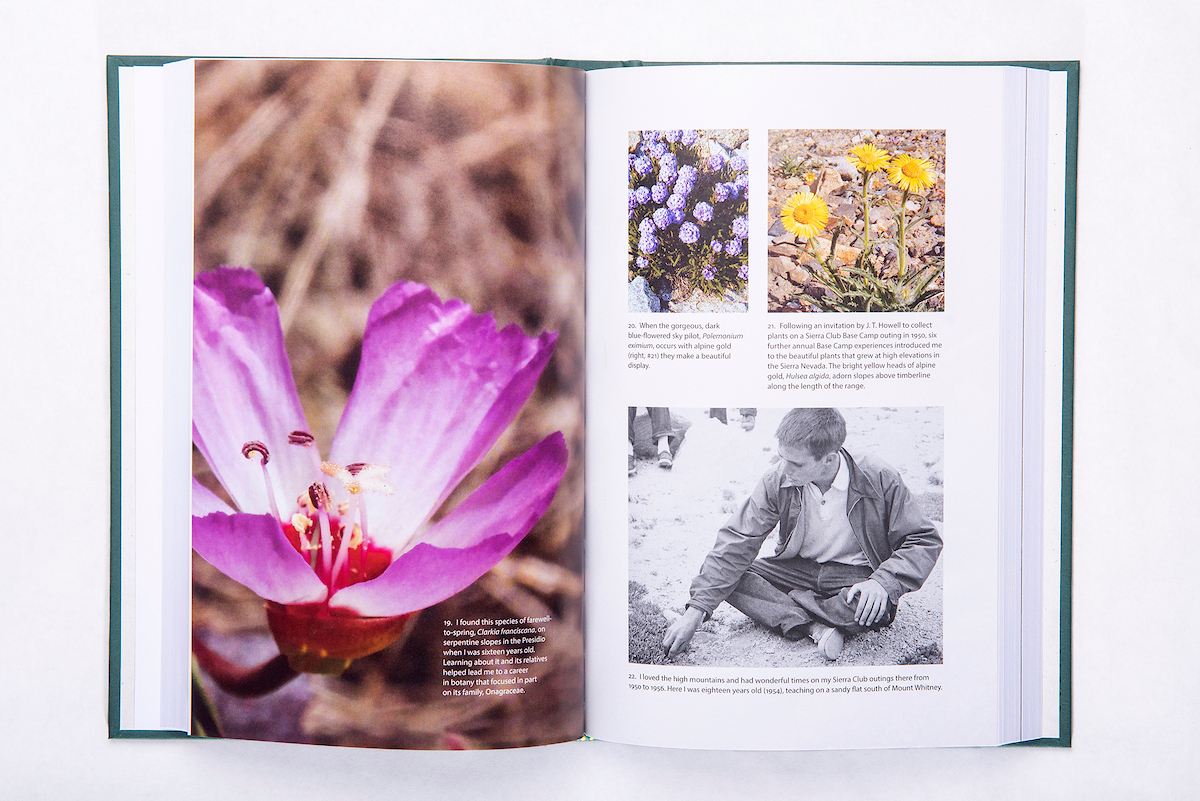
Courtesy of the Missouri Botanical Garden
Contributions to Knowledge
Raven contributed to much more than plant conservation and the modern understanding of coevolution. In 1974, Raven and Daniel Axelrod broke new ground in biogeography with a landmark study. They were among the first to link the evolution and dispersal of flowering plants to plate tectonics and Earth’s geological history, according to an account of Raven’s life published in Nature.
Raven also wrote hundreds of books and scientific papers, including the influential textbooks Biology of Plants and Environment. He served as co-editor of Flora of China for 35 years. This ambitious international project produced a 49-volume encyclopedia documenting 31,500 Chinese plant species.
In 2000, President Bill Clinton presented Raven with the National Medal of Science, the United States’ highest honor for scientific achievement, in recognition of his contributions to plant science and biodiversity conservation. Raven also served on the President’s Committee of Advisors on Science and Technology from 1994 to 2000.
Raven remained deeply engaged in science and science policy until the end of his life. In one of his final papers, published in 2025, he and his co-authors called for reforms to biodiversity governance that would make it easier to collect, conserve, exchange and use plant diversity for research, crop improvement and global food security.
“Given what I have learned about the incredible diversity of life and the interconnectedness that ties humanity’s fate to that of Earth’s non-human species, I can’t stand idly by while it is all threatened... Thus, I considered it necessary to do what I can,” he wrote in his autobiography.
The Crop Trust celebrates the extraordinary legacy of Peter H. Raven. His pioneering science and lifelong advocacy transformed plant conservation worldwide. That vision lives on by inspiring initiatives such as the Global Conservation Consortium for Food Plants, which brings botanical gardens, genebanks and other partners together to safeguard the plant diversity that underpins our food future.
Timeline
1936: Born in Shanghai on 13 June
1957: Bachelor’s degree in biology at the University of California, Berkeley
1960: PhD in botany at the University of California, Los Angeles
1962–1971: Assistant, then associate professor, at Stanford University
1964: Coauthor of Butterflies and Plants: A Study in Coevolution
1971–2010: Director, then president, Missouri Botanical Garden in St. Louis
1973–2010: George Engelmann professor of botany, Washington University in St. Louis
1974: Co-author of Angiosperm Biogeography and Past Continental Movements
1988–2013: Coeditor of Flora of China through a joint Chinese-U.S. project
1994–2000: Member of President's Committee of Advisors on Science and Technology
2000: Receives the National Medal of Science, presented by President Clinton
2010-2018: Board of Trustees of the Center for Plant Conservation
2010–2026: President emeritus at Missouri Botanical Garden
2026: Dies on 25 April in St. Louis at age 89
Categories: For Educators, For Students