Sweetpotato Leaves à la Singida
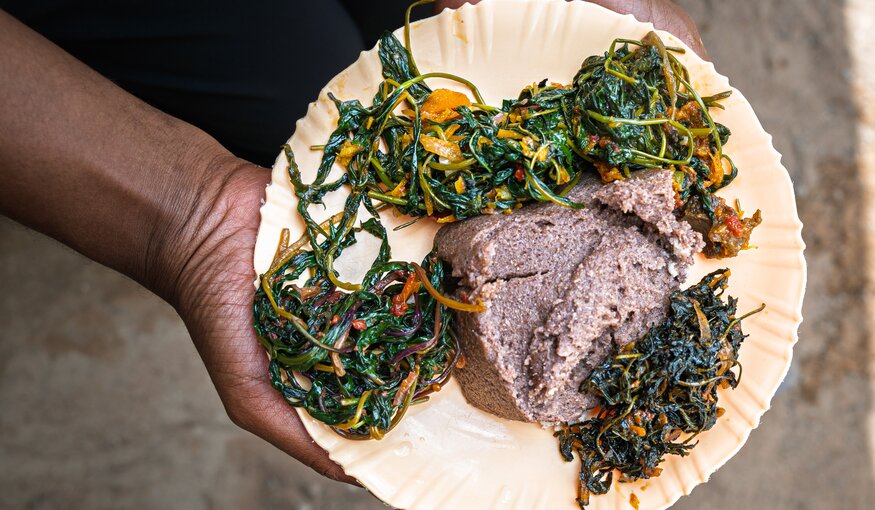
Three types of sweetpotato leaves served with finger millet ugali. Photo: Michael Major/Crop Trust
-
 By Michael Major Crop Diversity Digest Contributor
3 June 2026
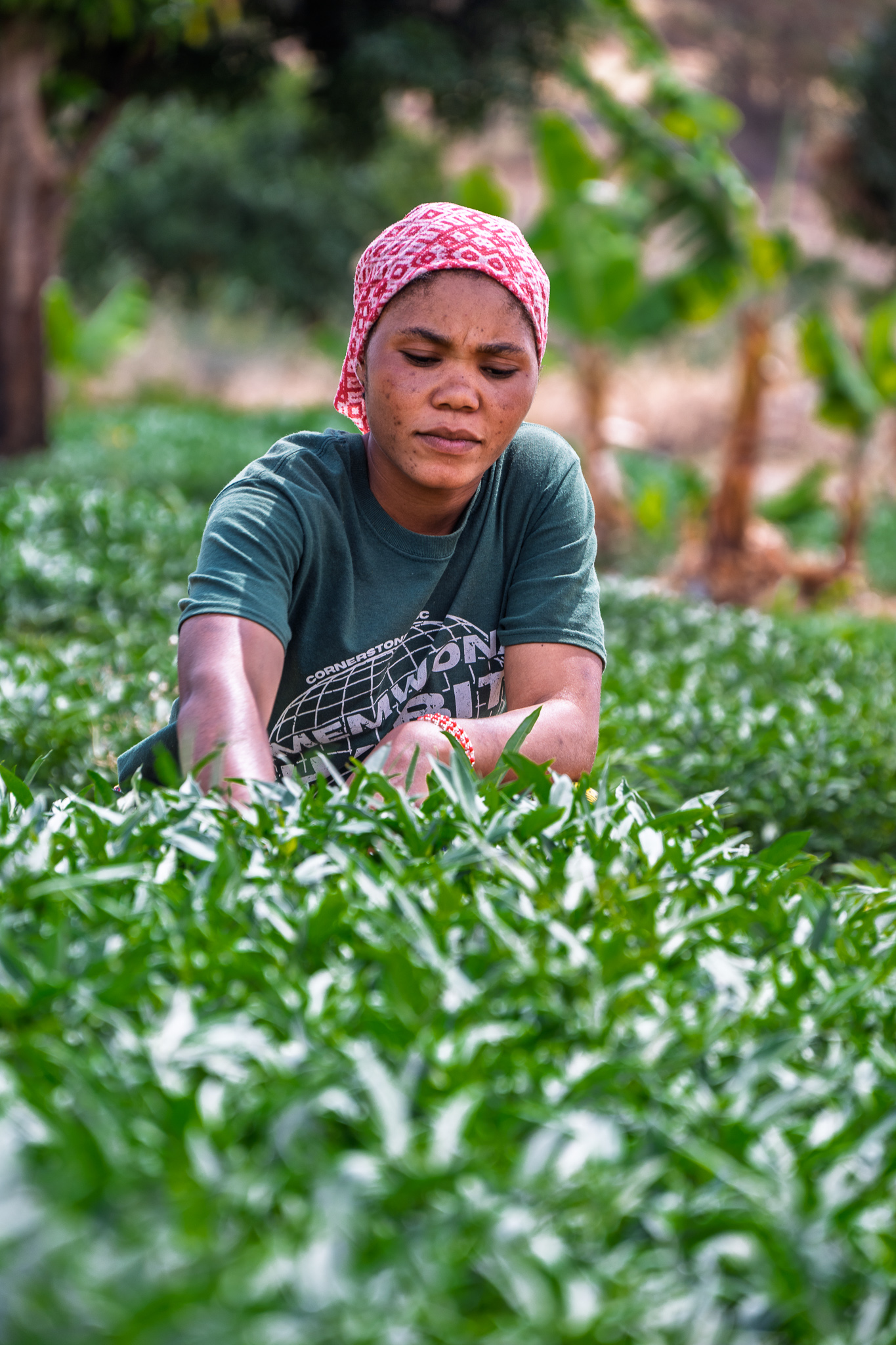
The sun is barely up when I meet Jasmin Salum in her family’s irrigated plot in Mumbivi, a small village just outside Singida in central Tanzania. The air is cool, still holding the last traces of night. The only sound is the rhythmic shhht-shhht of Jasmin’s blade slicing through fresh sweetpotato leaves. She works with easy confidence, gathering the cut stems into neat armfuls before laying them in the shade.
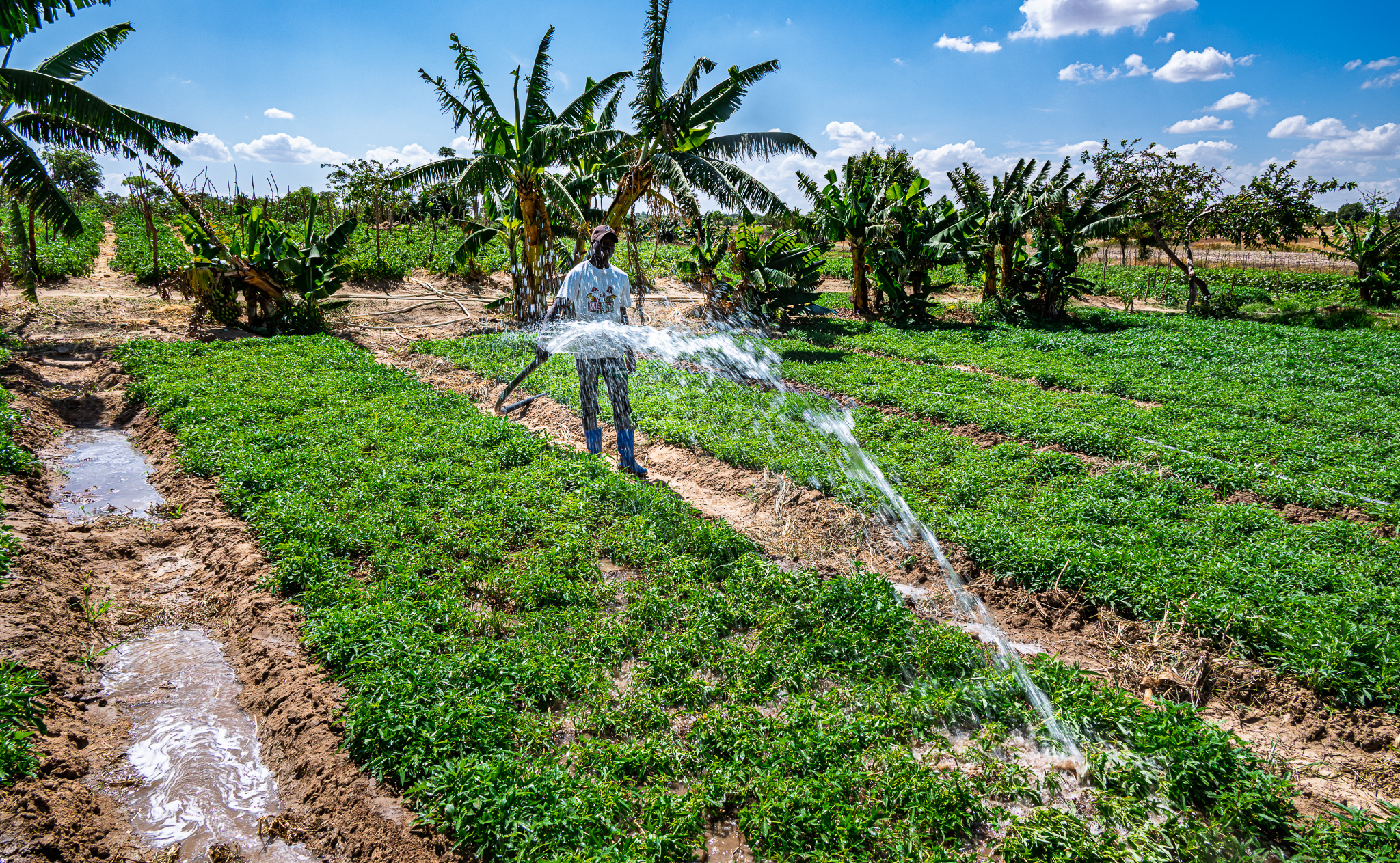
Her family’s fields of sweetpotato are immaculate – weed-free, vibrant and impossibly tidy. Green-veined and red-tinged varieties grow in orderly rows. The soil is still damp from early-morning irrigation.
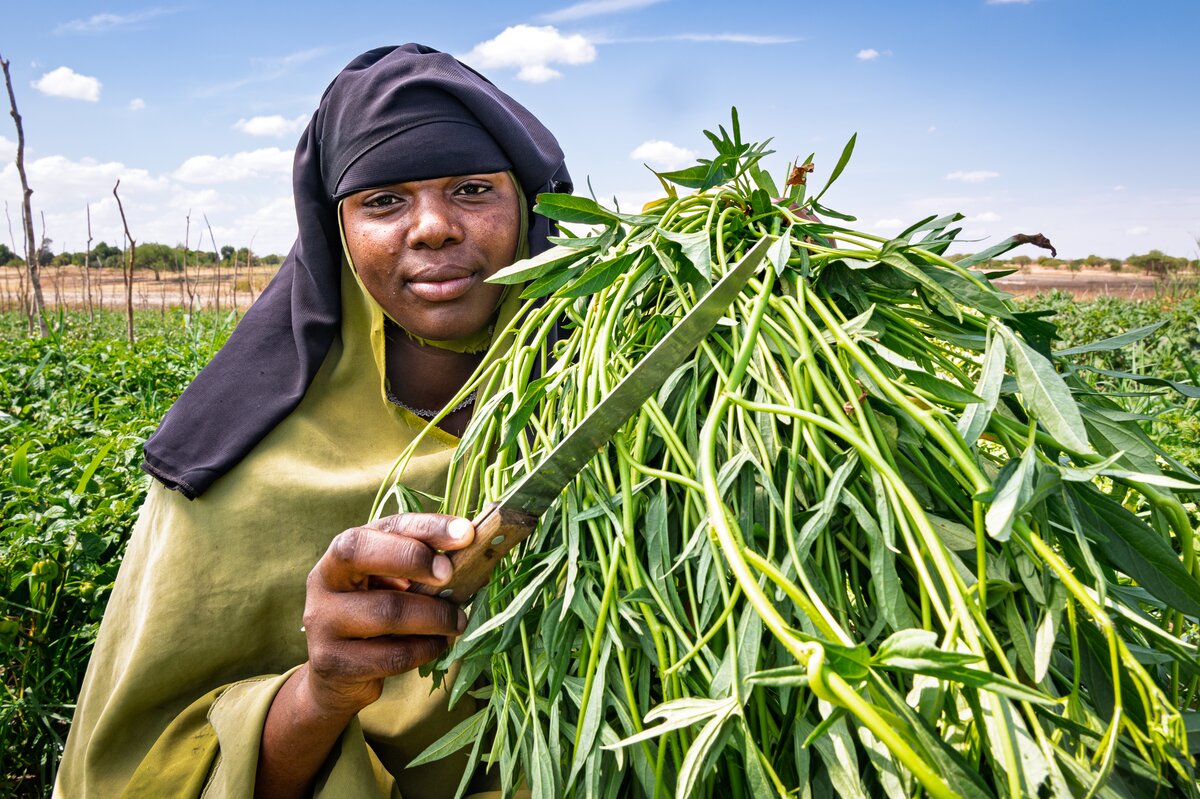
Jasmin Salum holds freshly harvested sweetpotato leaves. Photo: Michael Major/Crop Trust
Farmers in semi-arid Singida grow sweetpotato for the leaves, not the roots that many people around the world associate with the crop. The leaf-type vines are perennial under irrigation, sending up harvestable foliage to cut on each bed once a month. This crop is perfect for the local conditions – reliable, nutritious and a feature of household meals across the region.
Did you know? Sweetpotato leaves are far more than a byproduct of the crop. Popular in rural markets across Tanzania, they are packed with vitamins A, C, K and B-complex. They are also rich in iron, calcium and antioxidants that rival – and sometimes surpass – other leafy greens.
Fast-growing, productive and climate-resilient, sweetpotato plants provide delicious, nutritious roots and edible leaves, creating new income opportunities for farmers. Discover more about Sweetpotato – Super Leaves.
Jasmin’s father explains that the leaves must be harvested early. By mid-morning, the sun will be too strong and the bundles begin to wilt within hours. There is no cold chain in Singida – fresh sweetpotato leaves must be sold and eaten the same day they are harvested.
This hyper-short value chain is one reason the Crop Trust's BOLDER initiative prioritizes sweetpotato leaves as an opportunity crop in Tanzania. With BOLDER's support, researchers at the World Vegetable Center (WorldVeg) are studying the crop from farm to plate – working to strengthen each link, from clean planting material to the way the leaves reach households. The leaves are incredibly nutrient-dense, yet the system that delivers them remains informal, fragile and under-recognized. It was this work that brought me to Singida: to document a crop that feeds the region but rarely makes the headlines.
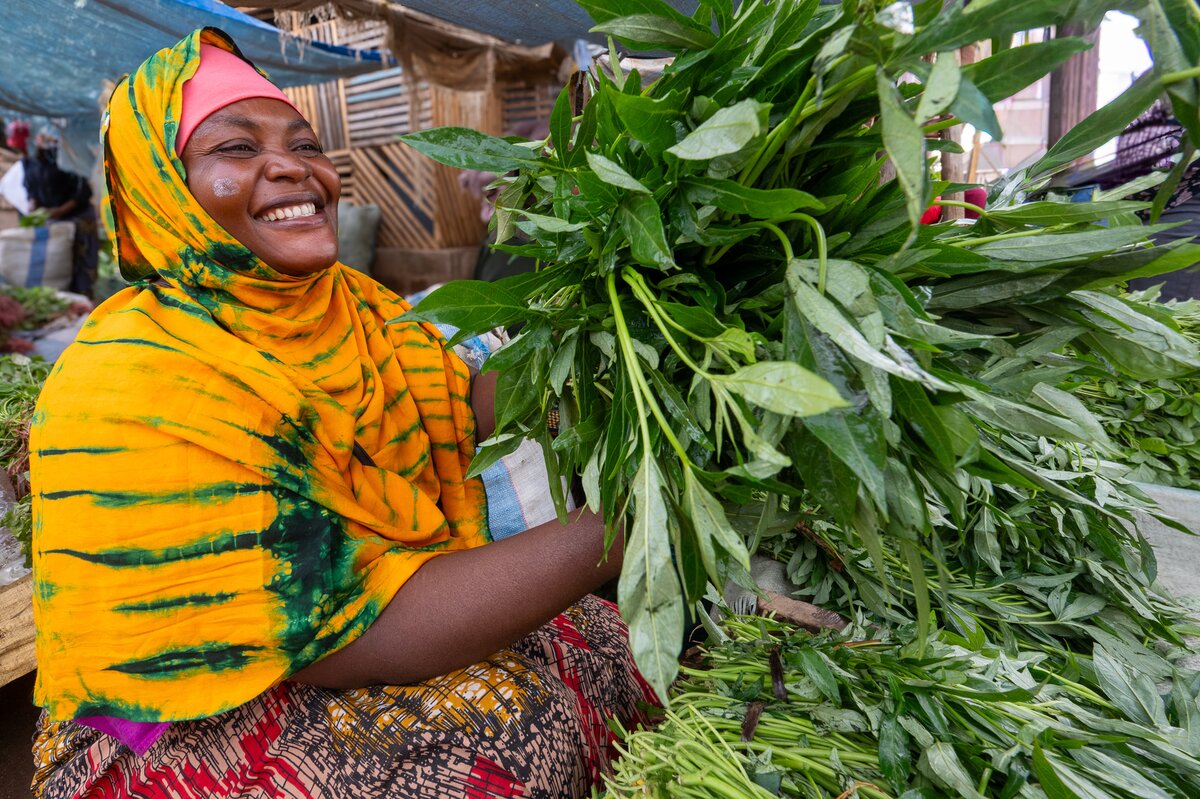
Domina Rabiel Ndasi bundles sweetpotato leaves in Singida market. Photo: Michael Major/Crop Trust
A Bustling Market, a Fragile Chain
We arrive at the Singida market as women arrange piles of leafy greens on floor mats, calling out to early shoppers. Retailer Domina Rabiel Ndasi works with speed and precision, shaking loose each handful of leaves, trimming off damaged edges and spraying the leaves with water to keep them fresh.
Her stall shows just how intricate Singida’s leafy-vegetable trade really is. Bulk bags arrive from the farms in the early morning, first passed through collectors and then wholesalers who split the loads into smaller units. Retailers like Domina take it from there – trimming, washing and re-bundling the leaves into the neat handfuls sold for 100 to 200 Tanzanian shillings, or around 4 to 8 cent USD.
As WorldVeg socio-economist Inviolate Dominick explained, “Every actor in the chain adds value – the collector aggregates, the wholesaler sorts, the retailer cleans and repacks. But everything is racing against the clock. Sweetpotato leaves wilt fast. Whatever isn’t sold by late afternoon is usually discarded.”
Domina’s challenge is consistency. She rarely knows the exact field a given bag came from. The leaf types vary, the quality varies and communication along the chain is thin. Our fieldwork confirmed this – farmers, middlemen and retailers operate with little coordination or standardization. Yet demand is strong.
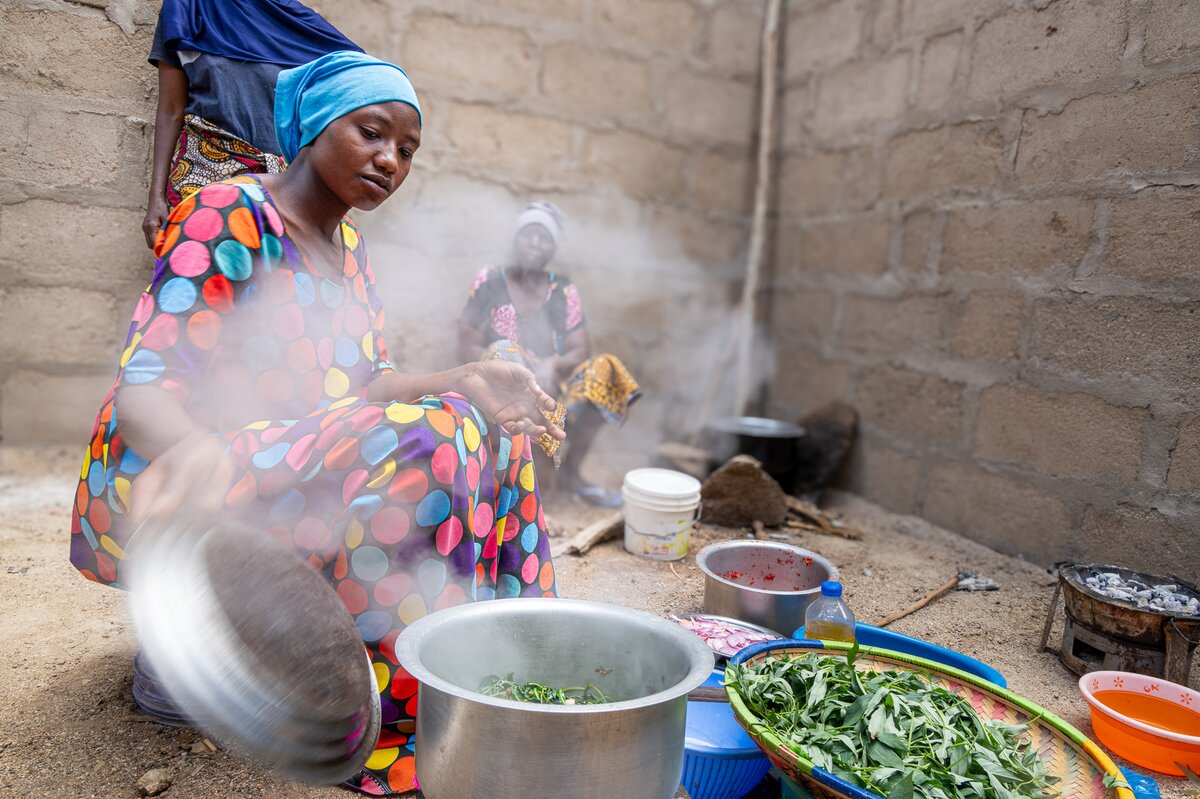
Tatu Ramadhani prepares green-veined sweetpotato leaves. Photo: Michael Major/Crop Trust
Into the Kitchen in Mwanganjuki
From the market we head to Mwanganjuki on the edge of Singida town. Here, in a shared courtyard, Tatu Ramadhani is preparing lunch. She greets us with a warm smile and motions toward three bowls of freshly washed sweetpotato leaves.
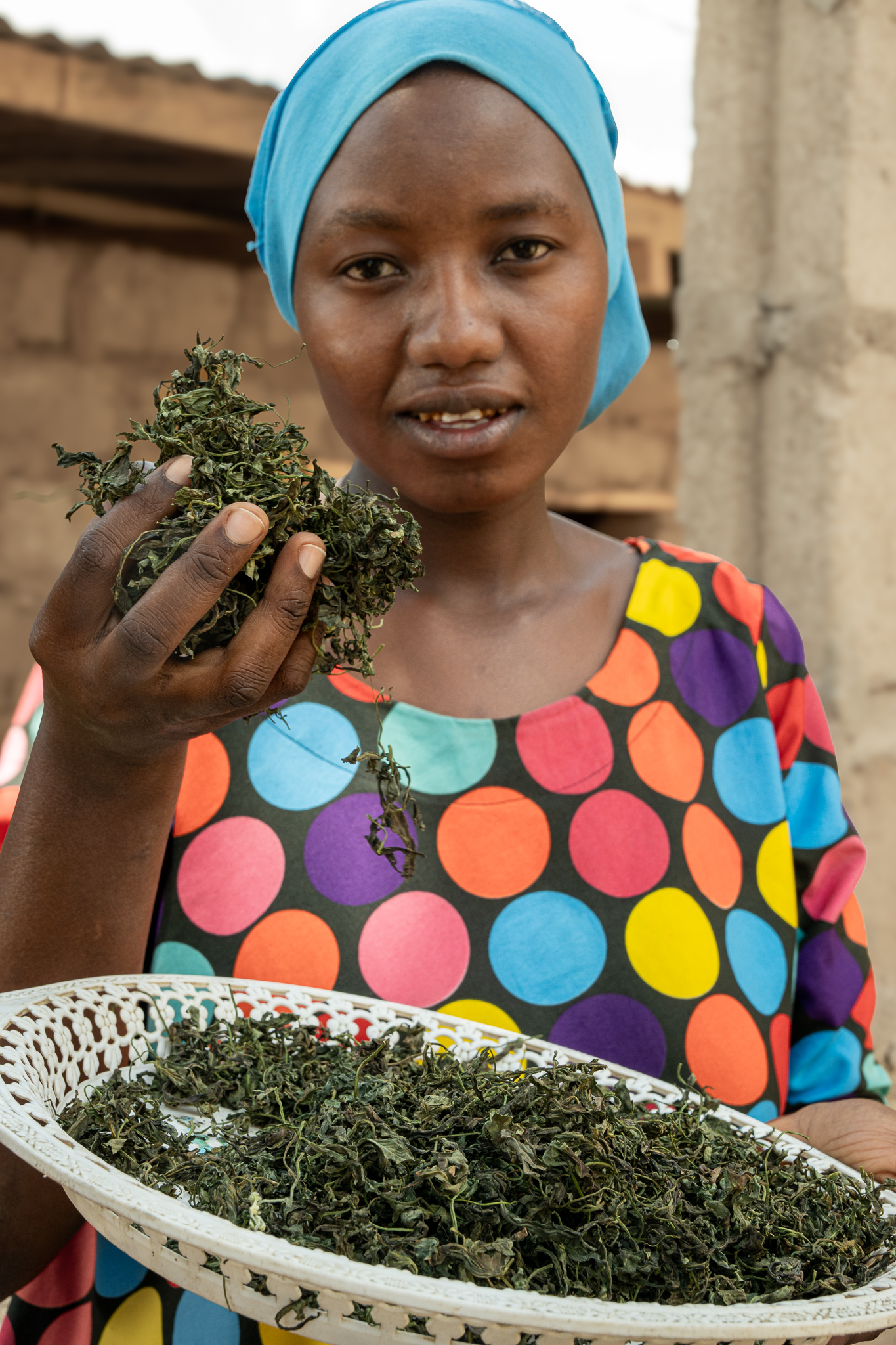
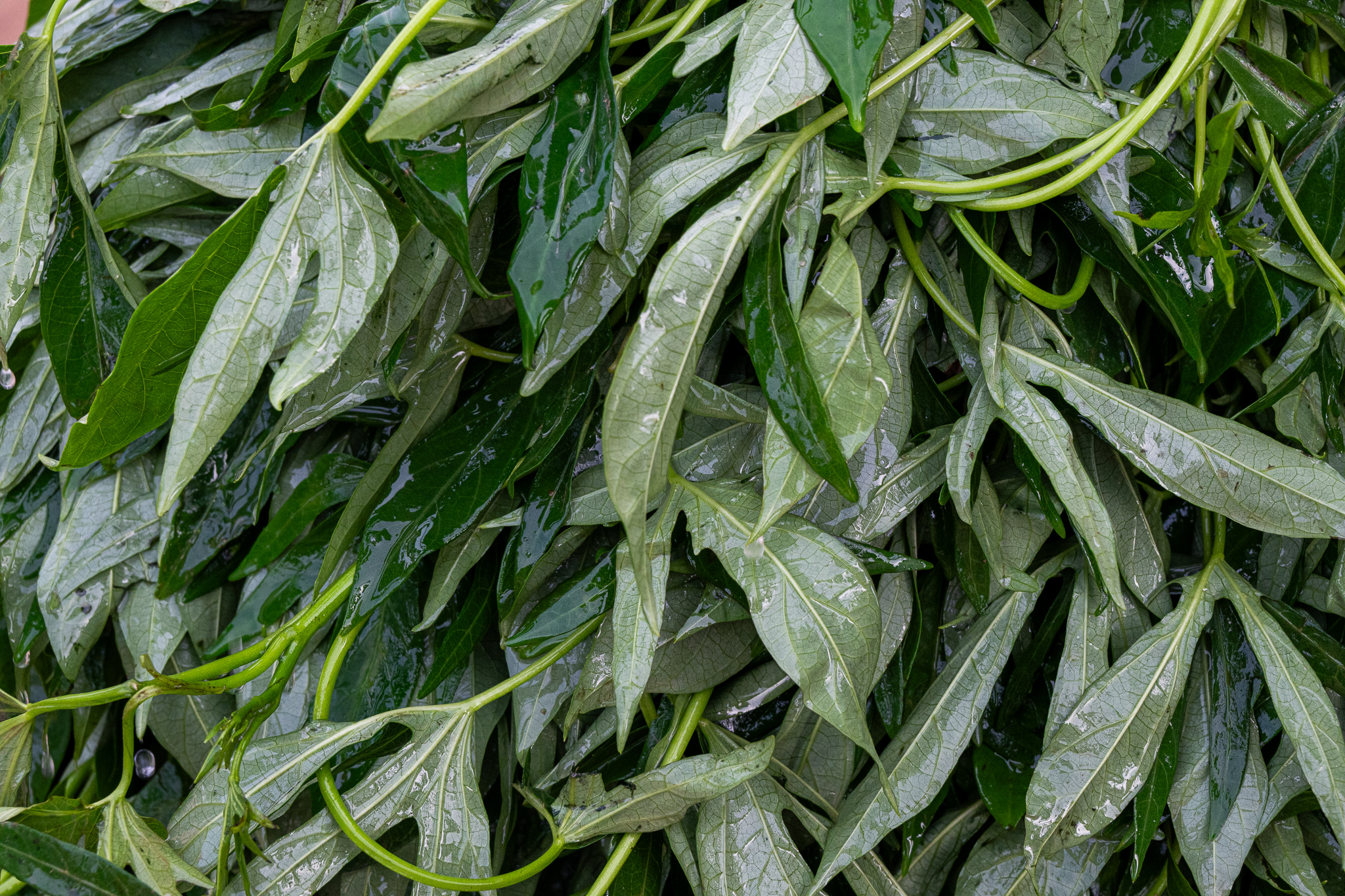
“These are the green-veined ones,” she says, lifting the first bowl. “These are red-veined. And these” – she taps the third bowl – “are dried leaves.” I ask whether the different leaves have names. Tatu shrugs. “They don't have special names,” she says. “They're just matembele.” That’s revealing. The leaves that feed Singida move through its kitchens and markets unnamed and uncatalogued – and that anonymity is partly why the crop stays overlooked.
I pick up a handful of the dried leaves and inhale. They have a deep, earthy aroma, almost like tea. In Singida, drying is still limited and mostly for home use, but it is a quiet innovation, offering families a way to preserve vegetables for the dry season.
Tatu cooks the green-veined leaves over charcoal, adding onions, tomatoes, a touch of oil and a squeeze of lime. Within minutes the leaves soften and darken, releasing a scent that reminds me of spinach, but richer.
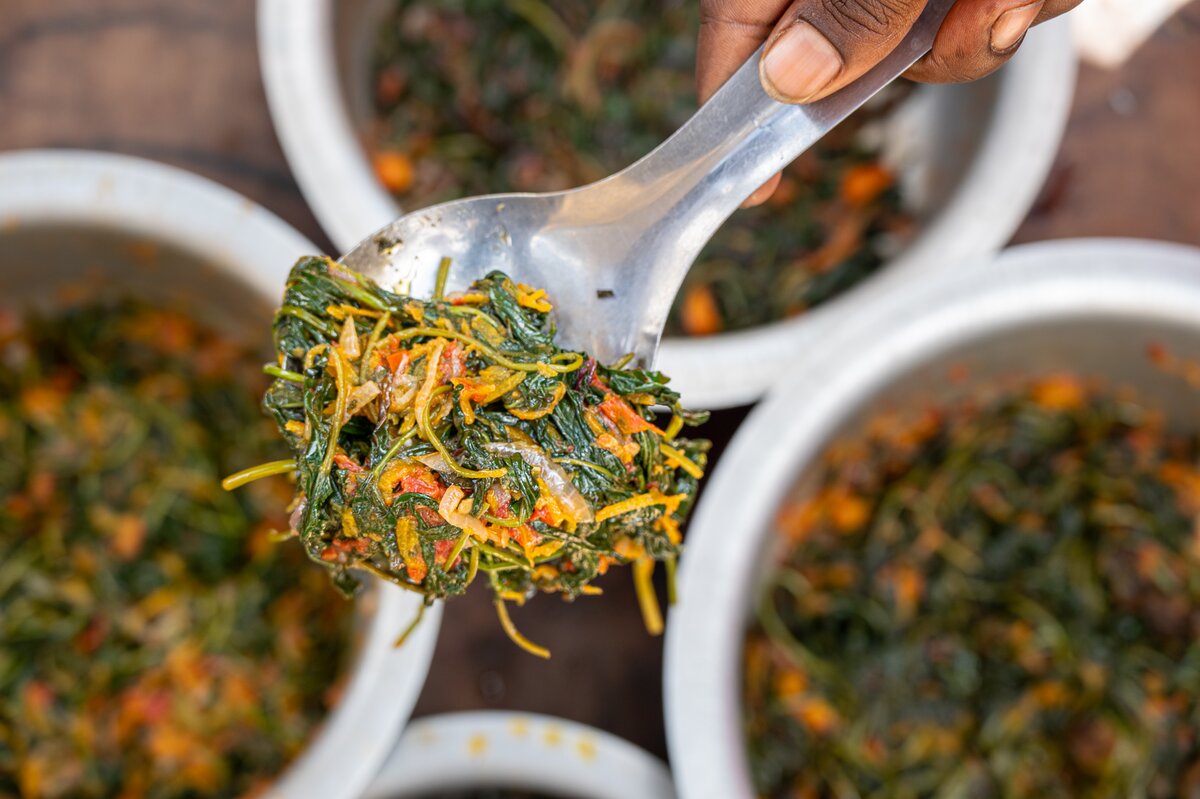
Green-veined sweetpotato leaves ready for consumption. Photo: Michael Major/Crop Trust
We eat with our hands, tearing pieces of finger millet ugali and dipping them into the warm greens. The three types share similarities but retain subtle distinctions in color and taste. It’s a simple meal, but one that carries both history and science.
Yet only a small fraction of global sweetpotato research focuses on leaves, not roots. Lack of awareness and the short lifespan of the harvested greens keep sweetpotato leaves undervalued despite their clear benefits for healthy diets.
As we finish eating, Tatu shakes her head at the idea that these leaves might be considered a fallback food. “How can something this good be a food of last resort?” she asks. “We’ve eaten this since our grandmothers’ time.”
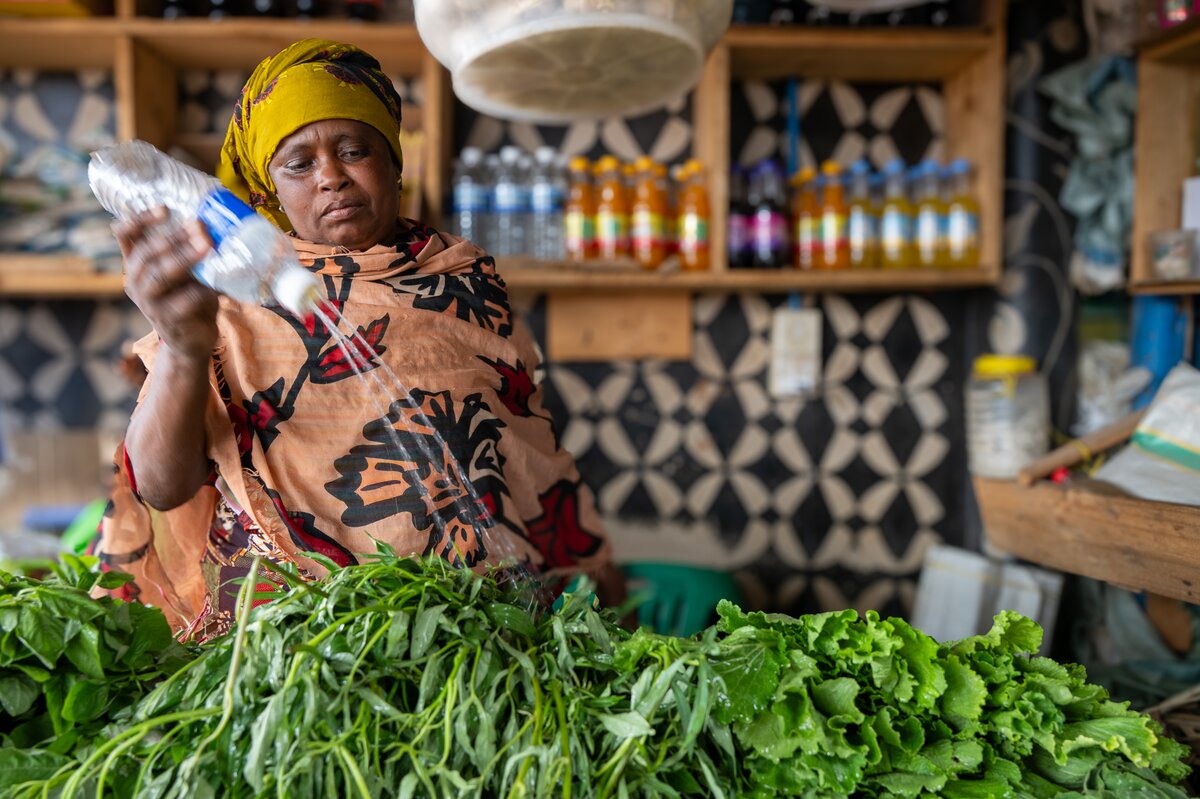
A street vendor in Singida keeps her sweetpotato leaves moist to avoid wilting. Photo: Michael Major/Crop Trust
Where the Opportunity Lies
Walking through Singida with farmers, retailers and cooks, it becomes clear why the Crop Trust’s BOLDER initiative prioritizes sweetpotato leaves. The value chain is short, local and largely driven by women managing everything from irrigation to retail. Each link can be improved – better vines, better post-harvest handling, better cooling or drying technologies, even new recipes and nutrition messaging. Strengthening even a few links can support healthier diets and stronger livelihoods.
From Jasmin’s careful morning harvest, to Domina’s busy market stall to Tatu’s generous lunch table, I saw a food system held together by skill, resilience and everyday innovation. But I also saw a crop that deserves far more recognition. Sweetpotato leaves are not a backup or a last resort.
They are fresh. They are local. They are nutritious. And in Singida, they are absolutely delicious.
If there is beauty in simplicity, it grows here – in the cool morning dew on sweetpotato beds and in the smoky kitchens where the day’s harvest becomes a meal shared with friends.
Categories: BOLD, Food Security, Nutritional Security
Related Articles