The Perfect Fry: Breeding Potato Varieties to Satisfy the Market
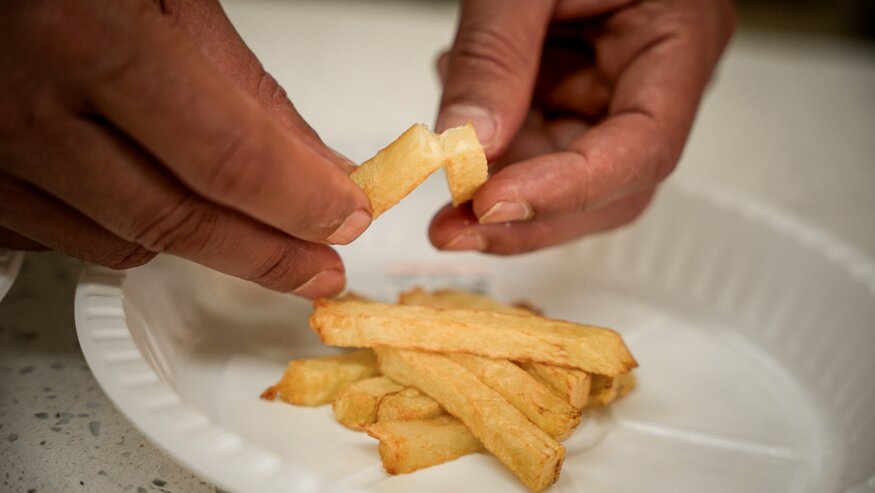
Breeders evaluate the frying quality of experimental potato varieties at the Kabete Laboratory of the University of Nairobi, Kenya. These tests help determine whether a variety can produce evenly coloured, crisp chips preferred by vendors and consumers. Photo: Kreis Visual Storytelling
19 June 2026
Chips, French fries, pomme frites, or fries za kifaransa in Swahili. Whatever you call them, fried potatoes are among the world's most popular foods. It’s no different in Nakuru, Kenya.
At the Nakuru market, Rada Mwati stands over a fryer, turning potatoes into chips for a steady stream of customers. "I’ve done this work for a long time," she says, gesturing to her shop. "The business is good and it pays well." But for Rada and thousands of other food vendors, the success of their business hinges on one factor that happens long before the oil starts bubbling – the kind of potato they buy to fry.
More Than a Farmer's Crop
Potatoes are a major crop in Kenya. It is the second most important food crop after maize and supports roughly 800,000 smallholder farmers. But the crop’s impact goes far beyond the farm. Transporters, seed producers and street vendors all depend on the potato trade, a sector valued at about 400 million USD in the country.
For Rada and other vendors, the market can be challenging. Sometimes Shangi, which customers love, is not available in the quantities they need. This is despite the fact that Shangi accounts for two-thirds of Kenya's potato production. The variety that works so well in the fryer can struggle in the field,where diseases like late blight can wipe out 30 to 80 percent of a crop. These losses, along with seasonal supply and distribution challenges, can affect what reaches the local markets. For Rada, this means her customers get less tasty chips. And maybe they go to a different vendor.
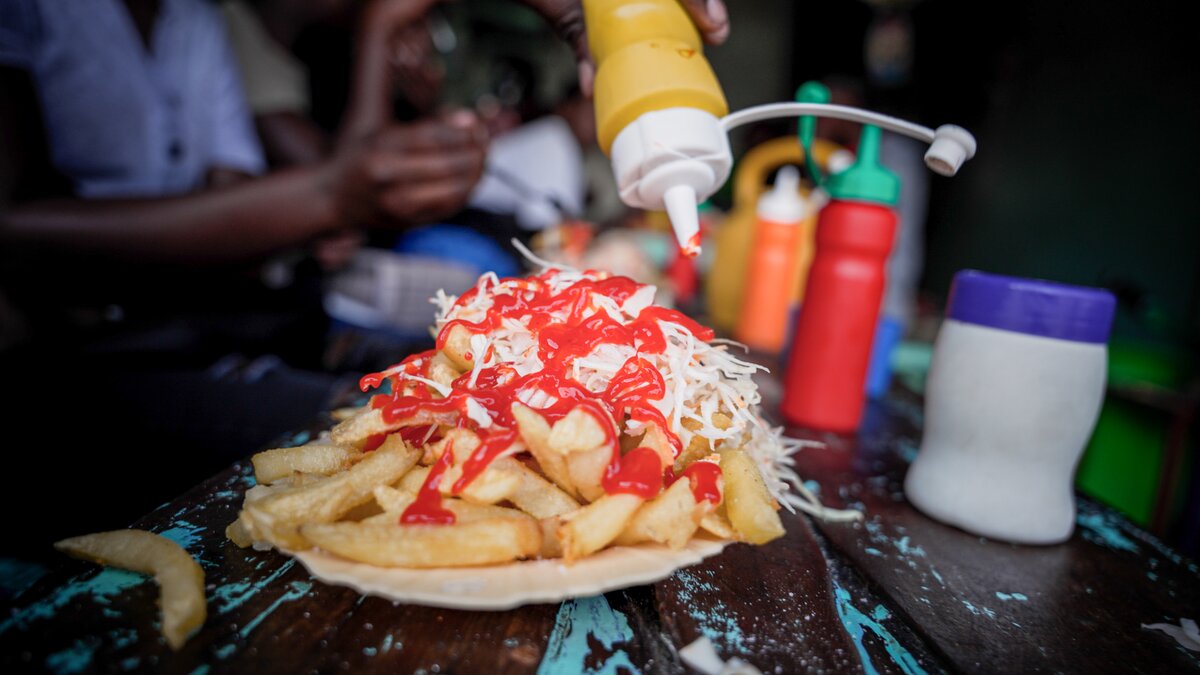
A plate of chips served with coleslaw at a food stall in Nakuru, Kenya. Fried potatoes are one of the country’s most popular street foods. Photo: Kreis Visual Storytelling
The "Fry Test”
A potato variety that can withstand disease and deliver the same cooking experience would be a breakthrough. It also has to look and taste good. "Not every potato works in the fryer," Rada explains. "Mshororo has too much water – it turns brown when you fry it, and customers don’t like that. Shangi makes the best chips."
For a new potato variety to succeed, it has to meet the needs of farmers, traders, vendors and the people who eat it. While farmers prioritize yield and disease resistance, the market has its own set of rules. Traders demand uniform size and storability for long-distance transport, and vendors like Rada need specific frying characteristics. People just want to eat that perfect fried potato.
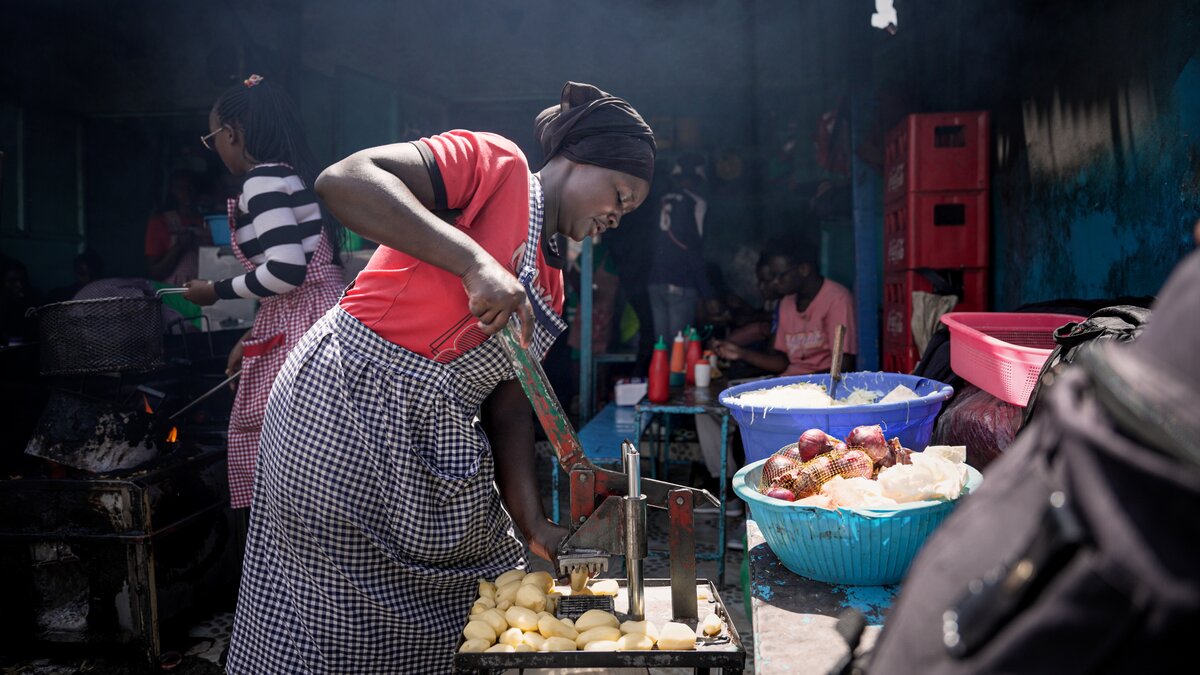
A food vendor uses a manual cutter to slice potatoes for frying at a food stall in Nakuru market, Nakuru, Kenya. Photo: Kreis Visual Storytelling
Designing the Future Potato
The challenge for breeders is to create a potato that survives the rigors of the field and the kitchen. The Crop Trust is taking steps to help. Through the BOLD project, breeders are working to create potato varieties that farmers can grow, traders can transport and vendors like Rada can fry.
“Diversity is not just about what you see in the field,” says Thiago Mendes, a breeder with the International Potato Center (CIP). "It’s also about what you see in the kitchen. We see a variation of colour after frying that goes from dark to yellow – yellow is the desirable trait. The dark ones, we just discard.”
Breeders working with BOLD are developing new potato lines that combine field resilience with the qualities vendors depend on in the kitchen. Size, colour after frying, texture and taste all matter alongside yield and disease resistance. Any successful variety has to work beyond the field. It must produce well for farmers, move through the market and meet the expectations of vendors and consumers.
In Kenya, the next successful potato will be judged not only by how it grows but also by how well it sells. And who knows, the next potato to win over Rada’s customers may already be growing in a breeding field where scientists are drawing on crop diversity to find disease resistance, market value and the perfect fry.
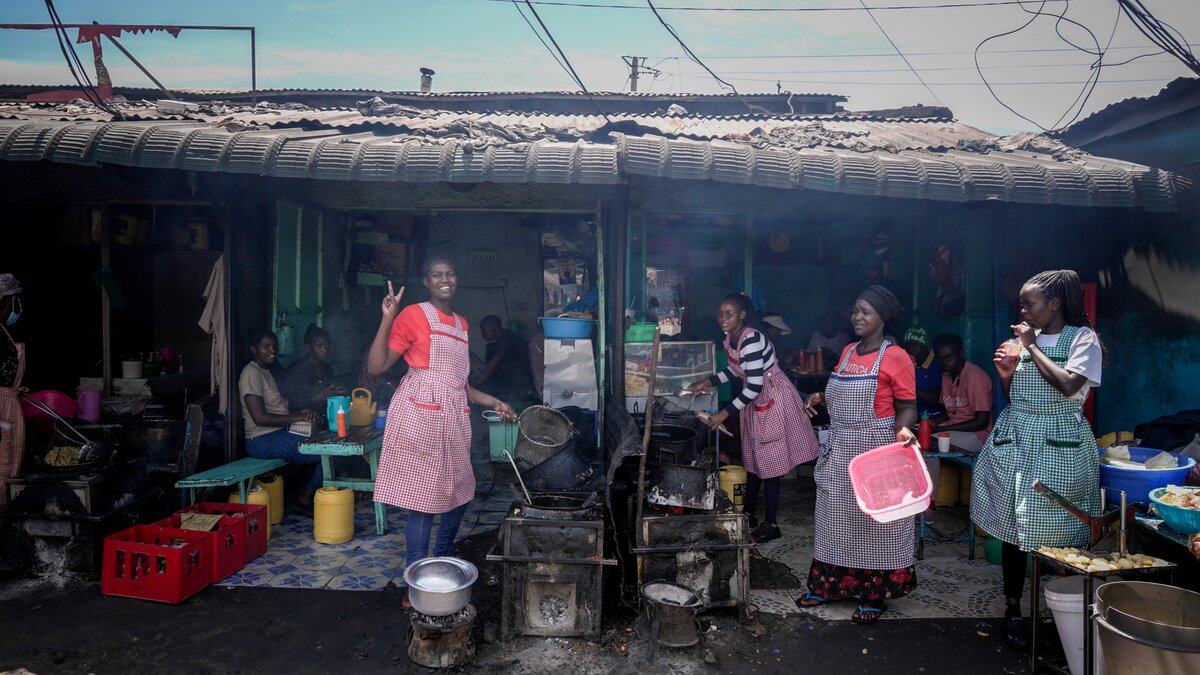
Food vendors prepare fried potatoes at a food stall in Nakuru market in Nakuru, Kenya. Photo: Kreis Visual Storytelling
This story is part of UNTAMED – a series exploring the diversity of some of the world’s most important crops, and the farmers, scientists and genebanks working to keep that diversity alive in a changing climate.
Read this next: The Risk of One Potato: Shangi and the Challenge of Diversity in Kenya
Categories: BOLD, Food Security