Skip to content

Search

Please use this search facility to search all content found within the website:

Search words under length of 3 characters are not processed.

1835 results:

HRH The Prince of Wales Hosts a 'Food Forever' Reception with the Crop Trust

HRH The Prince of Wales Hosts a 'Food Forever' Reception with the Crop Trust The Prince of Wales, Crop Trust Global Patron, will host a reception on the theme of 'Food Forever - Actions for a

King Charles photo

Connecting Genebanks, Economics and Careers

Connecting Genebanks, Economics and Careers The Genebank Impacts Fellowship Two cohorts of young professionals have had the opportunity to leverage their passion for economics and agricultural

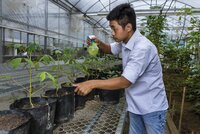
HANOI, VIETNAM, 16 AUGUST 2016: Genetically engineered Cassava plants are transplanted in a experimental greenhouse at the Hanoi headquarters of the International center for Tropical Agriculture. CIAT’s mission is to reduce hunger and poverty, and improve human nutrition in the tropics through research aimed at increasing the eco-efficiency of agriculture. Backed by the Colombian government and Rockefeller, Ford, and Kellogg Foundations, CIAT was formally established in 1967 and began its research in 1969. CIAT’s staff includes about 200 scientists. Supported by a wide array of donors, the Center collaborates with hundreds of partners to conduct high-quality research and translate the results into development impact. A Board of Trustees provides oversight of CIAT’s research and financial management. CIAT develops technologies, methods, and knowledge that better enable farmers, mainly smallholders, to enhance eco-efficiency in agriculture. This makes production more competitive and profitable as well as sustainable and resilient through economically and ecologically sound use of natural resources and purchased inputs. CIAT has global responsibility for the improvement of two staplefoods, cassava and common bean, together with tropical forages for livestock. In Latin America and the Caribbean, research is conducted on rice as well. Representing diverse food groups and a key component of the world’s agricultural biodiversity, those crops are vital for global food and nutrition security. In its work on agrobiodiversity, the Center employs advanced biotechnology to accelerate crop improvement. Progress in our crop research also depends on unique collections of genetic resources– 65,000 crop samples in all – which are held in trust for humanity. Alongside its research on agrobiodiversity, CIAT works in two other areas – soils and decision and policy analysis – which cut across all tropical crops and production environments. Center soil scientists conduct research across scales – from fields and farms to production systems and landscapes – to create new tools and knowledge that help reduce hunger through sustainable intensification of agricultural production, while restoring degraded land and making agriculture climate smart. CIAT’s work on decision and policy analysis harnesses the power of information to influence decisions about issues such as climate change, linking farmers to markets, research impact assessment, and gender equity. (Photo by Brent Stirton/Reportage by Getty Images for Crop Trust)

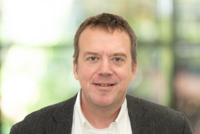
Christoph Beck

Christoph oversees the work of the Corporate Operations and Human Resources Team of the Crop Trust. Furthermore he is a member of the Senior Management Team. Christoph holds a university diploma in

Crop Trust Dialogue on Genebanks at GLF Biodiversity Conference

Crop Trust Dialogue on Genebanks at GLF Biodiversity Conference Protecting and harnessing the earth’s biodiversity is more critical than ever to tackle urgent issues like climate change and

A Little Wild in Our Rice

A Little Wild in Our Rice Scientists are collaborating with farmers in Vietnam in a new project which is striving to develop improved varieties of rice which can withstand the challenges of climate

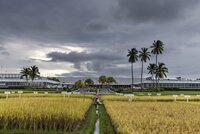
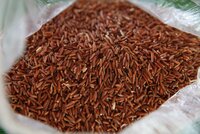
Almost two-thirds of the world’s population depend on rice as part of their daily sustenance. In Vietnam’s Mekong Delta, rice is harvested two or three times a year, and 80% of the 17 million people who live there are engaged in rice cultivation. During a recent Crop Wild Relatives visit, Crop Trust, IRRI and NMBU representatives consumed it steamed, puffed, in flakes, as noodles, as wine, to mention just a few of the ways the Vietnamese enjoy this staple crop. Photo: L.M. Salazar

Fast-Tracking Food Security Using Space Science

Fast-Tracking Food Security Using Space Science Plant breeders developing new crop varieties are finding success after shifting their gaze from the fields to the stars. Scientists at the

Grasspea at ICARDA’s facilities at Marchouch Station, Morocco. Photo: Michael Major/Crop Trust

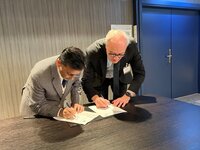
The Crop Trust and IRRI renew their commitment to safeguarding rice diversity in perpetuity

The Crop Trust and IRRI renew their commitment to safeguarding rice diversity in perpetuity Berlin, Germany, 15 November 2023 - The Crop Trust and the International Rice Research Institute

Genebank Impact Fellowship

The Crop Trust’s Genebank Impacts Fellowship Program was established in 2018. It provides early career professionals with hands-on experience in evaluating the impacts of genebanks and building

Seeds for Resilience

Seeds for Resilience is a five-year project to support the national genebanks of Ethiopia, Ghana, Kenya, Nigeria and Zambia

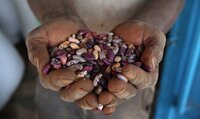
Hands holding a variety of beans in Rwanda

Crop Conservation Strategies

Thanks to support from the German Federal Ministry of Food and Agriculture (BMEL), the Crop Trust and its partners have been working to update five existing global crop conservation strategies and

Seeds germinating in genebank petri dishes

Show cookie settings