Securing Coffee's Future Starts with Protecting Its Diversity
2 November 2026
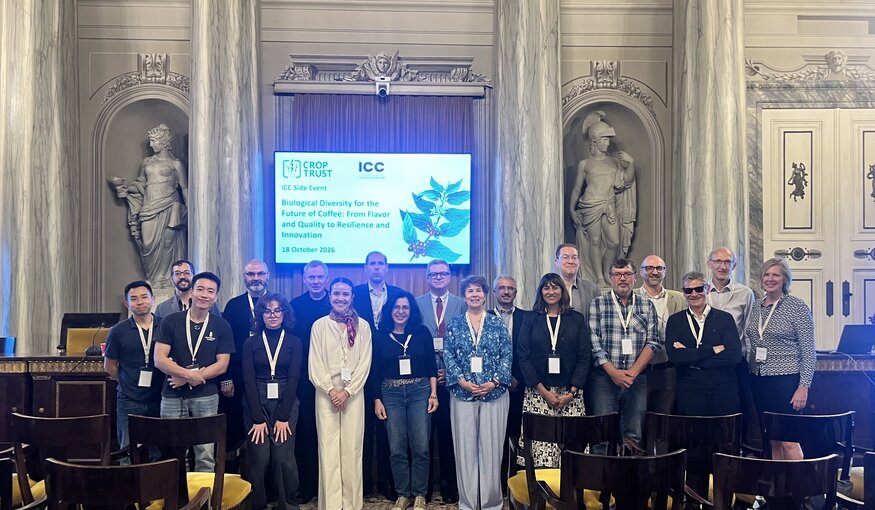
At the International Coffee Convention in Trieste, the Crop Trust brought coffee experts together to explore how safeguarding genetic diversity can strengthen the future of one of the world's most important crops.
Could a little-known coffee species help farmers grow coffee in a hotter, drier world? Could it offer a different flavor profile that opens new opportunities for producers and new experiences for consumers? And what happens if that species disappears before scientists have the chance to find out?
These questions took center stage at a Crop Trust workshop during the International Coffee Convention 2026 in Trieste, Italy. The discussions explored both the promise of coffee's remarkable biological diversity and the urgent need to safeguard it.
For millions of people, coffee is part of the daily routine. For over an estimated 125 million people worldwide, it is also a source of income and livelihoods. From smallholder farmers and their communities to roasters, retailers and consumers, coffee connects people across continents. Yet the future of this global industry is increasingly uncertain as rising temperatures, shifting rainfall patterns, pests and diseases threaten production.
One of coffee's greatest resources for meeting these challenges lies in its own diversity.
More Than the Coffee in Our Cups
While most coffee consumed worldwide comes from just two species, Arabica and Robusta, the coffee family includes more than 130 known species. Many are not studied or cultivated, yet they may hold characteristics that could help coffee production adapt to changing growing conditions.
Species such as Coffea liberica, C. stenophylla, C. eugenioides and C. racemosa are attracting interest for their potential contributions to climate resilience, quality and product differentiation. But that potential still needs to be understood.
At the workshop, Steffen Schwarz of the Coffee Consulate and International Coffee Convention emphasized that a coffee's flavor profile is shaped by more than its genetics. Growing conditions, processing and roasting all influence the final cup. Understanding what different species can offer requires systematic research, reliable identification, controlled trials and careful sensory evaluation.
The same scientific rigor is needed when assessing climate resilience. A species that grows naturally in hot or dry conditions may hold promise, but that does not automatically mean it can be cultivated successfully or provide farmers with a viable livelihood.
The opportunity is significant. So is the work required to realize it.
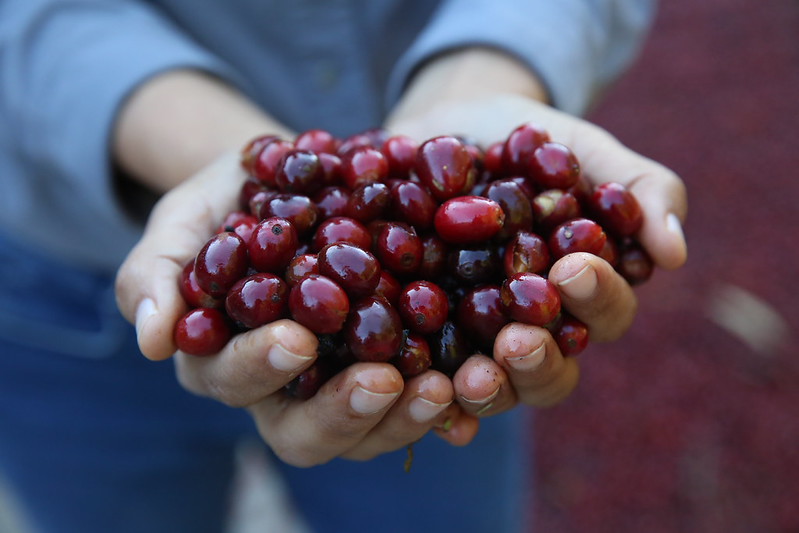
Geisha coffee berries from Hacienda La Esmeralda in Panama. Hacienda la Esmeralda is renowned as the largest producer of Geisha coffee, a variety originally from Ethiopia, which arrived in Panama via the CATIE genebank in the 1960s. Over 400 different accessions (or sub-varieties) have been planted on their farm. Credit: Luis Salazar/Crop Trust
Safeguarding Diversity for Coffee's Future
Before researchers and breeders can explore this potential, the diversity itself must be conserved.
Unlike many crops, coffee cannot generally be safeguarded through conventional seed storage. Its genetic resources are maintained primarily in living collections in field genebanks, as mature plants. These coffee trees require continuous care and remain exposed to natural conditions, including drought, disease, extreme weather and other threats.
The Crop Trust's Global Conservation Strategy for Coffee Genetic Resources identifies four collections of particular global importance, maintained by institutions in Ethiopia, Côte d'Ivoire, Madagascar and Costa Rica. Together, they safeguard valuable diversity, including cultivated coffee varieties and wild species that may prove important to the crop's future.
Although best known for its dried, roasted and fragrant beans, coffee plants start out as a perennial woody shrub. Coffee cherries – the Coffea plant’s fruits – develop on branches and usually contain two seeds which are then harvested and processed.
Discover more about coffee in our knowledge hub.
These collections are an essential resource for the global coffee community. Yet maintaining them requires skilled staff, adequate facilities, reliable funding and international cooperation. Strengthening documentation, improving access to genetic resources and establishing secure backups are also critical.
As habitats are lost and environmental pressures increase, the need to conserve coffee diversity both in living collections and in the wild becomes more pressing.
And conservation is only part of the challenge. Scientists must be able to characterize and study these resources, breeders must be able to use promising material, and farmers must ultimately benefit from the knowledge and innovations that emerge.
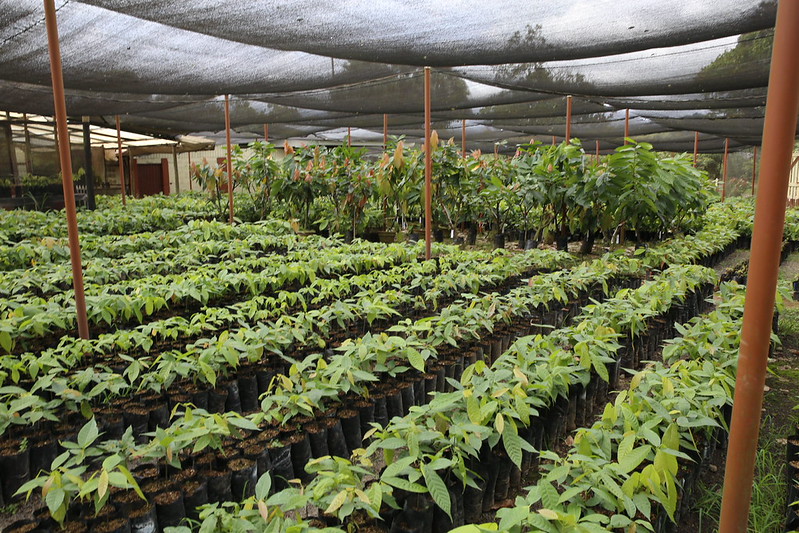
Living coffee collections surveyed during Crop Trust visit to CATIE (Centro Agronómico Tropical de Investigación y Enseñanza) in Costa Rica.
Turning Shared Interest into Lasting Action
The conversations in Trieste highlighted a growing recognition that coffee's crop diversity is not simply a scientific resource. It is an asset for the entire sector. Securing this diversity underpins future opportunities for adaptation, innovation and economic resilience.
They also raised an important question. How can the coffee community translate that recognition into sustained support for conservation?
Christophe Montagnon of RD2 Vision emphasized the need to move beyond repeated discussions toward practical commitments that strengthen the collections on which future research and breeding depend.
Reflecting on the workshop, Crop Trust Director of Science and Programs Sarada Krishnan said, “Coffee conservation is a challenge that requires collaboration. It was great to hear many different voices from the international community, coffee science and private sector calling for action to protect coffee’s future. The world runs on coffee and we need to invest now to keep it around forever.”
Collaborating for Coffee
The path forward will require action on several fronts. Conservation institutions need predictable resources to maintain and secure their collections. Researchers need support to investigate promising species and traits. Farmers need access to appropriate planting material, practical knowledge and economically viable options. And the wider coffee industry has an important role to play in supporting the biological foundations of its future.
The Crop Trust is working with partners to advance a more coordinated approach to conserving coffee’s crop diversity, including opportunities for sustained financing through its Endowment Fund and other forms of support.
The International Coffee Convention offered a valuable opportunity to strengthen this conversation, connect different parts of the coffee community and build momentum toward a more secure future for coffee.
For a crop that sustains millions of livelihoods and brings enjoyment to countless more people every day, the stakes could hardly be higher.
Coffee's future will depend on the choices made today – the varieties we grow and species we explore, and especially the diversity we protect and make available for generations to come.
Protecting that diversity is an investment in the future of coffee itself.
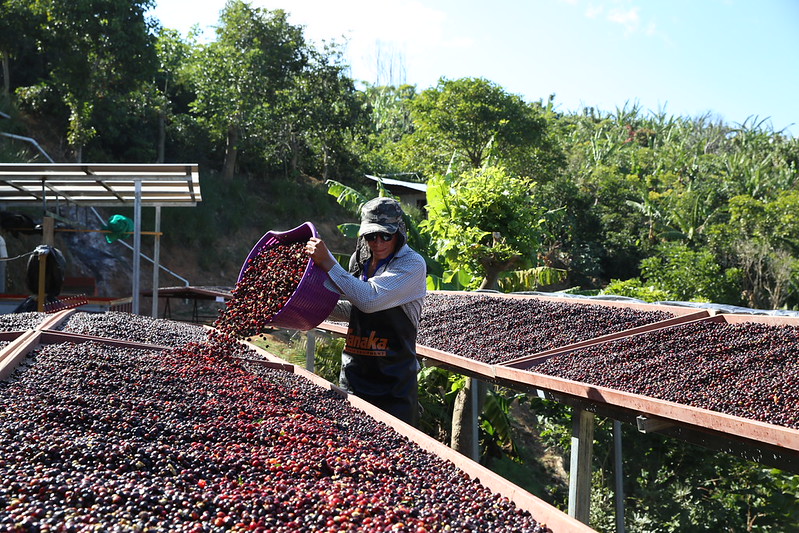
Worker at the Mirazu Micro-mill in Costa Rica’s Todos los Santos region is spreading the coffee cherries out to dry in the sun. Credit: Luis Salazar/Crop Trust
Curious how you can help save coffee? Check out our Coffee Forever campaign.
Category: Coffee
Related Articles