Wild Wheat’s Lesson for the Climate Talks
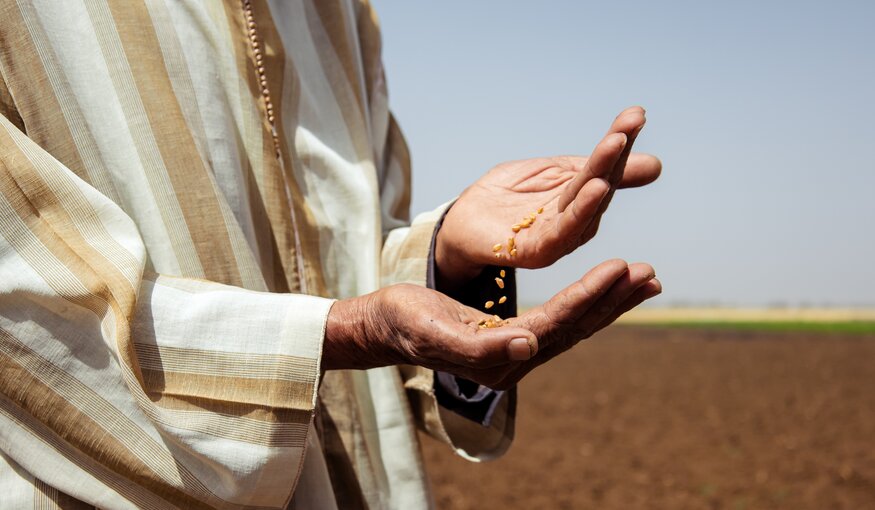
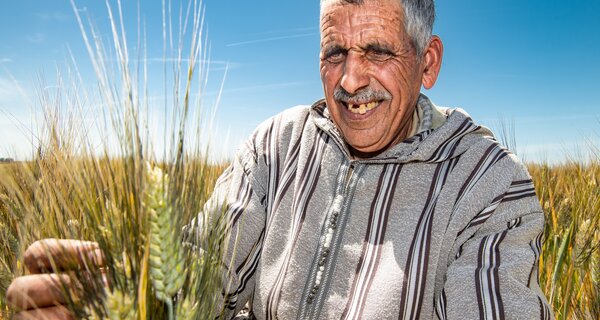
A farmer participating in the BOLD trials examines the grains of Jawahir after growing it in his field at Marchouch. Photo: Zineb Belhadfa/Crop Trust
17 November 2026
A wild wheat from Iraq shows how diversity conserved in genebanks decades ago can help agriculture adapt today, and why that journey requires sustained investment.
The entry in the plant inventory is brief. A wild wheat from Iraq. Nineteen kilometres east of Sulaimaniya. An elevation of 1,050 metres. A number: PI 427363.
Recorded in a United States collection in 1978, the sample belonged to a species called Triticum araraticum, a wild relative of cultivated wheat. Nothing in that short description anticipated the full extent of its usefulness. Decades later, it is contributing to new durum wheat varieties in Morocco, Syria and Lebanon, where farmers are dealing with drought and the uncertainty of rain.
As governments gather in Antalya, Türkiye, for the UN climate conference, this wheat offers an adaptation solution and a story about the importance of collaboration. Some of the resources agriculture will need for tomorrow’s conditions already exist in genebanks today. The challenge is to conserve crop diversity, understand what it offers and work together to turn that knowledge into seed a farmer can sow.
A Wild Inheritance
Wild relatives are members of the extended families of cultivated crops. Growing beyond the protection of agriculture, their populations can carry useful adaptations to difficult conditions, including resistance to pests and tolerance of drought. Breeders look to this diversity for characteristics that could help cultivated plants cope with stresses their existing varieties struggle to withstand.
But a useful wild plant is a starting point. Its descendants must also produce a worthwhile harvest, suit the place where they will grow and meet the needs of the people who grow and eat them. Reaching that combination takes repeated crossing, selection and testing.
For the Iraqi wheat, an early attraction was resistance to the Hessian fly, an insect pest capable of causing severe losses. At Kansas State University, Moroccan researcher Ahmed Amri investigated that resistance during doctoral work completed in 1989. Researchers in Morocco took this to the next level. In the 1990s, Miloudi Nachit, a wheat breeder working at the International Center for Agricultural Research in the Dry Areas (ICARDA) selected material from the Moroccan programme and used it in further crosses in Syria.
The resulting lineage became known as ICARDA-Morocco, or ‘Icamor’. Successive breeders inherited and developed it. The wheat’s eventual usefulness emerged through work that crossed countries and outlasted individual research projects.
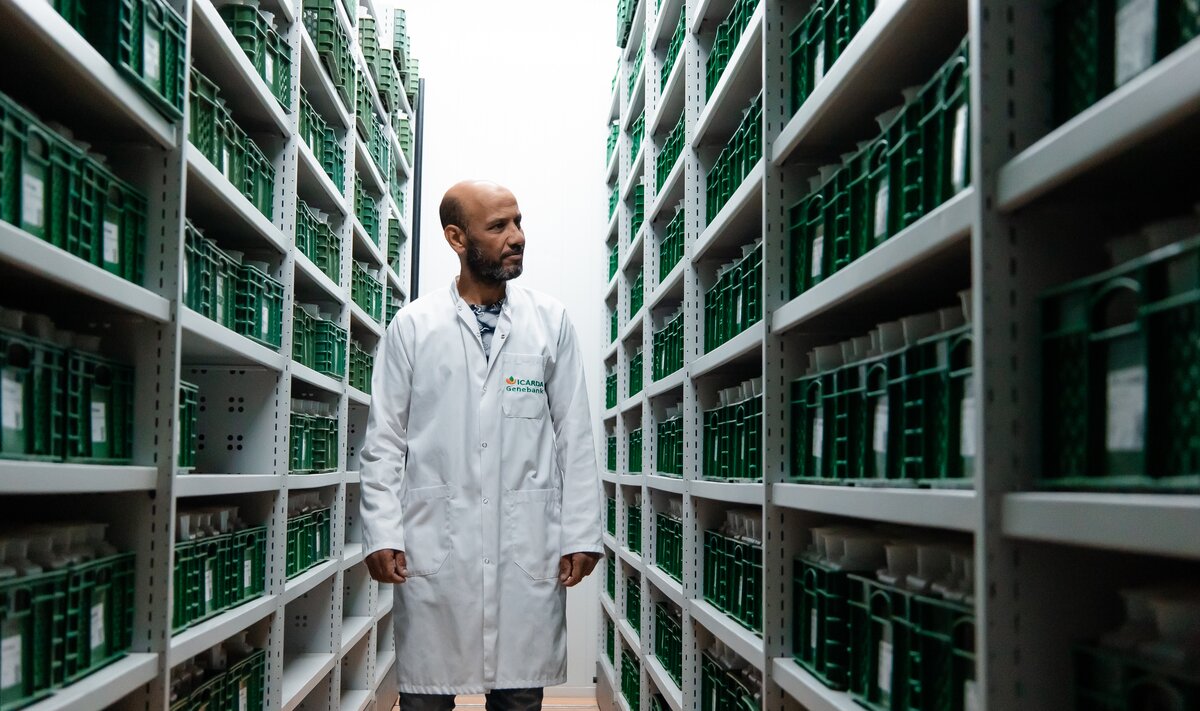
ICARDA’s Genebank in Rabat houses one of the world's most unique and extensive collections of cultivated dryland crops. Photo: Zineb Belhadfa/Crop Trust
Wheat For a Drier World
In Morocco, that history has helped breeders produce Jawahir, whose name means “jewels” in Arabic. Released in 2023 by the National Institute of Agricultural Research, the durum wheat combines drought tolerance with resistance to the Hessian fly. Farmers have tested it alongside older varieties in provinces including Essaouira, Tiznit and Safi.
ICARDA reports that, in those trials, Jawahir yielded more than 1.5 tonnes per hectare even under severe drought, while other varieties in the same fields often struggled to reach one tonne.
The ‘family’ has taken other forms elsewhere. Syria’s General Commission for Scientific Agricultural Research developed Cham 11, valued for its performance under rain-fed conditions, yield potential and grain quality. In Lebanon, the Lebanese Agricultural Research Institute developed Red Grain, already in farmers’ hands and valued for its yield in the Beqaa Valley and its suitability for making burghul.
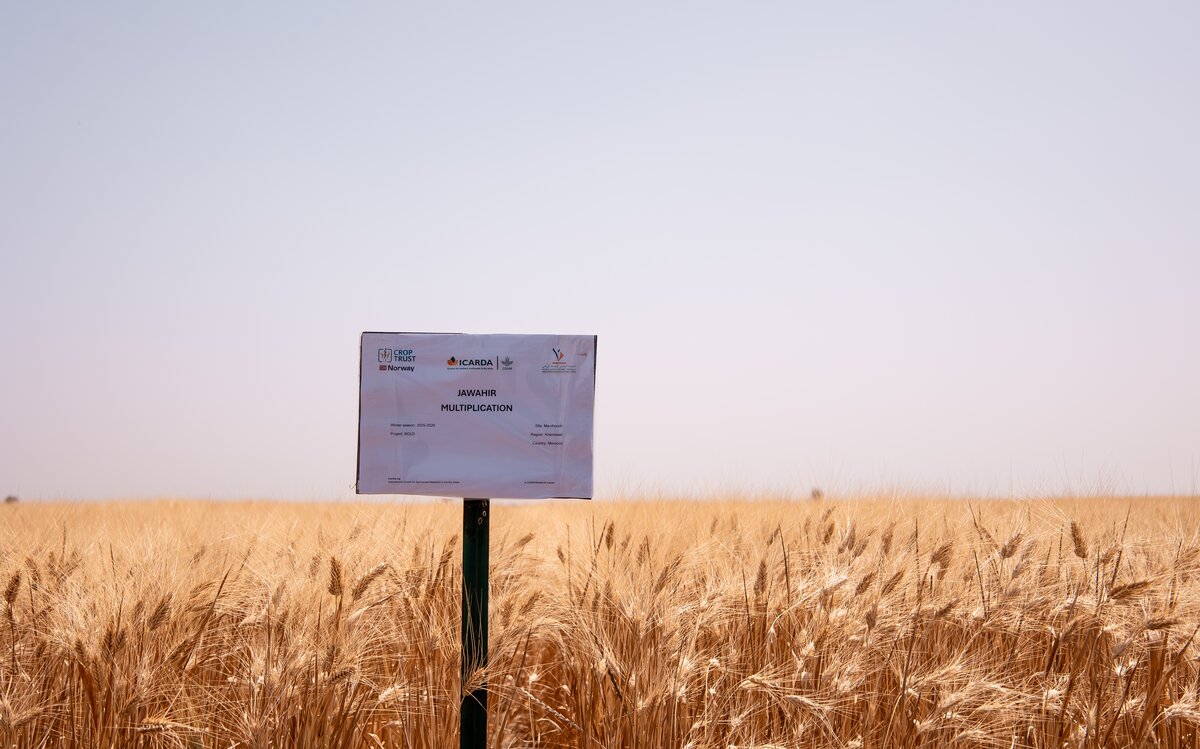
A multiplication field of Jawahir in the INRA/ICARDA research station in Marchouch. Photo: Zineb Belhadfa/Crop Trust
Seeds for Farmers’ Needs
Farmers helped to determine which combinations were worth pursuing. In all three countries, evaluation has extended beyond research stations into their fields. Filippo Bassi, ICARDA’s principal scientist working on durum wheat, describes a process in which researchers ask farmers what they like and dislike about the material being tested.
“Sometimes we get the response we expect, but very often we don’t,” he says. “And that is where we draw from the ancestral knowledge of farmers, better matching their own needs.”
That exchange brings another kind of expertise into the breeding process. Farmers sow the seeds and then judge a candidate variety against the demands of their own land and livelihoods. Their assessments can change which plants researchers choose to take forward.
“We are trying to put farmers at the center,” says Rola El Amil, head of the plant breeding department at the Lebanese Agricultural Research Institute. Her institute tests material supplied by ICARDA with farmers, helping select varieties suited to Lebanese conditions.
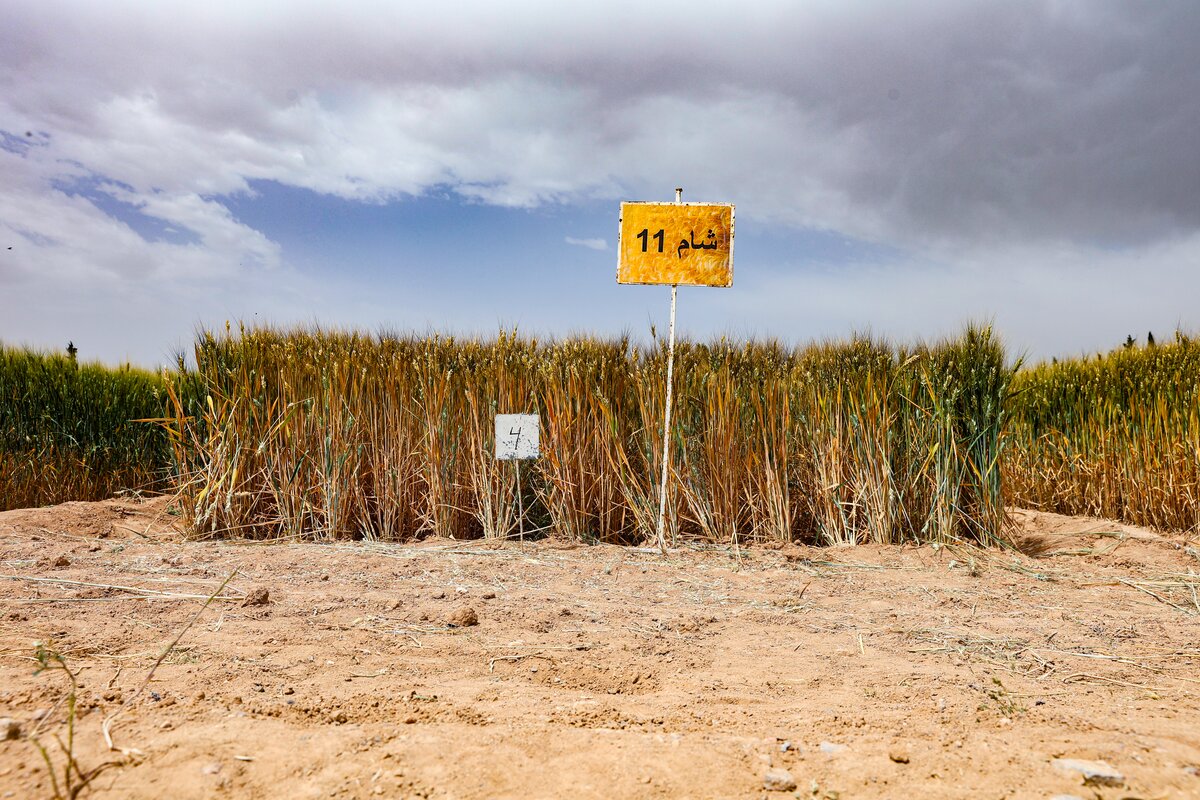
Trial fields of Cham 11 durum wheat at GCSAR’s Qarahata Research Station in Syria. Photo: Zineb Belhadfa/Crop Trust
Good Things Take Time
The Crop Trust’s BOLD project, funded by the Government of Norway, supports this work with ICARDA, a CGIAR research centre, and national partners. It helps connect diversity held in genebanks with breeding, field testing and the seed systems needed to bring promising varieties into wider use.
That last step can take years. Jawahir and Cham 11 are under seed multiplication – the process of growing enough seed for wider distribution. A variety may have demonstrated its value while remaining beyond the reach of most farmers. In Morocco, research and seed partners are working to expand the supply of Jawahir.
For the climate talks, there is a practical lesson in that timescale and in the need for collaboration. Agricultural adaptation depends partly on decisions made long before a particular variety is needed. The diversity we work together to conserve now, understand and share widely enables future breeders to adapt to challenges that will come. We just need to ensure the collections, expertise and partnerships endure.
The next useful sample may already have an inventory number. What it will become depends on what we keep alive, and what we do with it.
Categories: For The Press, For Partners, BOLD, Wheat, Food Security, Nutritional Security
Related Articles