

By Connor Purcell
Crop Diversity Digest Contributor
30 January 2026
Wander through the bustling rural markets of Tanzania and you will see green, heart-shaped leaves tied in neat bundles and piled high on the stalls. They are sweetpotato leaves – popular in local dishes, highly nutritious, and a good source of income. But go to a city supermarket and they’re not there. Why not? It’s kind of a paradox.
Sweetpotato leaves are really good for you. They are rich in vitamins A, C, K and B-complex, and provide potassium, iron, calcium and magnesium. They also contain powerful antioxidants, which help protect the body’s cells from damage, support the immune system, and may lower the risk of long-term illness. According to the International Potato Center (CIP), which also works on sweetpotatoes, their leaves are far superior in nutritional value to cabbage and compare well with other dark green leafy vegetables grown across sub-Saharan Africa.
Leafy Opportunity
Dr Sognigbe N’Danikou, the genebank manager at the World Vegetable Center in Arusha, Tanzania, has worked on traditional African vegetables for decades. In his view, sweetpotato leaves may be one of the country’s most underused nutritional resources.
“Right now, we see the leaves sold fresh in local markets,” he says. “But they do not reach supermarket shelves, where they could really star as part of a nutritious diet and open much greater opportunities for farmers.”
A paradox indeed. Sweetpotatoes are widely grown, highly resilient and nutritionally rich, yet their leaves remain largely absent from research agendas, policy frameworks and formal markets.
Today, farmers sell sweetpotato leaves unprocessed, picked fresh from the field and bundled for nearby market stalls. To reach supermarkets – and to store for longer than a few hours – the leaves would need to be washed, packaged and kept cool. That requires infrastructure, investment and coordination – and all still largely missing.
“There is a disconnect between what farmers can supply and what supermarkets are prepared to buy,” N’Danikou says. “Someone has to create the link between the two.”
Understanding demand is as important as increasing supply. Without reliable market information, farmers risk producing too much or too little, at the wrong time, and for the wrong buyers. A functioning market, N’Danikou asserts, depends on aligning every step of the value chain – from farmer to distributor to retailer – around predictable demand.
Only then can sweetpotato leaves move beyond informal markets and become a reliable, consistent source of income for farmers.
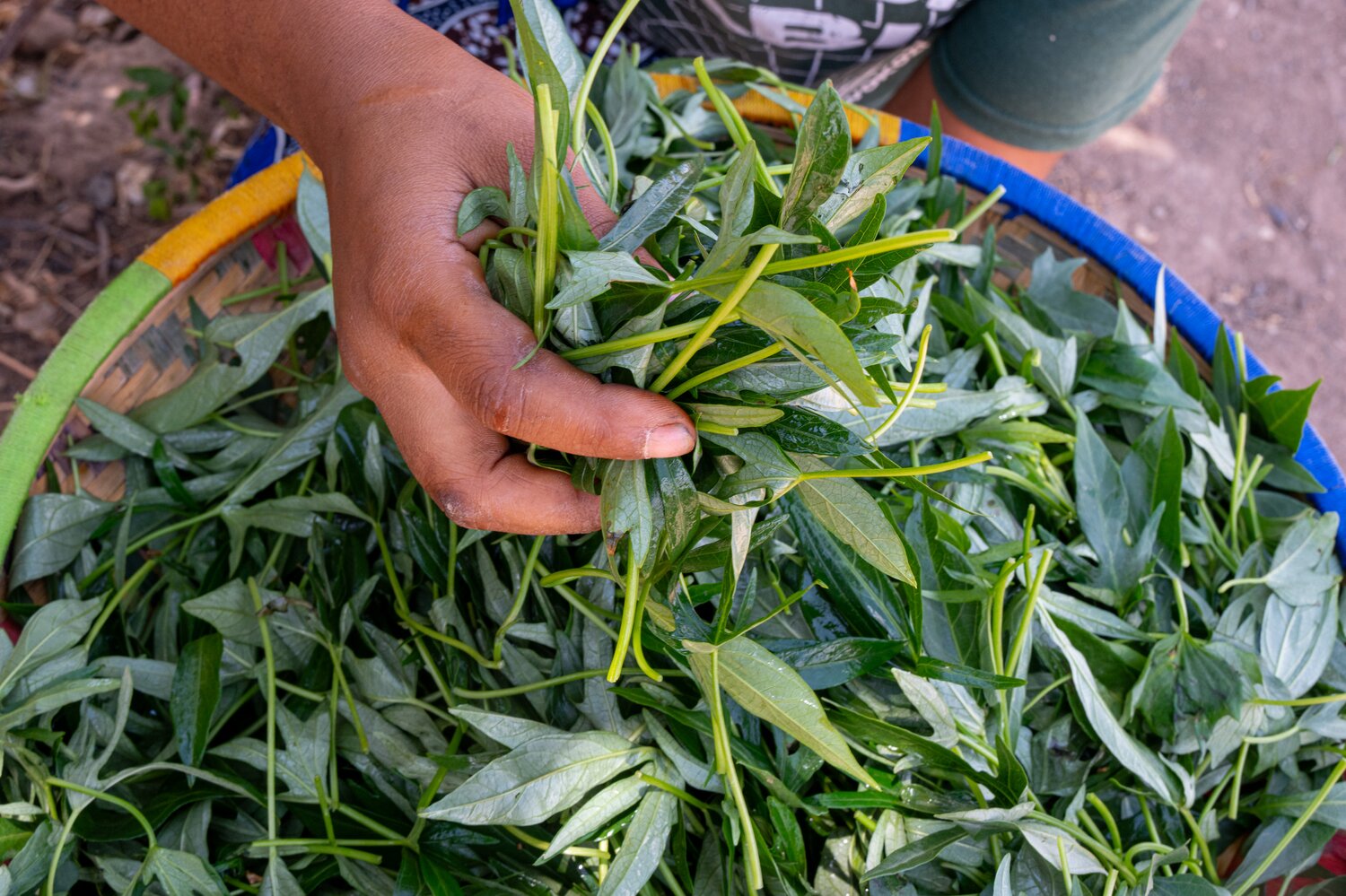
Preparation of sweetpotato leaves in Mwanganjuki, Tanzania. Photo: Michael Major for Crop Trust
Unlocking Potential
That’s why the Crop Trust’s Building Opportunities for Lesser-known Diversity in Edible Resources (BOLDER) initiative works with partners on sweetpotato leaves, along with several other “opportunity crops,” such as fonio and pumpkin.
In Tanzania, the project is mapping the leaf value chain, testing approaches to processing and preservation, and working with farmers to identify consumer demand.
And the opportunity is considerable. With the right investment in local processing facilities, cold storage and farmer support, sweetpotato leaves could become a regular feature of urban diets.
But it all starts with conservation of the diversity of the crop, and for sweetpotato that is challenging. Sweetpotatoes are rarely conserved in genebanks as seeds, because that doesn’t preserve the genetic integrity of the local varieties that farmers know and love. Maintaining plants in field collections is costly and risky, exposing the crop diversity to pests, diseases and climate stress. Conserving sweetpotato as plantlets in test tubes requires specialized facilities and expertise that are still missing in many countries. In addition, sweetpotato varieties are frequently exchanged informally among farmers and may be poorly documented, making it difficult to capture their full diversity and associated knowledge before it is lost.
For N’Danikou, conserving and using the diversity of sweetpotatoes goes hand in hand with creating demand for its leaves. Without reliable markets, farmers have little incentive to document old varieties and test new ones , and breeding programs struggle to move from research into practice. Promotion of the crop depends on protection of its diversity. That’s why collaboration with the national genebank is central to BOLDER’s work, in Tanzania and elsewhere.
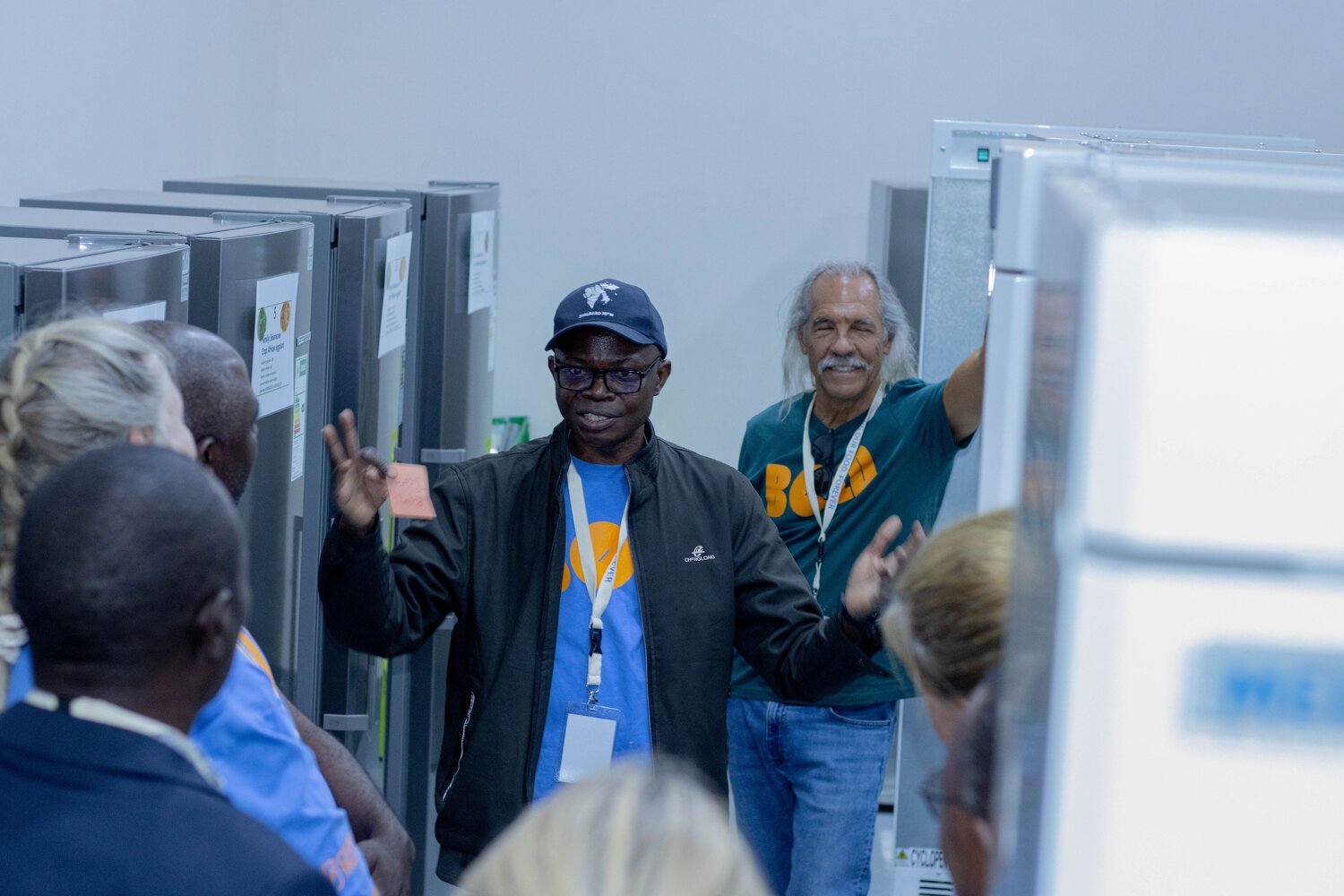
N’Danikou welcomes attendees of a BOLD project workshop to the WorldVeg genebank in Tanzania. Photo: Petra Pajdakovic/Crop Trust
Looking Forward
But technical fixes are not enough. Policies are also important. This is where the country’s long-term development agenda matters. The national development vision Dira 2050 places strong emphasis on inclusive growth, private sector development and sustainable use of natural resources, with a particular focus on expanding economic opportunities for women and young people.
Sweetpotato leaves fit squarely within that ambition. They are often described as a ‘woman’s crop’, reflecting the central role women play in land preparation, weeding, harvesting and selling. Strengthening their value chain can therefore increase women’s incomes and economic autonomy, while improving access to nutritious food in both rural and urban households.
Sweetpotatoes also grow quickly with little water or fertilizer, making them particularly valuable in dry and climate-stressed regions.
Public procurement could also play a role in promoting the crop. Policies that encourage schools to source leafy vegetables locally can improve children’s diets while providing farmers with a more stable and predictable market.
With conservation of sweetpotato diversity on a solid footing, better leaf-producing varieties, a functioning supply chain and stronger policy support, something that has long been treated as a by-product could finally feature on supermarket shelves.
To learn more about sweetpotato leaves and other opportunity crops, explore the Opportunity Crop Knowledge Base.
Related News
Saving Sweetpotato Diversity: How Technology is Boosting Food Security in Drought-Affected Africa
Sweetpotato plays a crucial role in combating food insecurity and malnutrition in Africa. However, its genetic diversity is under threat from climate change, pests, and diseases, which could have dire consequences for millions of...
2 Oct 2024