Skip to content

Search

Please use this search facility to search all content found within the website:
918 results:

Genebanks Have Safely Stored Seeds Crucial for Food Security for Decades, Study Finds

… in storage so they should continue to be tested…

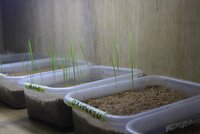
Plastic tubs used to germinate seeds, thus testing their viability, in a seed lab

Biodiversity for Food Security: A BOLD Approach

… of our crop diversity and continue the critical work we…

IRRI, LOS BANOS, PHILIPPINES, 9 AUGUST 2016: Workers conduct drought resistance rice sampling at the International Rice Research Institute. IRRI is the world’s premier research organization dedicated to reducing poverty and hunger through rice science; improving the health and welfare of rice farmers and consumers; and protecting the rice-growingenvironment for future generations. IRRI is an independent, nonprofit research andeducational institute founded in 1960 by the Ford and Rockefeller foundations, withsupport from the Philippine government. The institute, headquartered in LosBaños,Philippines, has offices in 17 rice-growing countries in Asia and Africa, and About 1,000 staff members. Working with in-country partners, IRRI develops advanced rice varieties that yield more grain and better withstand pests and disease as well as flooding, drought, and other destructive effects of climate change. More than half of the rice area in Asia is planted to IRRI-bred varieties or their progenies. The institute develops new and improved methods and technologies that enable farmers to manage their farms profitably and sustainably, and recommends rice varieties and agricultural practices suitable to particular farm conditions as well as consumer preferences. IRRI assists national agricultural research and extension systems in formulating and implementing country rice sector strategies. (Photo by Brent Stirton/Reportage by Getty Images for Crop Trust.)

Five Standout Messages from “Into the Wild” at GLF Climate

… of its value, and are continuing to fund the work…

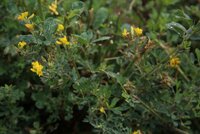
In Kazakhstan, we saw 'Medicago falcata' everywhere, a yellow-flowered wild relative of alfalfa that is drought and cold tolerant. It is one of the many alfalfa Crop Wild Relatives being crossed with its domesticated counterpart, 'M. sativa', by our pre-breeding partners in China (GRI / CAAS), Chile (Inia Chile), Australia (SARDI) and, of course, Kazakhstan (KSRIAPG).

Crop Trust Annual Report Released: A Look Back at a Year of Change

… (CIP) and are eager to continue much of this work through…

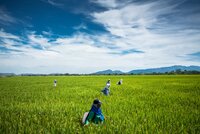
Farmers in rice fields, Colombia.

Foods that Can Beat the Heat this Summer

… Heat It is vital that we continue to incorporate these…

Nuts About Peanuts

… generations of farmers to continue to grow peanuts, and…

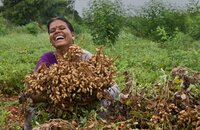
A smiling farmer holds her groundnut harvest. Photo: L. Vidyasagar/ICRISAT

Revival and Survival of Repatriated Potato Landraces in the Andes

… how long Andean farmers continue to use repatriated…

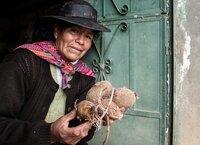
Woman holding potatoes.

An Endowment for the Ages

… research centers, and contributes, with the government…

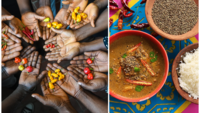
Celebrating the colors and shapes of chilli diversity. (Photos: Shawn Landersz/Crop Trust and Megha Kokli)

Spicing Up Diets and Livelihoods with Peppers

… ensure that breeders can continue to produce improved crop…

Global Food Crisis is Leaving Millions Hungry, But There are Solutions

… hungry as food prices continue to rise as a result of…

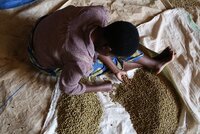
Woman sorting beans in Rwanda
Scroll to top

Show cookie settings