Seeds, Farmers and the Connections That Matter
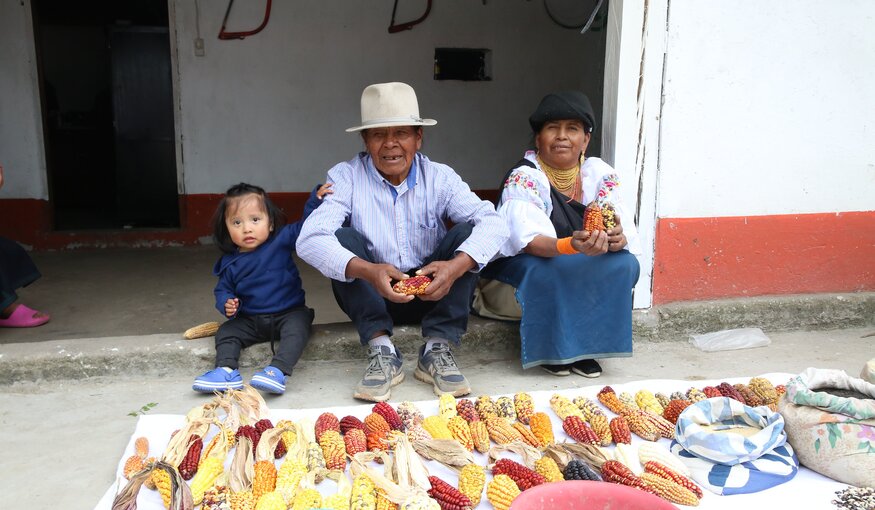
Magdalena Laine with her husband and grandson pose for a picture behind a partial selection of all the diversity they grow in their chakra.
13 November 2026
Genebanks worldwide safeguard thousands of crop varieties. Breeders develop new ones to help farmers cope with drought, pests and changing growing conditions. Yet getting the right seeds into farmers’ hands remains one of agriculture’s most persistent challenges.
New research suggests the answer lies not only in which seeds are available, but in the networks, institutions and relationships that determine access.
Farmers may plant seeds saved from the previous harvest, exchange them with neighbors, buy them at local markets or obtain them from formal suppliers. Each route has advantages and limitations. Together, they form the seed systems that determine which crops and varieties farmers can grow.
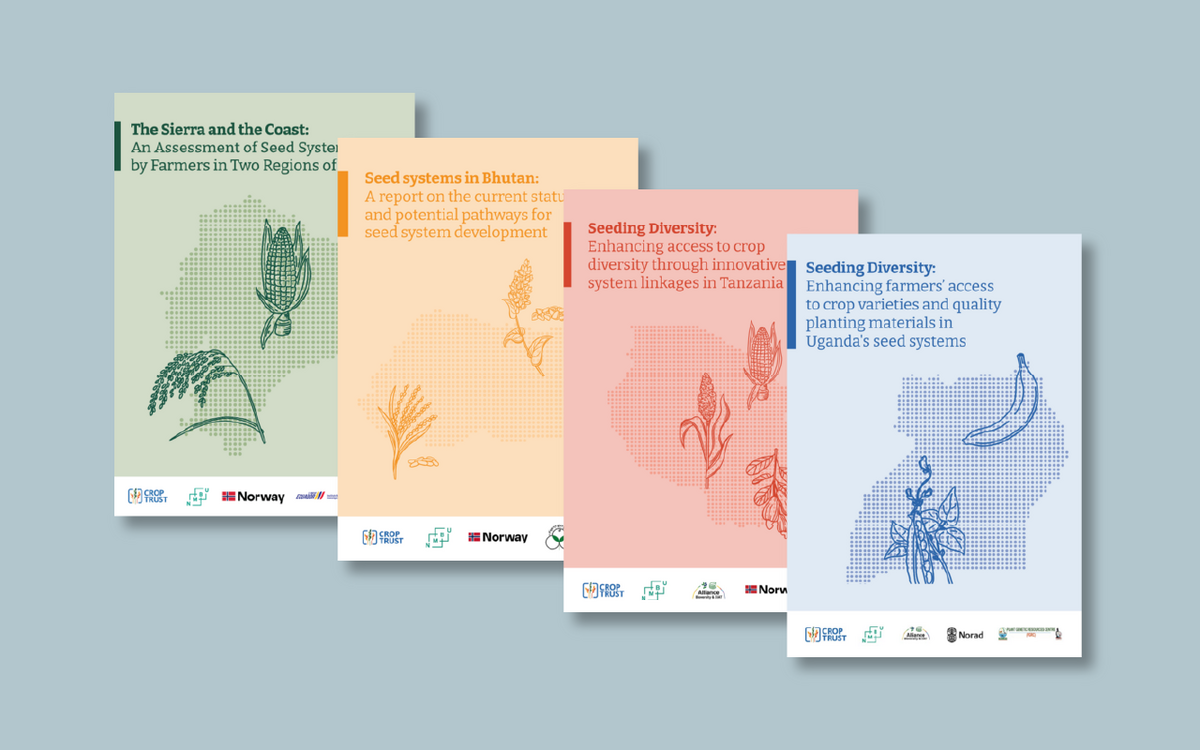
Through the Crop Trust’s BOLD project, researchers from the Norwegian University of Life Sciences (NMBU) and national partners studied these systems in Bhutan, Ecuador, Tanzania and Uganda. They explored how farmers access seeds, how crop diversity is conserved and used, and where stronger connections could improve farmers’ choices.
Despite different agricultural, cultural and policy environments, the research points to a common challenge – conserving crop diversity is essential, but ensuring farmers benefit from it requires more.
Farmers Are the Backbone of Seed Systems
In Tanzania, farmers plant 76% of their farmland with seeds saved from previous harvests. Even with an established formal seed sector, farmer-managed seed remains central to production.
Farmers draw on multiple seed sources, choosing according to availability, cost, familiarity, and suitability to local conditions.
In the Indigenous Kichwa communities of Cotacachi, Ecuador, farmers maintain diverse maize, beans, potatoes and fava beans within the traditional chakra farming system. They save, select and exchange seeds through families, local fairs and community networks. These practices maintain crop diversity and preserve varieties valued for their culinary uses, cultural significance and local adaptation.
In Bhutan, farmers obtain seed from neighbors and relatives through purchases, barter, loans, and exchanges of seed or labor. In Bumdeling, a relative introduced the rice variety Machum from another district in exchange for local rice. Cultural traditions also shape farmers’ choices. In Samar, farmers reported expanding cultivation of the local wheat variety Jo to make kaapchi, roasted wheat flour used in rituals.
Across the four countries, farmers identified their own seed and seed obtained through nearby social networks as reliable and well adapted to their needs. The findings underline the importance of understanding and supporting the systems farmers already use.
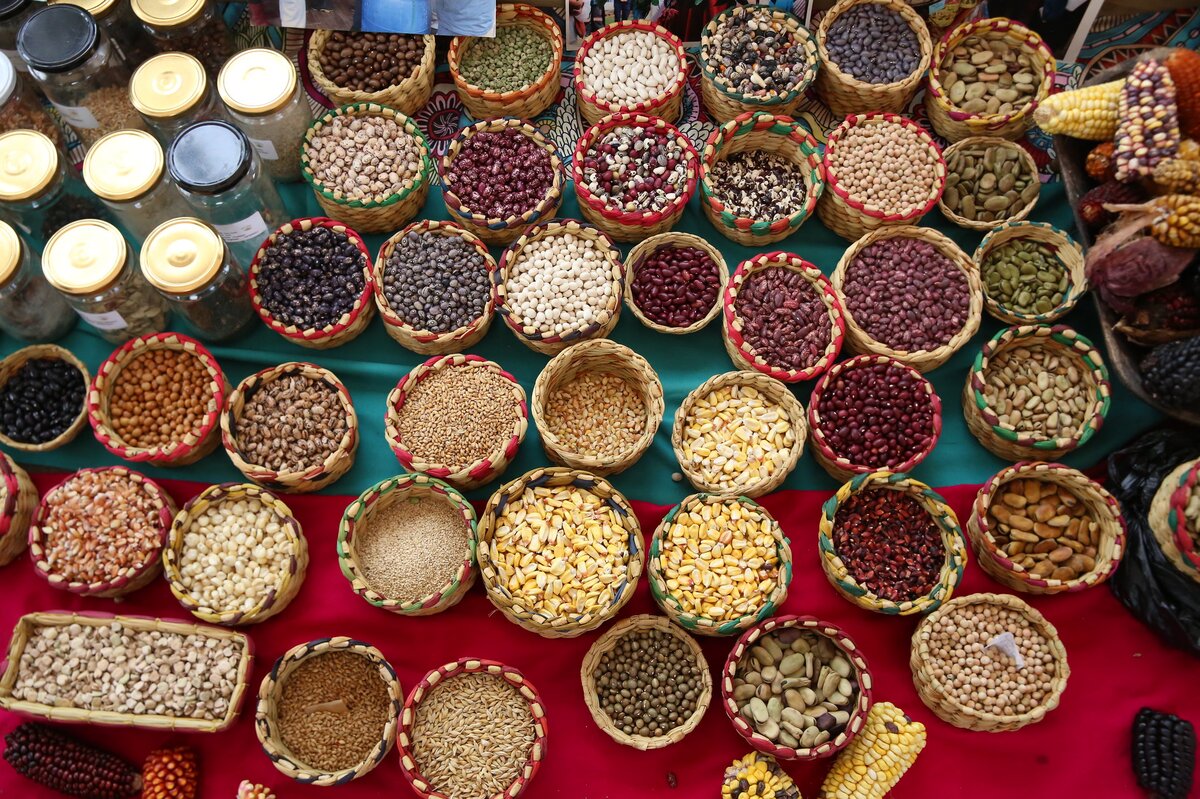
Varieties of maize, beans, and habas, displayed at Muyu Raymi Festival, Ecuador.
But Farmers’ Choices Are Changing
By growing and exchanging different varieties, farmers help conserve crop diversity. Yet the studies reveal pressures that can gradually reduce it.
In Uganda, researchers found that farmers are abandoning crop and varietal diversity faster than new varieties are introduced, raising concerns about the loss of genetic diversity even in a country with considerable agricultural biodiversity.
Economic pressures shape these choices. Farmers discontinue varieties that yield poorly, require too much labor, or attract few buyers. In Ecuador’s Daule canton, farmers grow nine improved rice varieties, but SFL-011 dominates production, largely because it commands a favorable market price. In Bhutan’s Orong community, better market value makes Desiree potatoes more popular than the tastier local Jamu joktang.
These choices make economic sense for individual farmers. But when many concentrate on the same varieties, diversity across agricultural landscapes declines.
Maintaining a range of varieties can help farmers cope with drought, diseases and changing growing conditions. It also preserves varieties valued for local cuisine, cultural identity and religious traditions.
Farmer-led variety evaluation, breeding and local seed production could help maintain this diversity while meeting farmers’ food and income needs.
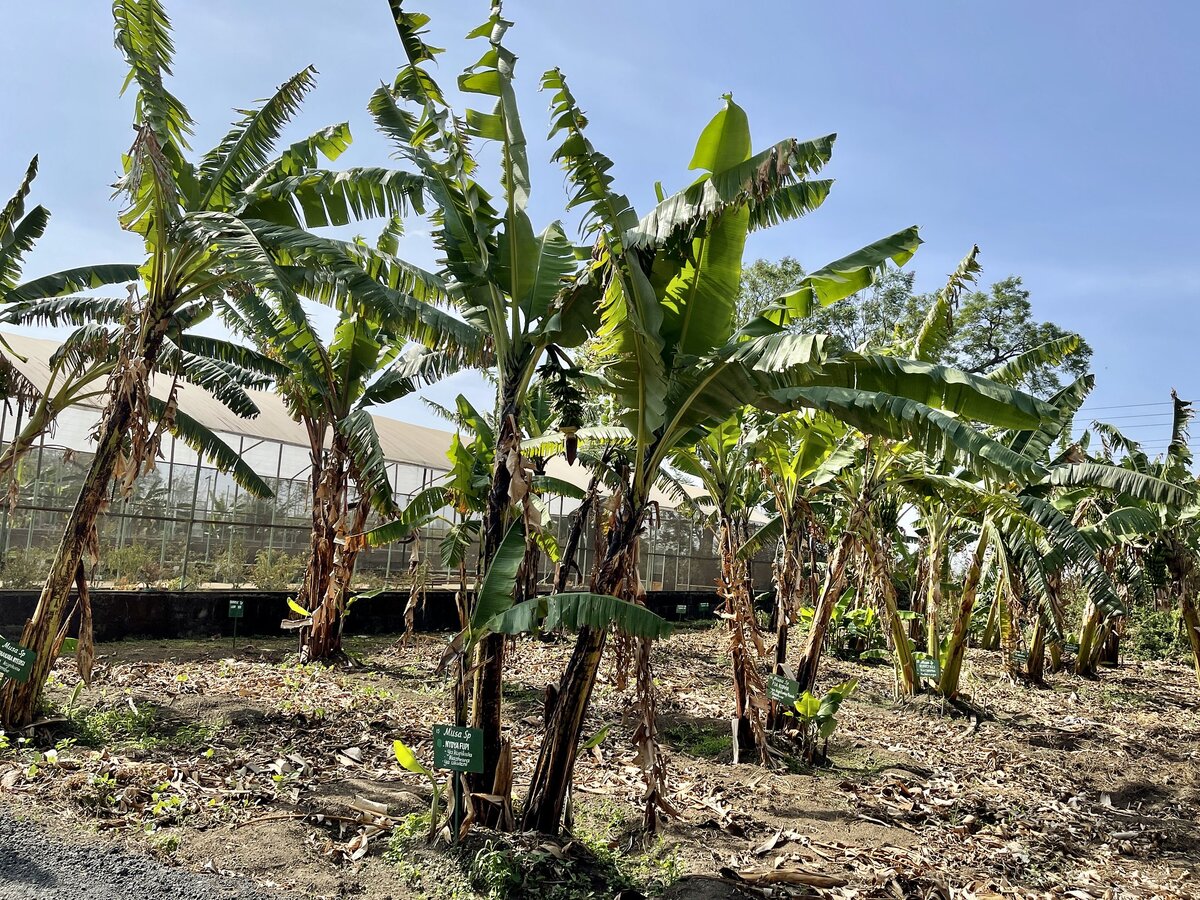
Banana collection at the Tanzania National Plant Genetic resources Centre (TPHPA) in Arusha. Photo: Crop Trust
Genebanks Hold Valuable Diversity – Stronger Connections Can Unlock It
While farmers maintain diversity in their fields, genebanks provide an essential safety net. They conserve crop varieties and wild relatives that might otherwise disappear, giving researchers and breeders material to develop varieties suited to changing agricultural conditions.
The studies suggest that connections between genebanks and other parts of seed systems could be stronger.
Tanzania’s National Plant Genetic Resources Centre in Arusha conserves thousands of crop samples and works with 29 community seedbanks, linking genebank conservation with efforts in farming communities. Yet many breeders obtain plant material through their professional networks rather than directly from genebanks.
Closer collaboration among genebanks, breeders, researchers, seed producers and farmers could make conserved diversity more accessible and useful.
In Ecuador, the national genebank and farmers’ organization UNORCAC help identify, multiply and reintroduce varieties being lost. In Cotacachi, “Wanted” posters sought seed donations of Canguil negro, a black-seeded popcorn, from farmers still maintaining it. Breeders helped select seeds for better popping performance. A local university and farmers’ organization then multiplied the seeds for distribution to farmers.
Such initiatives show how different actors can work together. However, the research found that seeds distributed through these efforts do not always perform well in farmers’ fields, highlighting the need to strengthen seed dissemination strategies.
Stronger connections can help turn conserved diversity into varieties farmers want and can use, increasing its contribution to food security.

Farmers holding a biodiversity fair including genebank samples multiplied by community seed bank groups in Dremetse Geog in Eastern Bhutan. (Photo: Development Fund)
Better Connections, Better Choices
The studies also challenge the idea that improving seed systems is simply a matter of distributing more commercial seed.
Farmers rely on a combination of formal and informal channels. Local markets, farmer organizations, community seedbanks, seed businesses and personal networks all contribute to making planting material available.
Yet these actors do not always receive the support or recognition they need. Gaps in coordination, information, seed production and distribution can limit farmers' access to quality seed and a wider choice of varieties.
Strengthening seed systems therefore requires working across these different channels, rather than treating them as competing alternatives.
This could mean improving links between national genebanks and community seedbanks, involving farmers more directly in evaluating varieties, supporting local seed production or strengthening collaboration between researchers and seed suppliers.
The appropriate solutions will differ from country to country. What works in Ecuador's Indigenous farming communities in the Sierra may not address the same challenges faced by rice growers on the Coast or seed producers in Tanzania or Bhutan.
The common principle, however, is clear. Seed systems work best when the people and institutions involved are connected and farmers have meaningful choices.
From Research to Action
The four country studies are more than an assessment of existing challenges. They are helping shape the next phase of the Crop Trust’s work under BOLD.
Working with national partners, researchers are using the findings to develop and test practical approaches to strengthen seed systems and improve farmers' access to quality seed and crop diversity.
The research reinforces an important lesson for efforts to strengthen global food security – no single institution or seed supply channel can meet every farmer's needs.
Genebanks safeguard diversity. Breeders develop new varieties. Seed producers multiply planting material. Farmers select, grow and exchange seeds, keeping diversity alive in agricultural landscapes.
Each plays a different role. Their collective impact depends on how effectively they work together.
For the Crop Trust and its partners, the task is therefore not only to conserve the diversity that agriculture may need tomorrow, but also to strengthen the connections that enable farmers to benefit today.
Categories: For The Press, For Partners, BOLD, Food Security, Nutritional Security
Related Articles